
For centuries, the silhouette of a wine bottle has served as a silent ambassador for the liquid within, dictating expectations before the cork is ever pulled. However, understanding these foundational designs is no longer merely an exercise in historical appreciation or visual aesthetics; it is the first critical step in establishing a robust, data-driven packaging strategy. For modern brand owners, choosing the right shape and size is a complex equation that must perfectly balance ancestral tradition, extreme structural engineering, and cold, hard supply chain economics.
5 Essential Wine Bottle Shapes You Must Know
To master the art of wine packaging, one must first decode the visual language of the global market. The shapes we recognize today were not born out of random artistic whims, but rather forged by early manufacturing limitations and the highly specific physical requirements of different grape varietals. Recognizing these profiles is paramount to ensuring your product telegraphs the correct message to the consumer.
Bordeaux & Port Bottles
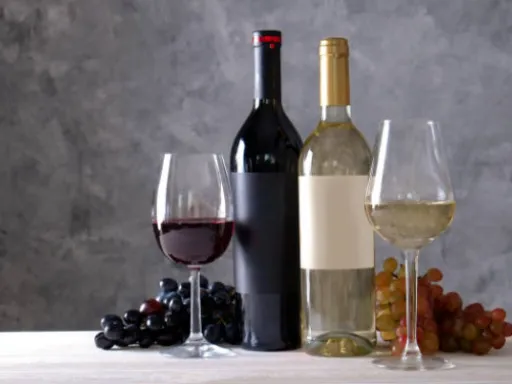
Characterized by high, pronounced shoulders and a strictly cylindrical body, the Bordeaux bottle is the undisputed global standard. This design functions essentially as a hydrodynamic dam. When pouring a heavily tannic Cabernet Sauvignon, Merlot, or an aged Bordeaux blend, the steep, high shoulder effectively traps the bitter, astringent sediment at the top of the bottle, preventing it from cascading into the glass and ruining the tasting experience. The classic Port bottle takes this defensive engineering a step further; its distinctive bulbous neck acts as an aggressive secondary buffer, designed specifically to catch the exceptionally heavy dregs that precipitate out of fortified wines over decades of cellar maturation.
Burgundy, Rhone & Provence
In stark contrast to Bordeaux, the Burgundy bottle is defined by its elegant, sloping shoulders and a wider, more robust base. Because grape varietals like Pinot Noir and Chardonnay naturally produce significantly less sediment during fermentation and aging, early glassblowers were free to favor this sloped form, which is structurally more stable and considerably easier to manufacture using primitive lung-blowing techniques. The Rhone bottle mirrors this silhouette but is often adorned with heavy embossed family crests. The Provence Rosé bottle takes the sloping concept to its extreme marketing conclusion with the Corset (or Skittle) shape. Utilizing perfectly clear flint glass and dramatic, sweeping curves, this shape is entirely designed to maximize light refraction, brilliantly displaying the wine’s alluring pale pink color to captivate consumers on the retail shelf.
Alsace Flute & Bocksbeutel
The tall, strikingly slender Alsace Flute (or Hock bottle) originated from the logistical realities of the Rhine River. Because these delicate Rieslings and Gewürztraminers were transported on smooth inland waterways rather than turbulent oceans, thick, shock-resistant glass was deemed unnecessary. Conversely, the German Bocksbeutel—a flattened, canteen-like vessel with a short neck—was ingeniously designed in the Middle Ages specifically to prevent the bottle from rolling away and shattering inside bumpy, horse-drawn carriages.
⚠️ Warning: While rich in historical charm, these irregular flat shapes present a catastrophic logistical nightmare in the modern supply chain. Their unique geometry drastically reduces palletizing volume, wastes valuable retail shelf space, and ultimately causes transportation costs to skyrocket.

The Physics of Glass: Pressure, Sediment, and the Punt Myth
Beyond the realm of cultural aesthetics, glass packaging is a marvel of applied materials engineering. When we move past surface-level appearances and unpack the physical laws governing bottle design, we quickly discover that the most iconic features of wine packaging are born from absolute necessity, while others are simply highly effective marketing illusions.
The 90 PSI Challenge of Champagne
A bottle containing traditional method sparkling wine is not merely a container; it is a highly volatile, pressurized vessel. It must consistently withstand internal forces of up to 6 atmospheres—approximately 90 PSI, which is roughly three times the recommended pressure of a standard passenger car tire. This extreme hydrostatic reality demands extraordinary structural integrity. To prevent catastrophic explosions on the production line and in the cellar, standard Champagne bottles require a massive empty glass weight of 800 to 900 grams, reinforced heavily at the base, and must be secured with specialized mushroom corks anchored by steel wire muselets.
The Engineering Truth Behind the “Punt”
The deep indentation found at the base of many wine bottles, universally known as the punt, serves a critical and non-negotiable engineering function in sparkling wines. By utilizing the arch pressure distribution effect, the punt masterfully transforms the outward explosive force of the carbonation into inward compressive stress, ensuring the bottom of the bottle does not shatter under pressure. However, for standard still wines, a deeply punted, ultra-heavy bottle offers absolutely zero chemical or physical benefit to the wine inside. It is a highly effective, expensive illusion of luxury—a legacy design choice that needlessly inflates your raw material costs, wastes container space, and dramatically increases your carbon footprint.
The Complete Matrix of Wine Bottle Sizes
In the world of glass manufacturing, size and shape are geometrically intertwined. As the capacity of a bottle scales upward or downward, the complexity of maintaining precise mold tolerances, uniform wall thickness, and structural stability shifts dramatically. Selecting the right volume format is a strategic decision that impacts everything from unit economics to the chemical aging trajectory of the wine.
| Format Name | Volume | Strategic Application & Market Placement |
|---|---|---|
| Piccolo / Split | 187.5ml | Perfect for single-serve economics; dominates airlines and luxury hospitality. |
| Demi / Half | 375ml | The standard for highly concentrated Ice Wines and rare dessert vintages. |
| Standard | 750ml | The universal global baseline for all commercial wine rack compatibility. |
| Magnum | 1.5L | The ultimate aging vessel, scientifically proven to slow down oxidation. |
| Jeroboam | 3.0L | High-impact display format designed for premium auction valuation and gifting. |
| Salmanazar | 9.0L | Requires extreme manufacturing expertise; represents the absolute pinnacle of prestige. |
The Single-Serve and Standard Spectrum
Smaller formats, particularly the 375ml Demi, utterly dominate the Ice Wine and botrytized dessert wine categories. Due to the extreme scarcity and low yield of these unique harvests, packaging them in smaller capacities serves a brilliant dual purpose. It maintains a psychologically accessible absolute retail price point for the consumer, while simultaneously amplifying the perception of the liquid as concentrated, rare, and precious—literally framing it as “liquid gold” that must be savored drop by drop.
The Giant Formats and Aging Potential
The true intrinsic value of a Magnum (1.5L) or larger format lies not in its visual dominance, but in the science of the micro-oxygenation ratio. Because the diameter of the cork and the ullage (the space between the wine and the cork) remains virtually identical to a standard 750ml bottle, while the volume of the liquid exponentially doubles, the proportion of oxygen entering the wine over time is drastically reduced. This unyielding mathematical certainty slows the maturation process, making giant formats the undisputed, scientifically superior choice for the long-term cellar aging of world-class vintages.
The Hidden B2B Economics: Logistics, Storage, and Sustainability
When a brand transitions its focus from the romanticism of the tasting room to the brutal realities of global procurement, bottle shape and glass weight immediately cease to be mere cultural traditions. They become cold, hard Total Cost of Ownership (TCO) parameters that can either silently bleed your margins or significantly optimize your supply chain.
The Wine Rack Compatibility Friction
One of the most disastrous oversights in modern wine premiumization is the “size black hole.” The vast majority of standard commercial displays and high-end residential wine cellars are rigidly engineered with wooden or metal slide rails tailored exclusively for the 74mm to 76mm diameter of a standard Bordeaux bottle. ⚠️ Critical Friction: When brands blindly adopt oversized, heavy Burgundy bottles—often pushing 85mm to 90mm in diameter—to artificially mimic prestige, they severely alienate their end-users. Forcing these oversized bottles into standard racks violently scrapes premium labels, jams delicate sliding mechanisms, and slashes the stated capacity of the consumer’s fridge by up to thirty percent. This unseen friction directly triggers infuriating consumer experiences, high retail return rates, and permanent brand resentment.
The Light-Weighting Megatrend & Production Feasibility
Simultaneously, global sustainability mandates are forcing a reckoning. According to the latest European Extended Producer Responsibility (EPR) regulations, retailers are aggressively penalizing heavy packaging through steep carbon taxes. The industry mandate is clear: reduce weight without sacrificing strength. However, relying on traditional “Blow-and-Blow” (B&B) manufacturing to achieve this often results in dangerously uneven glass wall thickness—meaning a lighter bottle suddenly becomes a fragile, shattering liability on high-speed bottling lines.
When pursuing this delicate balance of extreme light-weighting and uncompromised structural integrity, many brands face a catastrophic rise in production line breakages. This is precisely where Nuvole Glass redefines the packaging landscape through an integrated matrix of advanced engineering. Rather than relying on traditional guesswork, we begin with Finite Element Analysis (FEA) software during the initial mold design phase, mathematically optimizing the shoulder curvature and base geometry to perfectly distribute internal stresses. However, a flawless blueprint requires flawless execution; therefore, we manufacture utilizing the industry-leading Narrow Neck Press-and-Blow (NNPB) forming process coupled with full-spectrum Automated Optical Inspection (AOI). This high-precision capability guarantees absolute uniformity in glass wall thickness, completely eliminating microscopic stress concentration points and bubbles. By marrying computational design with elite manufacturing tolerances, we deliver a premium, sustainable glass container that dramatically slashes your shipping overhead while remaining virtually indestructible on the filling line.
Imagine transitioning your flagship red wine from a heavy 850-gram luxury bottle to our structurally optimized 420-gram eco-glass. The financial transformation is immediate and staggering. Within a standard 40-foot High Cube shipping container, you are instantly eliminating over two tons of completely useless dead weight. Because you are no longer constrained by maximum highway weight limits, this translates directly into loading approximately fifteen to twenty percent more net liquid payload per shipment. You are effectively slashing your cross-border freight costs, entirely bypassing the escalating European Extended Producer Responsibility packaging taxes, and turning logistical waste into pure bottom-line profit—all without sacrificing a single millimeter of brand prestige.

Conclusion: Balancing Tradition with Packaging Efficiency
From the highly functional hydrodynamic shoulders of Bordeaux bottles to the exacting pressure thresholds demanded by Champagne, the history of wine bottle shapes is fundamentally a masterclass in purposeful design. As the industry evolves, the definition of true premium packaging is rapidly shifting away from wasteful, heavy glass and superficial aesthetics. For today’s forward-thinking decision-makers, success lies in intelligently aligning historical brand identity with pristine manufacturing tolerances, actionable logistical efficiency, and data-driven ROI.
Elevate Your Packaging Strategy
Ready to eliminate logistical dead weight and protect your margins with precision-engineered NNPB glass?
Consult Our Engineers