
In the high-stakes world of commercial hospitality and fine dining, the vessel you pour from speaks volumes before the liquid ever touches the palate. The debate between a carafe and a decanter is not merely a matter of aesthetic preference; it is a fundamental choice between physics, chemistry, and operational efficiency. Choosing incorrectly can result in agonizingly slow service, irreparably tainted wine, or catastrophic procurement losses. This comprehensive guide dissects the uncompromising boundaries between these two iconic vessels.
The Core Anatomy: Carafe vs. Decanter Defined
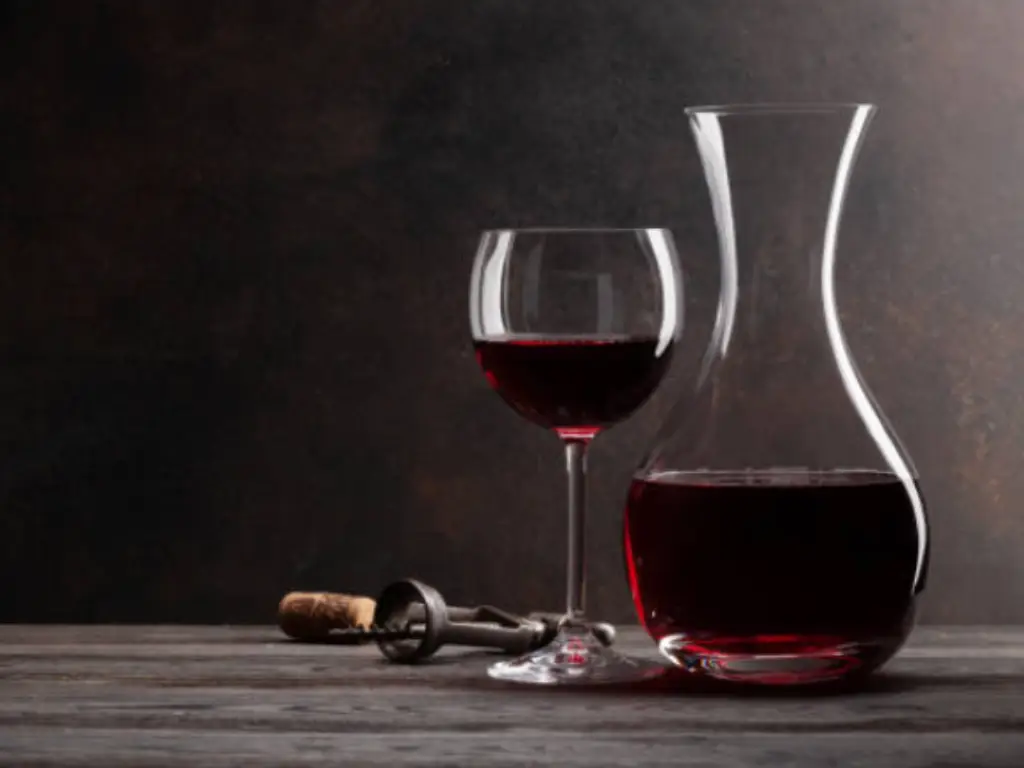
To permanently resolve the confusion, we must understand that form exclusively follows function. A carafe is fundamentally designed as a Transporter—engineered to move liquids efficiently from point A to point B without altering their state. Conversely, a decanter serves as a Transformer—a passive machine constructed with specific geometric ratios intended to force a chemical and physical evolution upon the liquid it holds.
The 5 Core Differences at a Glance
- Primary Purpose: Carafes are built for rapid displacement and high-volume serving; decanters are built for intense aeration and the meticulous separation of sediment.
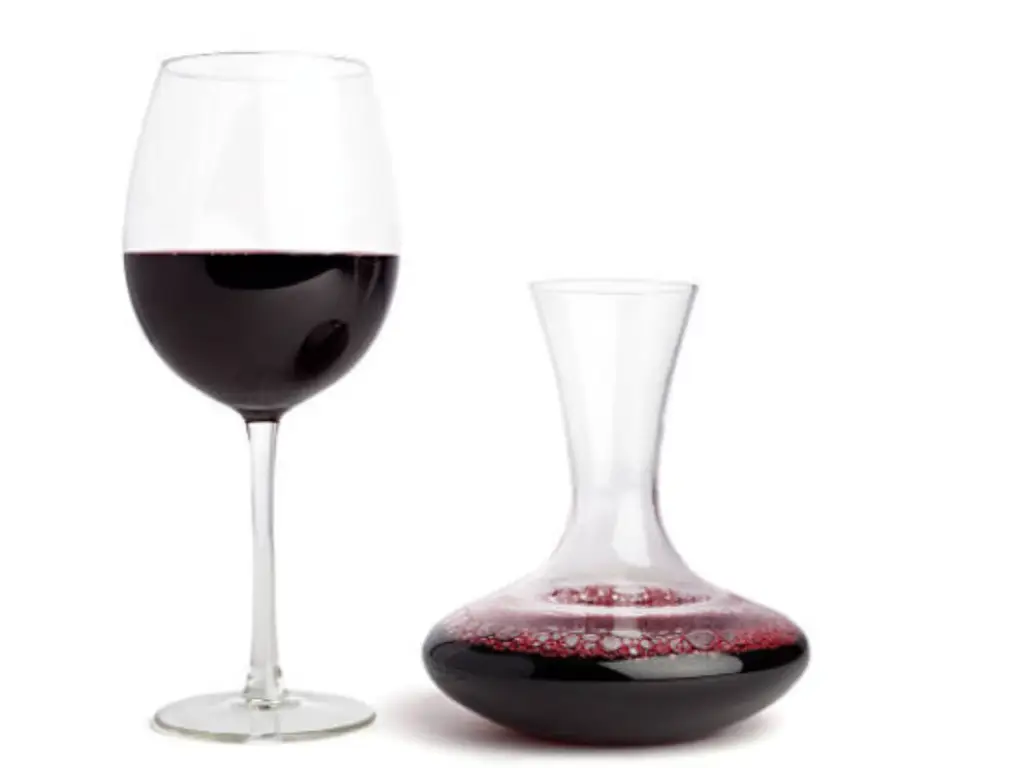
- Base Geometry: Carafes utilize a straight, cylindrical, or slightly flared base to save space; decanters feature an exaggerated, sweeping wide bottom to spread the liquid thin.
- Air-to-Liquid Ratio: Carafes intentionally minimize oxygen exposure; decanters mathematically maximize surface area to initiate chemical oxidation.
- The Stopper Factor: Carafes are universally open-top to facilitate immediate consumption; decanters frequently include airtight, heavy glass stoppers to preserve high-proof spirits or halt over-oxidation.
- Ideal Beverage Profile: Carafes excel with water, juices, batched cocktails, and coffee; decanters are the absolute domain of highly tannic young wines and delicate, aged vintages.
The Carafe: The Efficient Transporter
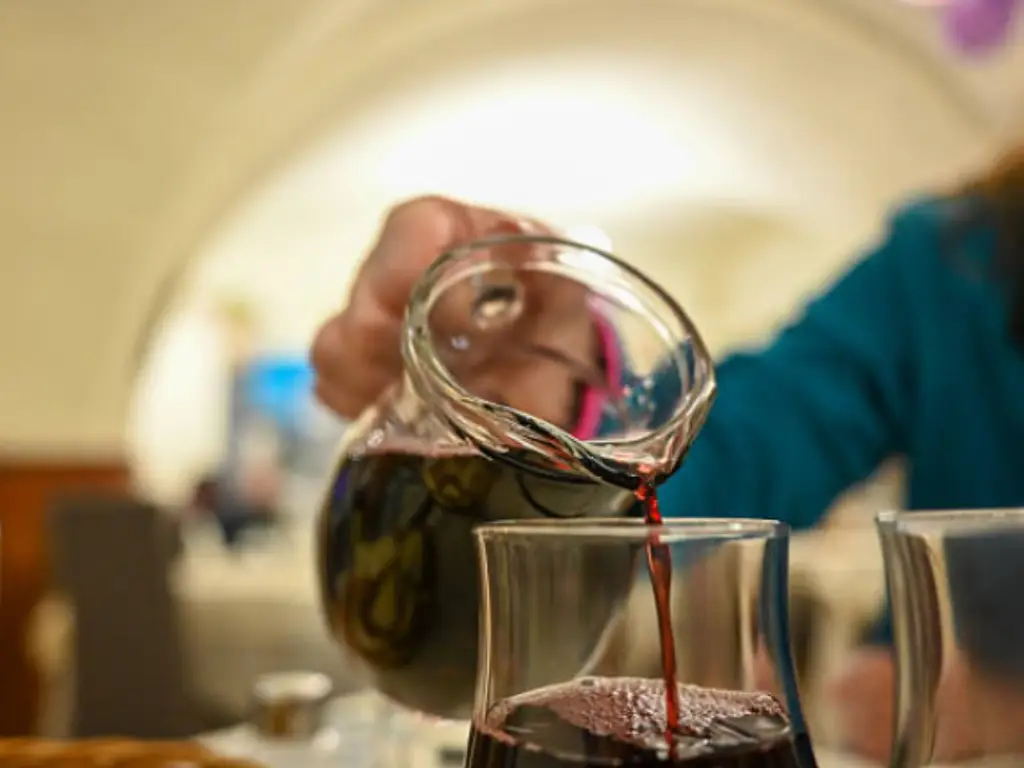
The carafe traces its lineage to the practical needs of bustling European bistros. Designed for absolute operational efficiency, the carafe acts as a seamless conduit. Its defining characteristic is its deliberate lack of chemical intervention. The structure typically features a vertical body that is effortless for a server or guest to grip single-handedly. By employing an inline pouring angle and maintaining a uniform width from base to neck, the carafe allows for high-frequency, drip-free service. When a waiter needs to quickly replenish water glasses across a ten-top table, the carafe’s predictable fluid displacement ensures the liquid pours immediately upon tilting, eliminating the awkward delay inherent in wider vessels.
The Decanter: The Liquid Transformer
A decanter, in stark contrast, is deeply rooted in the alchemy of winemaking. It is not designed to be held casually. The wide base of a standard red wine decanter is calculated to achieve an extreme Surface-Area-to-Volume Ratio. When a tight, young Cabernet Sauvignon is poured inside, the expansive geometry spreads the wine into a thin pool, forcing massive interaction with ambient oxygen. This sudden hyper-aeration accelerates the evaporation of volatile sulfides (which often smell like struck matches or cabbage in newly opened bottles) and initiates the polymerization of harsh, astringent tannins, rendering the wine velvety on the palate.
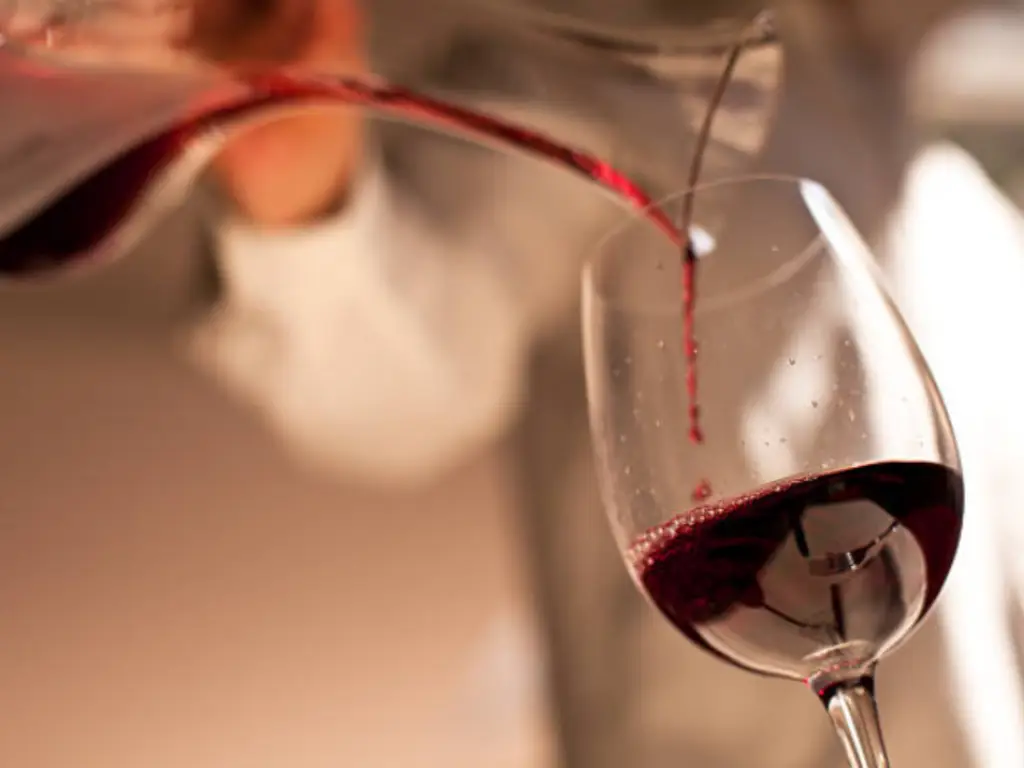
Simultaneously, the decanter’s slender, elongated neck is not merely decorative; it functions as a precise optical window. When dealing with an aged Bordeaux, a sommelier will place a light source (traditionally a candle) beneath the neck during the pour. The narrow channel allows them to spot the dark, muddy tartrate crystals and sediment rushing toward the opening, allowing them to stop the pour before the grit ruins the final glass.
| Analytical Dimension | Carafe (The Transporter) | Decanter (The Transformer) |
|---|---|---|
| Architectural Intent | High-frequency serving & seamless liquid displacement | Chemical aeration & precise physical sediment separation |
| Neck Morphology | Wide open, optimized for rapid filling and cleaning | Narrow, optimized for optical clarity, grip, and vapor trapping |
| Base Proportion | Vertical or subtly tapered; minimizes footprint on crowded tables | Expansive and asymmetrical; maximizes liquid spread and oxidation |
| Oxygen Interaction | Minimal to moderate (preserves temperature and carbonation) | Maximum (forces structural changes in polyphenols and tannins) |
| Cleaning Difficulty | Low (Often commercial dishwasher safe depending on material) | Extreme (Requires specialized friction, totally inaccessible by hand) |
The Ultimate Selection Logic: Which Vessel Do You Actually Need?
Eliminating selection anxiety requires abandoning aesthetic preference and embracing operational logic. Your choice of vessel should be dictated entirely by the fluid dynamics required for your specific beverage and the environmental demands of your service setting. Utilizing an “If-Then” decision matrix ensures flawless execution.
Scenario A: High-Volume Serving (Water, Juice, Batched Cocktails)
If your goal is quick table turnover, hosting a high-volume Sunday brunch, or serving iced water in a busy dining room, the Carafe is your mandatory selection. The straight walls allow for rapid pouring and easy storage in commercial refrigerators.
⚠️ Critical Question: Can you serve water in a decanter? You physically can, but it is an operational disaster. When you tilt a wide-base decanter, the massive volume of water must travel from the back of the bowl to the narrow neck, creating a frustrating delay before the water actually pours. Furthermore, serving hard water in a decanter guarantees the formation of inaccessible limescale and calcium rings deep within the bowl, permanently ruining the vessel’s optical clarity for future wine service.
Scenario B: Tannic Softening and Sediment Separation (Wines & Aged Spirits)
For fine dining environments and high-net-worth scenarios, the Decanter transitions from a mere container to a premium value multiplier. The theater of decanting justifies higher price points and elevates the sensory experience. However, careful matching is required. Young, highly tannic wines (like Barolo or young Syrah) demand a hyper-wide base to force aggressive oxygenation. Conversely, delicate, aged wines (15+ years old) require a narrow-base decanter (often called a duck decanter); here, the goal is purely to separate the sediment while carefully protecting the fragile, fading aromatics from over-oxidation.
The Gray Area: Can You Flash-Decant in a Carafe?
A highly debated topic among casual enthusiasts is the feasibility of “Flash Decanting” everyday, inexpensive table wines using a standard carafe. This is a viable gray-area tactic, but it is strictly governed by physical boundaries.
⚠️ The 1/3 Volume Rule: You must never fill the carafe beyond one-third of its maximum capacity. Because the straight-wall design lacks the expansive swirling room of a decanter, attempting to agitate a full carafe will instantly result in the liquid sloshing over the top.
The Quantitative Benchmark: If you adhere to the 1/3 rule, vigorously swirling the wine inside the carafe for 2 uninterrupted minutes yields an oxidation effect roughly equivalent to allowing the wine to rest statically for 15 minutes in a standard wide-base decanter. It is a crude but effective method for softening cheap, tight Pinot Noirs in a pinch.
Material Science & Sourcing: The Hidden ROI in Commercial Glassware
Shape dictates a vessel’s function, but its atomic material composition dictates its survival. In high-volume commercial environments, failing to align the glass chemistry with the vessel’s operational reality leads to catastrophic breakage rates and bloated procurement costs.
Why Material Dictates Application: Crystal vs. Borosilicate
The operational lives of carafes and decanters could not be more different. Carafes are the workhorses of the industry. Tasked with handling everything from ice-cold citrus juices to steaming hot coffee, they lean heavily on high-borosilicate glass. This material contains boron trioxide, which drastically lowers the coefficient of thermal expansion, allowing the carafe to survive brutal thermal shocks without fracturing.
Decanters, however, operate in the realm of luxury, where optical clarity is paramount. They require lead-free crystal (where traditional lead oxide is replaced with barium oxide, zinc oxide, or potassium oxide). This substitution achieves two critical goals: it provides the high refractive index necessary to make ruby red wines visually brilliant under dining room lighting, and it provides the structural integrity required to laser-cut an ultra-thin, cold-cut rim—the secret to slicing through the wine for a perfectly drip-free pour.
Conquering the Decanter Manufacturing Bottleneck
The Total Cost of Ownership (TCO) Reality
Ordinary crystal vessels often succumb to micro-cracking after merely fifty cycles in a commercial dishwasher, inflicting a staggering thirty percent annual replacement rate that silently drains hospitality budgets. Nuvole Glass obliterates this total cost of ownership paradox by focusing its proprietary engineering exclusively on the manufacturing bottlenecks of ultra-premium decanters. Rather than relying on standard glassblowing, Nuvole’s mold engineers utilize high-precision thermodynamic blow control to conquer the notorious “uneven thickness” flaw inherent in asymmetric, wide-base designs. This exacting thermal mastery not only ensures maximum geometric surface area for optimal wine oxidation but is seamlessly paired with advanced fluid dynamics modeling to execute a razor-sharp, flawlessly drip-free cold-cut rim. By drastically reinforcing thermal shock resistance without sacrificing optical brilliance, Nuvole provides brand owners and fine dining establishments with bespoke OEM/ODM decanters that elevate the sensory experience while slashing annual procurement replacement costs by at least forty percent.
Master-Level Cleaning and Maintenance SOP
The most frequent, unseen point of failure in premium beverage management isn’t breakage; it is improper cleaning. The residues left behind by amateur washing techniques will irreparably destroy the aromatic profile of the subsequent pour.
Conquering the Decanter: The Cleaning Bead Method
⚠️ CRITICAL WARNING: Never, under any circumstances, use liquid dish soap to clean a wide-base decanter. Commercial dish soaps rely on heavy surfactants and synthetic fragrances. Because a decanter cannot be scrubbed by hand, these chemical surfactants cling to the microscopic pores of the crystal. When the next vintage is poured, the residue breaks the wine’s surface tension and entirely masks its delicate, volatile aromatics. You must rely purely on physical friction.
The Activation
Immediately after service, pour a handful of specialized stainless steel cleaning beads (often called decanter balls) into the vessel. Follow this with a cup of warm, purified water. Never use boiling water, as extreme localized heat can compromise even high-quality crystal.
The Physical Vortex
Hold the decanter firmly by the neck and swirl it vigorously in a tight, circular motion. The physical friction of the stainless steel beads rolling against the glass acts as a micro-sandblaster, gently but aggressively stripping away stubborn anthocyanins (red wine stains) and crystalline tartrate buildup without scratching the crystal.
Extraction & Inverted Drying
Carefully pour the beads into a fine mesh strainer for reuse. Finally, invert the decanter onto a specialized, rubber-tipped vertical drying rack. This prevents water from pooling in the wide base, ensuring the vessel dries completely spot-free and odorless, ready for the next service.
Commercial Protocols for High-Volume Carafes
While carafes are structurally simpler to clean, their high turnover rate introduces a different enemy: the dreaded “water spot.” Because carafes are washed in bulk, commercial setups must utilize an inline water softening system to strip calcium and magnesium from the water supply. Post-wash, carafes must be inverted immediately. Before hitting the dining room floor, they require polishing with a lint-free microfiber cloth over a plume of live steam to ensure a flawless, fingerprint-free presentation that communicates absolute hygiene to the guest.
Conclusion: Making the Right Investment
Choosing between a carafe and a decanter is ultimately an exercise in defining your operational intent. If your mandate is to transport liquids swiftly and cleanly without altering their fundamental chemistry, you require the straightforward, durable geometry of a carafe. However, if your objective is to command a premium at the table by softening harsh tannins, separating sediment, and elevating the sensory profile of a fine wine, you absolutely require the transformative power of a meticulously crafted decanter.
Elevate Your Beverage Program
Stop allowing fragile, poorly engineered glassware to inflate your replacement budgets and compromise your service standards. If your brand or establishment demands commercial-grade decanters that deliver flawless optical clarity, drip-free fluid dynamics, and a drastically compressed breakage rate, it is time to upgrade your sourcing.
Consult Nuvole Glass Experts