In the competitive landscape of premium beverages and cosmetics, your packaging is your silent ambassador. A custom glass bottle communicates heritage and quality before the consumer even opens the cap. However, navigating the custom glass manufacturing supply chain is fraught with pitfalls—from trading companies posing as factories to exorbitant hidden mold fees and unrealistic Minimum Order Quantities (MOQs).
This guide is designed to dismantle the information asymmetry in the glass packaging industry. We will dive deep into the engineering limits of custom glass, break down the real-world costs of mold development, and provide an objective review of the top 6 custom glass bottle manufacturers worldwide. Whether you are launching a boutique fragrance line or scaling a global spirits brand, this analysis will equip you with the hard data needed to secure your supply chain.
Demystifying Custom Glass: Quality Standards and Design Limits
A common misconception among brand owners is that any conceptual design drawn by a branding agency can be seamlessly translated into a mass-produced glass bottle. The reality of glass manufacturing is governed by strict physics, thermodynamics, and fluid dynamics. To evaluate a manufacturer’s true capability—and to avoid catastrophic failures during the filling process—you must understand the core quality standards and design limits that dictate glass production.
The difference between a premium custom bottle and a cheap imitation lies in the invisible details. Before you even discuss pricing with a supplier, you must assess their engineering capabilities through four critical parameters:
- Glass Distribution and Wall Thickness: A beautifully designed bottle is useless if it shatters on the bottling line. Proper glass distribution refers to the uniform thickness of the glass walls, particularly at stress points like the shoulder and the heel (bottom) of the bottle. Inferior manufacturers struggle with complex shapes—especially square or asymmetrical designs—resulting in thin, fragile corners. A highly capable manufacturer utilizes advanced gob (molten glass) delivery systems and precise mold temperature controls to ensure a uniform distribution, drastically reducing breakage rates during transit and filling.
- Clarity and Seed Limits (Flint Glass Purity): For cosmetics and premium spirits, the visual purity of the glass is paramount. Extra flint (Super Flint) glass must be crystalline. However, poor raw material mixing or inadequate furnace temperatures can lead to defects known as “seeds” (tiny gas bubbles) and “stones” (unmelted silica particles). Top-tier factories have stringent optical sorting machines and strict tolerance limits for these imperfections, ensuring your product’s color and texture are showcased without distortion.
- Dimensional and Neck Finish Tolerances: The neck finish is arguably the most critical engineering aspect of your custom bottle. If the mold tolerances are loose, the threading or corkage will deviate by even a fraction of a millimeter. This leads to misaligned closures, catastrophic leaks during shipping, and costly product recalls. Elite manufacturers maintain neck finish tolerances within ±0.3mm or tighter, guaranteeing compatibility with automated high-speed capping machinery and preventing oxygen ingress that could spoil your product.
- Thermal Shock and Internal Stress: Glass naturally develops internal stress as it cools from a molten state. If not properly cooled in an annealing lehr, the bottle will contain immense residual stress, acting like a ticking time bomb. A sudden temperature change—such as hot-filling a beverage or transitioning from a cold warehouse to a warm truck—will cause the bottle to spontaneously shatter. Leading manufacturers rigorously perform thermal shock tests (typically requiring stability across a ΔT of 42°C or more) and use polariscopes to verify that internal stress has been completely neutralized.
Understanding these technical boundaries transforms you from a vulnerable buyer into a sophisticated procurement expert. It empowers you to demand testing data and quality control protocols from potential suppliers, ensuring that your custom design is not just visually striking, but structurally flawless.
Exposing the Hidden Costs: Molds, MOQs, and a Real-World Calculation
The most guarded secrets in the glass packaging industry revolve around pricing structures. When requesting a quote for a custom bottle, buyers are often hit with a sticker shock regarding mold development fees and astronomical Minimum Order Quantities. To make strategic financial decisions, you must look under the hood of the manufacturing process and understand the economic logic driving these numbers.
Deconstructing the Price Tag: Why Molds and MOQs Matter
Why does a custom mold cost thousands of dollars, and why won’t most factories produce a run of just 5,000 bottles? The answers lie in the heavy industrial nature of glassmaking.
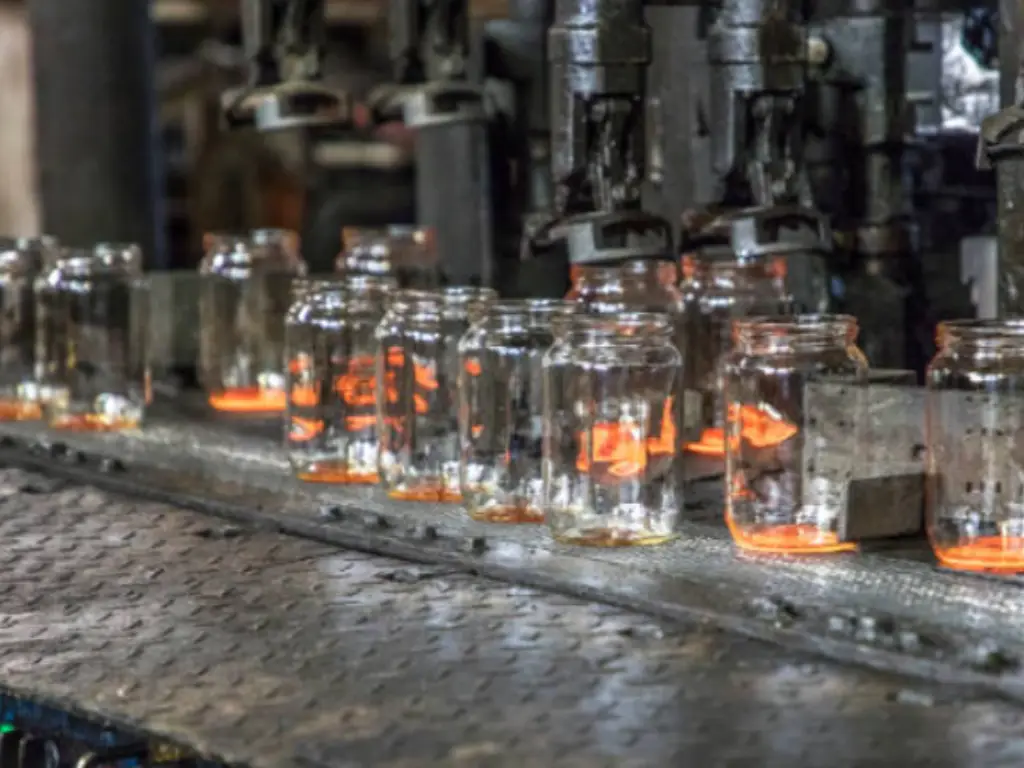
Firstly, a “mold” is not a single piece of equipment. In modern I.S. (Individual Section) machine production, a complete mold set consists of blank molds, blow molds, neck rings, baffles, and bottom plates. These components are precision-engineered via CNC machining from high-grade cast iron or bronze alloys to withstand molten glass at temperatures exceeding 1,100°C. Furthermore, to achieve commercial production speeds, a factory doesn’t just make one mold; they manufacture multiple cavities (often 6, 8, or 12 sets) to run simultaneously on the machine. You are paying for a complex suite of metallurgical engineering, not just a simple cast.
Secondly, the physics of the glass furnace dictate the Minimum Order Quantity (MOQ). A commercial glass furnace holds hundreds of tons of molten glass and operates 24 hours a day, 365 days a year. It cannot be turned off. Stopping a production line to change out heavy molds, calibrate the machinery, and stabilize the drop weight of the glass gob takes several hours. During this changeover, raw materials and immense thermal energy are completely wasted. For a factory to justify halting a continuous line, the subsequent production run must be large enough to absorb that downtime cost. This is the absolute physical reality behind the 50,000 to 100,000+ unit MOQs demanded by major global players.
The Real-World Sandbox: Cost Breakdown of a Custom Bottle
To eliminate ambiguity, let us simulate a real-world cost breakdown for a standard 750ml custom-shaped premium spirit or beverage bottle. While exact prices fluctuate based on design complexity and global metal index prices, the following timeline and budget structure represents the industry standard for a legitimate OEM process.
Before any metal is cut, the 2D concept must be translated into a 3D technical drawing that accounts for volumetric capacity, headspace, and structural integrity. Once approved, factories will produce a 3D-printed resin or acrylic prototype. This allows brand owners to physically hold the bottle, test the ergonomics, and apply preliminary labels.
Estimated Cost: $200 – $500.
This is a critical risk-mitigation step. The factory cuts a single-cavity test mold (sample mold) and runs it on the production line to create 50 to 100 actual glass samples. This stage proves the manufacturability of the design, reveals any glass distribution issues, and provides physical units for the buyer to test on their automated capping and filling lines.
Estimated Cost: $1,000 – $1,800.
Once the glass samples are approved, the factory proceeds to CNC machine the full set of production molds required for mass manufacturing. Depending on the size of the bottle and the configuration of the I.S. machine, this involves cutting multiple identical mold cavities.
Estimated Cost: $3,000 – $7,000+ (Highly intricate designs with complex embossing may push this higher).
Top Custom Glass Bottle Manufacturers Worldwide
Disclaimer: The profiles listed below are based on comprehensive public market feedback, industry averages, and supply chain reports. Buying decisions should always be based on the specific requirements, scale, and timeline of your unique project.
Verescence
Verescence stands as the undisputed global titan in the realm of luxury perfumery and high-end cosmetics glass packaging. With a heritage rooted deeply in the French glassmaking tradition, they are the trusted manufacturing partner for the world’s most prestigious luxury conglomerates, including LVMH, Chanel, and L’Oréal. Their mastery over Extra-Flint glass composition results in bottles that exhibit a crystal-like brilliance, perfectly showcasing premium fragrances and serums. Beyond structural manufacturing, Verescence leads the industry in eco-conception and advanced decoration techniques, offering unparalleled interior lacquering, sophisticated metallization, and intricate hot stamping.
Because Verescence is built to service colossal, high-volume production runs for global giants, they are best suited for established enterprise brands with extended forecasting horizons. Buyers preparing to engage with them should anticipate high Minimum Order Quantities (MOQs) and extended lead times for custom mold development. Success here requires substantial upfront capital and a supply chain strategy that can accommodate long-term scheduling and large-scale inventory management.
Heinz-Glas
Originating from Germany and boasting centuries of family-owned glassmaking history, Heinz-Glas is a powerhouse in the cosmetics and fragrance sector. They are globally renowned for their relentless commitment to technological innovation and precision engineering. Heinz-Glas excels in producing technically complex shapes and executing flawless surface treatments. Their in-house decoration capabilities are vast, ranging from soft-touch frosting and precise screen printing to cutting-edge laser engraving. Furthermore, they are pioneers in sustainable glass production, heavily investing in electric furnaces and high-percentage PCR (Post-Consumer Recycled) glass solutions.
Heinz-Glas is an ideal partner for mature brands prioritizing premium European engineering and sustainable practices. Due to their focus on fulfilling large-scale contracts for global beauty giants, buyers should be prepared for premium pricing structures and substantial initial mold investments. Brands looking to partner with them need a well-defined product roadmap, as their traditional manufacturing framework requires rigid contractual terms and significant MOQs, making them perfectly fitted for high-volume, long-term production rather than rapid market testing or agile pivots.
Vetropack
Headquartered in Switzerland, the Vetropack Group is one of Europe’s leading manufacturers of glass packaging for the food and beverage industry. With multiple production sites strategically distributed across Central and Eastern Europe, they are a dominant force in supplying high-quality standard and custom bottles for wine, beer, spirits, and culinary products. Vetropack is highly respected for its robust, reliable production lines and its industry-leading sustainability initiatives, particularly its mastery in integrating high volumes of cullet (recycled glass) into its furnaces to dramatically reduce the carbon footprint of its packaging.
Vetropack is perfectly positioned for large-scale food and beverage brands operating within or near the European market. Buyers outside of this region should carefully calculate cross-continental freight logistics before committing. Furthermore, their facilities are heavily optimized for high-volume, standard-to-premium containers. Therefore, clients should approach Vetropack when their projects require massive scale, consistent high-speed filling line performance, and reliable execution, rather than highly bespoke, low-volume custom geometries with intricate deep-processing decorations.
Orora
Orora is an absolute juggernaut in the Southern Hemisphere, dominating the packaging supply chain for the booming Australian and New Zealand wine, beer, and beverage markets. They operate highly sophisticated, automated glass manufacturing facilities designed for immense throughput and pinpoint consistency. Orora is heavily relied upon by global wine conglomerates for their ability to deliver millions of units of flawlessly uniform bottles, ensuring zero downtime on high-speed filling lines. They also offer comprehensive packaging solutions, integrating glass production with closures and corrugated shipping boxes.
Orora is the ultimate destination for large-scale beverage and wine conglomerates looking to standardize their packaging with absolute consistency. Because their factory setups are engineered for long, uninterrupted automated runs, brands should prepare for exceptionally high MOQs on new private molds. They are best suited for companies situated in the Asia-Pacific basin, or global brands whose volume is large enough to comfortably absorb the logistical planning and cross-continental shipping required to move heavy glass pallets efficiently.
PGP Glass
Formerly known as Piramal Glass, PGP Glass is an Indian multinational that has successfully positioned itself as a critical global hub for cosmetics, perfumery, and pharmaceutical glass packaging. They bridge the gap between high-end European quality and Asian manufacturing economics. PGP boasts an enormous capacity and a vast library of existing molds, while also excelling in custom Private Mold development. They have heavily invested in state-of-the-art decoration facilities, offering everything from acid etching to intricate printing, making them a go-to supplier for mid-to-large tier global beauty brands seeking cost-effective luxury.
PGP Glass is highly recommended for mid-to-large tier global beauty and pharmaceutical brands seeking to balance premium quality with manufacturing economics. To maximize the value of this partnership, buyers should deploy a robust internal project management team. While they execute standard designs flawlessly, clients bringing highly unconventional custom geometric shapes should build extra time into their schedules for multiple sampling rounds to perfect tolerances. Additionally, dedicated logistics planning is essential to smoothly manage transit from their Indian facilities to Western markets.
Nuvole
Operating as a premier source-factory out of Asia with a robust global delivery network, Nuvole specializes in providing comprehensive, end-to-end custom glass packaging solutions. Dedicated to serving boutique brands, medium-to-large distilleries, and high-end cosmetic lines, Nuvole ensures uncompromising quality across every phase of production. Their core strength lies in Agile Manufacturing and Rapid Prototyping. From initial concept design to final mass production, Nuvole’s in-house engineering team seamlessly accelerates 3D modeling and sample mold production, drastically shortening a brand’s time-to-market. Furthermore, they provide a highly transparent, pro-buyer financial structure: offering flexible, realistic MOQs and structured Mold Fee Refund Policies once cumulative order volumes are met, effectively optimizing the long-term ROI for custom molds.
Beyond structural manufacturing, Nuvole empowers buyers by allowing direct collaboration with technical engineers to resolve complex tolerance issues and execute sophisticated deep-processing decorations—including multi-pass silk screening, frosting, electroplating, and high-temperature decals—in real-time. Operating strictly as a dedicated B2B OEM/ODM powerhouse in the background, Nuvole focuses entirely on elevating their clients’ brands rather than building their own consumer-facing recognition. For procurement directors focused on supply chain efficiency, transparent communication, and flawlessly executed premium glass packaging, Nuvole’s dedication to manufacturing excellence and comprehensive quality control makes them an ultimate strategic partner for scaling businesses globally.
The Buyer’s Defense: Avoiding Trap Suppliers and Verifying Quality
The global marketplace is saturated with “trading companies” posing as direct manufacturers. Engaging with a middleman for a custom glass project is a recipe for disaster. It artificially inflates your unit costs, creates a dangerous game of telephone regarding complex engineering specifications, and leaves you with zero accountability if a mold fails or a batch arrives with critical defects. As a buyer, you must deploy a defensive auditing strategy to verify you are dealing directly with the source.
To penetrate the facade of a trading company and verify a factory’s true capabilities, you must ask highly specific, technical questions that a mere salesperson cannot answer without consulting an engineer. Here is your supplier verification checklist:
- Demand to See the Mold Shop: Do not just ask for pictures of glass bottles. Ask for live video footage or detailed documentation of their CNC mold-making facility. A true custom manufacturer has direct control over their mold tooling. If they have to “outsource the mold creation,” you are likely dealing with a broker or a lower-tier factory with no real engineering authority.
- Interrogate the Annealing Process: Ask them about their annealing lehr temperatures and the transit time of the glass through the cooling phase. Request their standard operating procedures for polariscope testing to check for internal stress. A legitimate factory will immediately provide thermal stability data (e.g., ΔT thresholds) rather than vague promises of “good quality.”
- Define the Tolerance Agreement: Before paying a single dollar for a prototype, demand a binding technical drawing that explicitly lists the acceptable tolerances for the overall height, body diameter, and most importantly, the neck finish (e.g., ±0.25mm). If a supplier is hesitant to commit to tight, written mechanical tolerances, walk away immediately. They lack the machinery precision required for premium packaging.
- Audit the Deep Processing Ecosystem: Custom bottles often require frosting, electroplating, or decal baking. Ask if these secondary processes are done in-house or outsourced to a third-party workshop. While outsourcing secondary processing is common, a top-tier manufacturer will have an ironclad QA protocol governing these third-party workshops, ensuring the scrap rate doesn’t destroy your final yield.
By shifting the conversation from “How much does it cost?” to “How do you control your manufacturing variables?”, you instantly command respect and filter out the opportunistic middlemen.
Conclusion: Securing Your Packaging Supply Chain
The journey from a conceptual sketch to a pallet of flawless custom glass bottles is an industrial marathon that requires more than just aesthetic vision. Success in custom packaging relies on understanding the strict physical limits of glass production, the genuine economic drivers behind mold fees and MOQs, and the ability to rigorously audit suppliers to avoid opportunistic middlemen. Ultimately, securing your packaging supply chain comes down to identifying a manufacturing partner whose engineering capabilities, quality control standards, and production agility perfectly align with your brand’s specific project demands and long-term growth strategy.