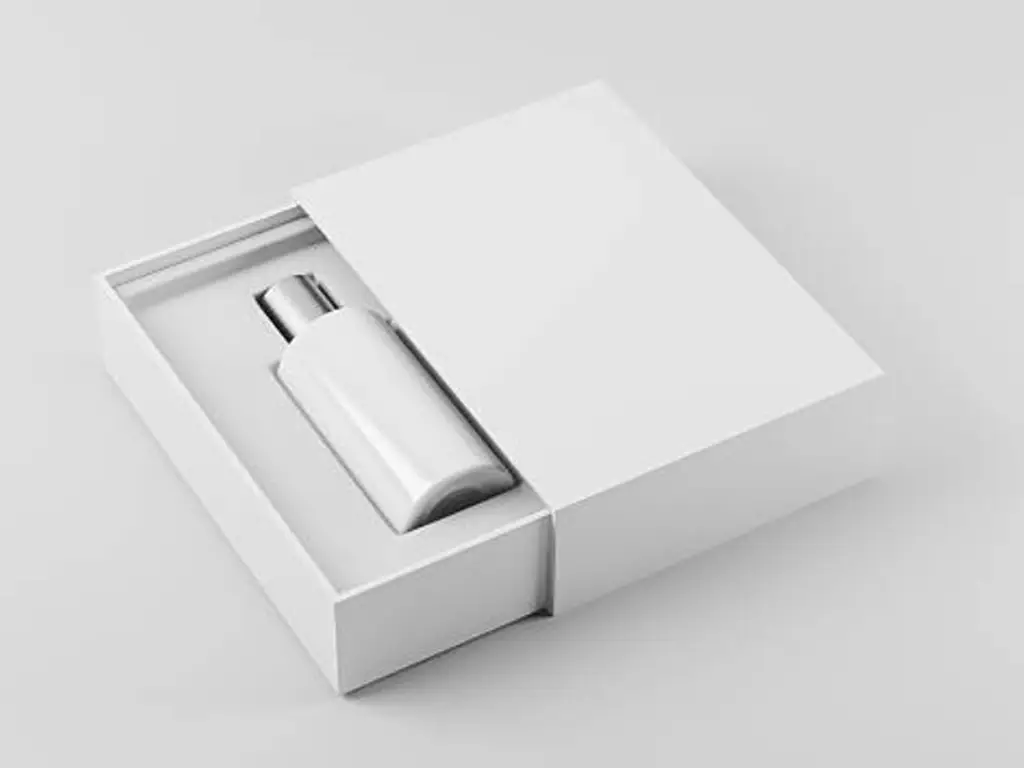
Introduce: In the hyper-sophisticated 2026 fragrance market, packaging is no longer a passive vessel but the primary architect of a brand’s “Perceived ROI.” This comprehensive technical audit deconstructs the essential intersection between material science, emotional branding, and industrial feasibility. For B2B procurement heads and brand founders, navigating the complex matrix of high-density alloys, bio-polymers, and structural engineering is the only way to safeguard margins while delivering the visceral “unboxing theater” that modern luxury consumers demand.
The Strategic Persona Audit: Identify Your Packaging Matrix
Every successful fragrance launch begins with a rigorous Strategic Persona Audit. Brands often fall into the trap of “design drift”—selecting high-cost materials that do not align with their distribution logistics or target consumer psychology. In 2026, we categorize fragrance ventures into three distinct packaging matrices, each requiring a specific balance of durability, weight, and visual impact:
- Digital-First Startups: These brands thrive on social-media-driven unboxing rituals. Their packaging must be “Camera-Optimized”—utilizing high-contrast textures and high-white SBS boards that provide 100% color fidelity for smartphone lenses. The primary ROI here is measured by User-Generated Content (UGC) virality and a sub-1.5% breakage rate in high-velocity D2C shipping networks.
- Luxury Niche Houses: For these players, “Tactile Grounding” is the primary currency. The focus is on the physical heft of the product—using heavy Zamac caps and dense 2400 GSM rigid boards to subconsciously promise high-end olfactive longevity. The packaging acts as a physical anchor for a $300+ retail price point.
- Global Mass-Retail: Efficiency and “High-Speed Machinability” are the KPIs. Materials must be optimized for automated cartoning and over-wrapping machines, prioritizing high-yield throughput and lightweighting to reduce global carbon footprints while maintaining immediate retail shelf-presence.
2026 Global Design Trends: Aesthetic Impact vs. Commercial ROI
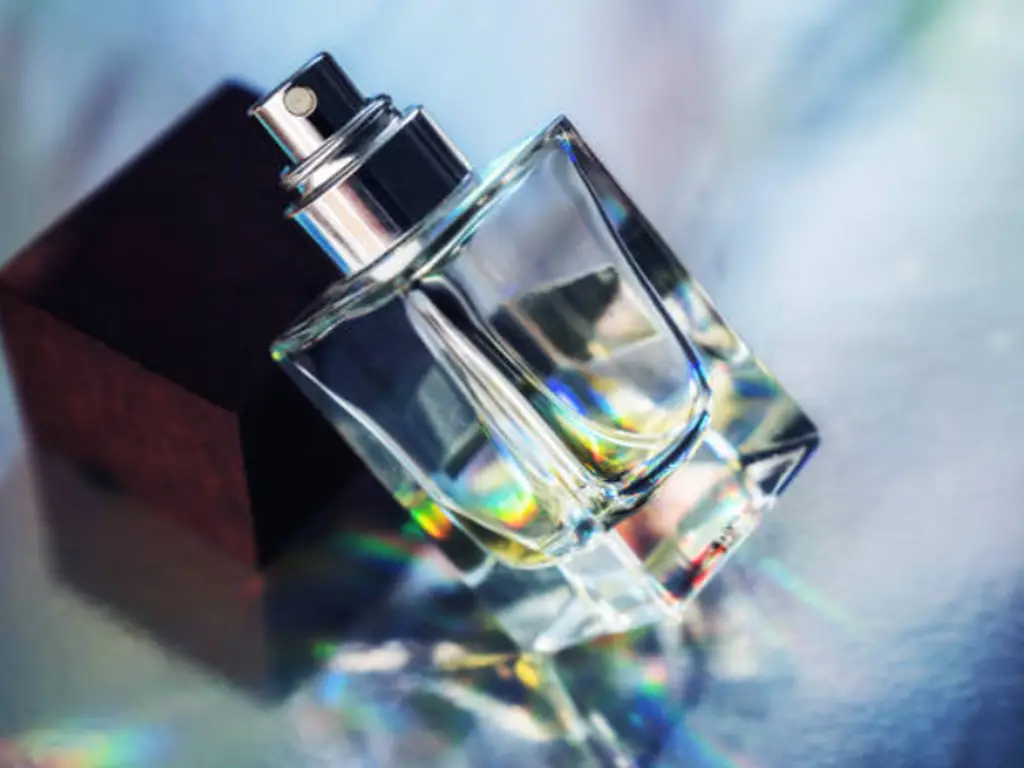
The design trends of 2026 are defined by “Active Interaction.” It is no longer enough for a box to look premium; it must perform a psychological function. For B2B buyers, the challenge is calculating Visual ROI: the ratio of perceived brand value increase relative to the technical complexity and scrap rate of production. Modern trends emphasize architectural geometries and tactile storytelling over generic ornamentation. Achieving this delicate balance between striking aesthetics and manufacturability requires a deep understanding of the art and engineering of perfume bottle designs.
| 2026 Trend Name | Visual Impact / Visual Cost | Commercial ROI Logic | Target Persona |
| Kinetic Structuralism | Extreme / High Die-Cut Cost | Triggers 5x higher viral social sharing via unique, mechanical opening sequences. | Digital-First Startups |
| Hyper-Tactile Minimalism | High / Medium Finishing Cost | Increases shelf-dwell time by triggering the “touch-and-hold” instinct. | Luxury Niche Houses |
| Bio-Futurism | Moderate / Variable Cost | Justifies premium pricing through documented ESG compliance. | Clean Beauty / Mass Retail |
Sustainable Maximalism: The Fusion of High Art and Eco-Consciousness
Sustainable Maximalism rejects the “minimalist brown box” stereotype, proving that environmental responsibility can be visually opulent. This 2026 innovation is powered by Soy-Based High-Saturation Inks. Unlike traditional petroleum inks, these vegetable-derived binders carry a 30% higher pigment load, enabling vibrant Pantones and neon effects that are 100% biodegradable. Furthermore, the trend relies on Glue-Free Origami Engineering. Advanced CAD die-cutting allows for complex rigid boxes to be constructed using only interlocking tabs and mechanical friction. This eliminates hot-melt adhesives—the primary contaminant in paper recycling streams—allowing brands to provide a sophisticated, puzzle-like unboxing experience that is as ecologically honest as it is beautiful.
Core Materials: Navigating Perceived Value and Scalability
Selecting the core materials for a perfume launch is a delicate balance of Tactile Psychology and Chemical Inertia. In 2026, the material matrix includes everything from heavy-weight alloys to bio-engineered resins. Every gram and every micron must be audited against its ability to protect the fragrance while justifying its price point. Procurement must look at the “Hand-Feel Score” as a measurable commercial metric.
| Core Material | Tactile & Visual Profile | Physical & Chemical Advantage | Unit Price / Typical MOQ |
| Zamac (Heavy Zinc Alloy) | Cold touch; extreme density and weight. | Subconsciously promises luxury quality. High durability. | High / 5,000 units |
| Surlyn Resin (Techno-polymer) | Crystal transparency; resembles real glass. | Shatterproof; extreme resistance to alcohol/oils. | Medium / 10,000 units |
| Bamboo / Sustainable Wood | Warm, natural wood grains. | Eco-friendly narrative; unique organic texture. | Moderate / 3,000 – 5,000 units |
| Aluminum (Anodized) | Metallic look; lightweight. | Corrosion-resistant; cost-effective metal illusion. | Low-Med / 10,000 units |
| ABS / Acrylic (Metallized) | Shiny finish; highly customizable. | Mass-market champion; extremely low cost. | Low / 20,000 units |
| Rigid Board (2400 GSM) | Sharp corners; solid structural feel. | Provides foundation for heavy luxury flacons. | High / 3,000 – 5,000 units |
Zamac (Heavy Zinc Alloy) remains the “Gold Standard” for niche luxury due to its density (~6.6 g/cm³), providing the “heavy” grounding feel consumers associate with high retail prices. Chemically, however, Zamac requires a PP (Polypropylene) inner liner to prevent ethanol-induced oxidation. Surlyn Resin, an ionomer resin, is the choice for brands like Chanel and Dior; it offers “Glass-like Clarity” with the safety of a polymer, resisting the “crazing” or clouding often seen in cheaper ABS when exposed to fragrance oils.
Bamboo and Sustainable Wood (Ash, Beech, Walnut) require strict Moisture Content Control (8-12%) to prevent cracking or molding during ocean freight. Crucially, from an engineering standpoint, all wooden caps must be equipped with an injected PP (Polypropylene) inner lacing. Without this physical barrier, the porous wood will absorb the fragrance’s ethanol, causing the cap to swell, warp, and ultimately fail on the retail shelf. For brands seeking a metallic aesthetic on a budget, Aluminum Shells offer a tarnish-free alternative, though they lack the psychological “weight” of Zamac.
The Future of Substrates: From FSC-Certified to PCR & Bio-Materials
As sustainability regulations tighten globally, 2026 sees the rise of advanced bio-substrates. While FSC-certified paper is the baseline, true innovation is found in Bagasse (Sugarcane pulp) and Seaweed paper. Bagasse provides a high-opacity, textured finish that mimics premium cotton paper but uses zero virgin tree fibers. Seaweed-based substrates utilize invasive algae to create naturally flecked paper that is entirely compostable. For global houses, PCR (Post-Consumer Recycled) board is the defensive strategy against plastic taxes, often using a “Hybrid Layer” technique—a 100% recycled core wrapped in a virgin FSC sleeve to ensure a flawless, luxury print surface.
Premium Surface Finishing: Tactile Mastery vs. Production Feasibility
Finishing is where the “Silent Sale” is made. The mastery of tactile friction—how a consumer’s finger catches on a debossed logo or glides over a matte coating—is a critical sensory touchpoint. However, B2B procurement must audit every finish for Production Feasibility. High-scrap rates in complex finishes (like multi-level embossing) can destroy margins. The 2026 focus is on achieving complex visual depth with fewer industrial passes.
| Finishing Technique | Tactile & Visual Mastery | Mold Budget (Est.) | Per-Unit Premium |
| Hot Foil Stamping | Metallic brilliance; crisp reflections. | $250 – $600 | $0.15 – $0.40 |
| Deep CNC Embossing | Extreme 3D relief and shadow play. | $500 – $1,200 | $0.12 – $0.25 |
| Soft-Touch Aqueous | Velvety, “skin-like” matte feel. | N/A (Inline) | $0.05 – $0.12 |
| Spot UV (Digital Varnish) | High-gloss contrast on matte base. | Low (Digital) | $0.08 – $0.20 |
| Matte/Gloss Lamination | Protective, uniform finish. | N/A | $0.10 – $0.15 |
| Screen Printing | High ink deposit; textured feel. | $50 – $150 (Screen) | $0.05 – $0.10 |
Eco-Friendly Artistry: Digital Foil and Plastic-Free Soft-Touch Coatings
2026 innovation is led by Digital Cold Foil. Traditionally, metallic decoration required expensive brass dies; Digital Cold Foil uses an inkjet adhesive system to apply foil with microscopic precision without any molds. This allows for serialized packaging and “small-batch” luxury at a fraction of the cost. Simultaneously, the industry is moving toward Plastic-Free Soft-Touch Coatings. Historically, velvety boxes used BOPP plastic films which made recycling impossible. Modern water-based aqueous lacquers now provide that same luxurious, fingerprint-resistant tactile experience while remaining 100% repulpable—a massive win for brands hitting Zero-Plastic Certification targets.
Structural Design & Protection: Engineering for the Unboxing Ritual
Structural design is the “Unsung Hero” of the perfume industry. A stunning box is a liability if the flacon shatters during last-mile delivery. In 2026, structural engineering focuses on Shock-Absorbing Architecture, designed to pass the ISTA 1A Drop Test—a rigorous protocol requiring the packaging to withstand 10 consecutive drops from a height of 76cm (30 inches) onto a hard surface without glass failure or leakage.
The ROI here is found in the massive reduction of damage-related returns and chargebacks, which can erode up to 15% of an indie brand’s net profit. However, achieving this level of bulletproof protection requires more than just thick cardboard; it demands a strategic selection of internal inserts that can dissipate kinetic energy before it reaches the fragile glass.
To help procurement teams navigate these engineering choices, we have benchmarked the primary insert architectures of 2026 based on their cushion coefficients and environmental footprints:
| Insert Material | Cushion Coefficient | Eco-Rating (ESG) | B2B Use Case / Best For |
| Dual-Density Laminated Foam | 9.5/10 (Industrial Peak) | Low (Synthetic Polymer) | Heavy 100ml+ niche flacons; high-risk global D2C shipping. |
| Flocked Blister / Sponge | 8.0/10 (Superior) | Moderate | Prestige gift sets where velvet-touch aesthetics are paramount. |
| Molded Paper Pulp | 7.0/10 (Good) | Extreme (100% Bio) | Clean Beauty brands prioritizing plastic-free certification. |
| Corrugated E-Flute | 6.0/10 (Basic) | High (Recyclable) | Secondary e-commerce mailers or mass-market discovery sets. |
The “Perfect Fit” Secret: Synchronizing Custom Glass Design with Secondary Packaging
The greatest nightmare for a B2B procurement manager is the “Tolerance Gap.” When a brand sources glass bottles from one factory and secondary packaging from another, the minor variations in glass thickness lead to a bottle that either doesn’t fit the tray or rattles inside—negating the impact of the ISTA testing.
Nuvole excels as a premier solution provider by Synchronizing Custom Glass Design with Secondary Packaging. As a premier manufacturer of both high-end glass and luxury boxes, Nuvole ensures that the 3D bottle blueprint and the structural die-lines are developed in perfect synchronization. This zero-tolerance approach ensures a “Hermetic Luxury” feel—a smooth, vacuum-like resistance when the lid is lifted.
Beyond fit, Nuvole ensures Visual Aesthetic Consistency. We perform Cross-Material Color Calibration, ensuring the metallic luster of the Zamac cap perfectly matches the foil on the box and the ink on the bottle. Partnering with Nuvole means a bulletproof supply chain where glass and packaging are engineered as a single, flawless unit, drastically reducing lead times and color-drift risks.
2026 Tech Increment: Smart Supply Chains and Interactive Packaging
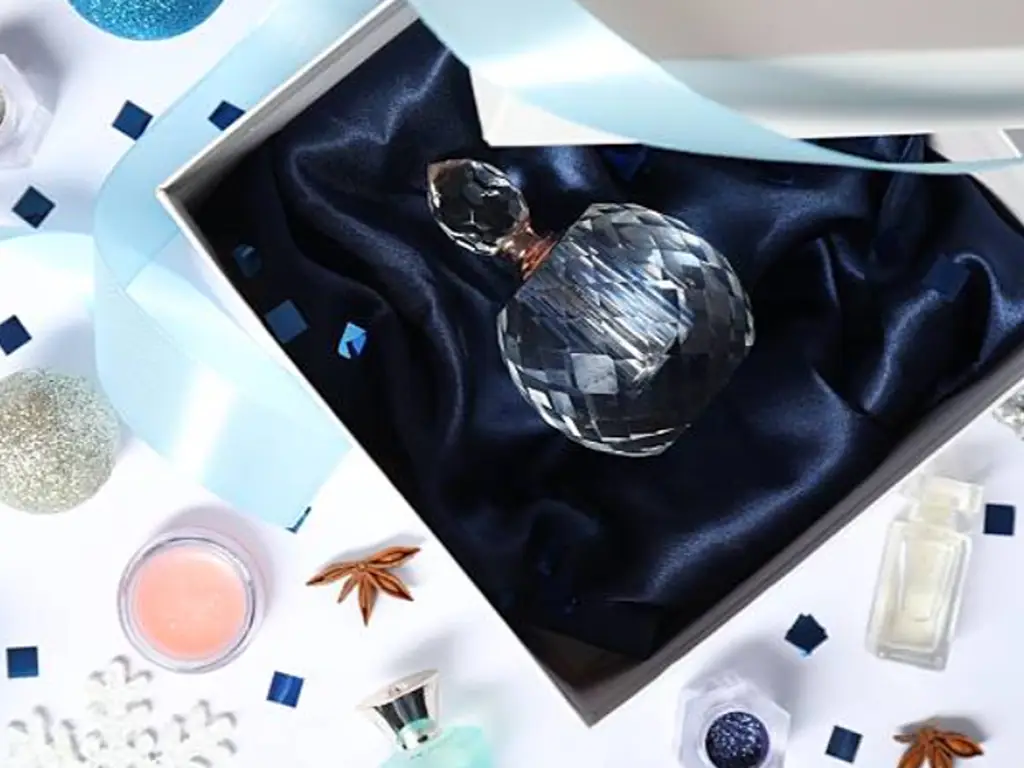
In 2026, perfume packaging has transitioned from a static container into a Digital Data Portal. This technological layer is no longer a luxury “add-on” but a strategic necessity for brands to defend margins, eliminate counterfeits, and own their consumer data. The “Tech Increment” focuses on four high-ROI pillars:
- Encrypted NFC for Anti-Counterfeiting: 2026-grade chips are embedded within Zamac cap liners or rigid boards. Utilizing rolling-code encryption, these non-clonable tags allow distributors and consumers to verify authenticity via smartphone, effectively eliminating gray-market risks.
- “Soil-to-Scent” Blockchain Traceability: Interactive packaging provides a verified audit trail of the fragrance lifecycle. From the harvest date of raw materials in Grasse to FSC-certified paper mill data, this transparency simplifies ESG (Environmental, Social, and Governance) compliance for B2B partners.
- AR-Enhanced Digital Unboxing: By using a smartphone lens, the box’s “Architectural Geometry” triggers immersive AR content—such as 3D scent pyramid visualizations or virtual distillery tours. This turns a static box into a 24/7 digital marketing channel.
- Smart Circularity & Diversion Tracking: Embedded tags track refill cycles for “Scent Fountain” programs and provide real-time batch visibility. This allows Nuvole and brand owners to detect unauthorized channel diversion and monitor CLV (Customer Lifetime Value) through empty-bottle return data.
Sustainability Note: All Nuvole-integrated smart components feature Easy Delamination, ensuring electronic tags are easily separated from paper substrates to maintain 100% recyclability.
While these digital advancements provide the “intelligence” of modern packaging, they are only as effective as the physical craftsmanship they inhabit. The true challenge for 2026 is not just choosing the right tech, but ensuring that every digital interaction is anchored by a flawless technical execution—bringing the brand’s creative vision into perfect alignment with manufacturing reality.
Conclusion: Aligning Your Creative Vision with Technical Reality
The 2026 perfume packaging landscape is ultimately defined by a single, unavoidable truth: Technical Alignment. While an arresting visual aesthetic may successfully trigger the initial purchase, it is industrial precision that guarantees the repeat purchase. To succeed in this hyper-competitive market, brands must master their material matrix and actively move away from fragmented sourcing. By consolidating your supply chain, you ensure that the physical execution perfectly matches the creative vision—eliminating fatal tolerance gaps and cross-material color drift. Ultimately, every seamless “click” of a heavy Zamac cap and every satisfying “snap” of a rigid box acts as a silent, physical promise of quality to your consumer. Once your creative vision is locked in, the next crucial step is finding a reliable partner to bring it to life by reaching out to specialized perfume packaging manufacturers.