Perfume Packaging Trends 2026: Sustainability, Design, and Sourcing
For years, fragrance packaging was decided last: the juice came first, and the bottle arrived as an afterthought. That order has quietly reversed. In 2026, bottles, boxes, and refill systems are increasingly briefed up front. They now carry a brand’s sustainability commitments, wellness positioning, and first impression before a single note is sprayed. Every trend below carries a business consequence: a sourcing decision, a margin shift, a shelf argument. That is why each trend is read twice here, first as a consumer signal and then as a commercial instruction. Here is where perfume packaging trends are heading, why they matter, and what it takes to actually make them.
Why Packaging Is Now Driving the Perfume Market
The perfume business is growing fast enough that packaging decisions carry real commercial weight. The global fragrance market was valued at $58.9 billion in 2025 and is projected to reach $89.4 billion by 2033, at a 5.5% CAGR (Grand View Research, 2026). The packaging slice of that market is moving with it, though exactly how fast depends on whose numbers you read:
| Source | Scope | Base value | Projection |
|---|---|---|---|
| Fortune Business Insights | Perfume packaging | $3.72B (2025) | $6.89B by 2033 |
| Global Market Insights | Fragrance packaging | $3.44B (2023) | 4.1% CAGR to 2032 |
| Knowledge Sourcing | Fragrance packaging | $4.34B (2025) | $5.94B by 2030 (6.48% CAGR) |
| Mordor Intelligence | Glass bottle packaging (cosmetic/perfumery) | $2.59B (2025) | $2.73B (2026) |
| Market Research Future | Perfume packaging | $2.79B (2024) | $6.13B by 2035 (7.42% CAGR) |
The spread between these figures is not disagreement; it is scope. Reports that count only glass bottles land near $2.5–4 billion; reports that include cartons, pumps, caps, and secondary packaging reach several times that. For the perfume packaging market as a whole, the consistent picture is mid-single-digit annual growth driven by premiumization and sustainability.
The reason packaging commands attention is behavioral, and the numbers are blunt. Some 64% of consumers have tried a new product simply because the packaging caught their eye (MWV research, cited by JohnsByrne, 2025). Another 72% agree that packaging design influences their purchase decisions (Nielsen, cited by JohnsByrne, 2025), and packaging can shift perceived product value by as much as 45% (Ipsos, cited by JohnsByrne, 2025). In a category sold largely through screens and unboxing moments, the pack is the first chapter of the experience. For brands, these numbers turn packaging from a cost line into a sales channel: the pack is the only salesperson who works before the scent does. For buyers and distributors, the same figures double as a screening tool, because packaging quality is the fastest proxy for how well a product will move.
Sustainability Is No Longer a Choice — It’s the Default
Sustainability dominates every perfume packaging trends report published for 2026, but the conversation has matured. The interesting question is no longer “should we be greener” but “which part of the pack do we redesign first.” A useful way to audit any packaging proposal is with three tests: does it reduce material, can it be refilled, and can it be taken apart for recycling?
The Refillable Bottle Goes Mainstream
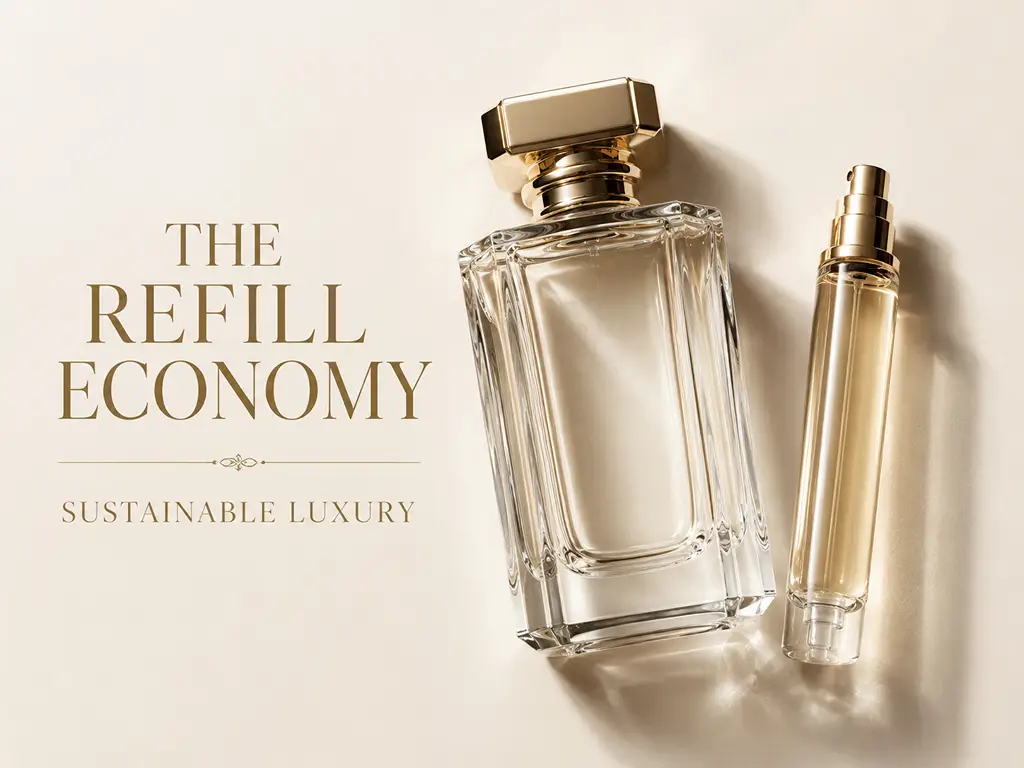
Refillable packaging has crossed from eco-niche to commercial mechanism, and the economics explain why. Refills typically cost 30–40% less than a new bottle (Scento, 2026), which makes refill programs a repeat-purchase engine for brands, not just a virtue signal. Consumer demand is measurable: 59% of luxury buyers now prefer refillable or modular packaging, and 54% are willing to pay 8–12% more for products made with recycled or renewable materials (Safic-Alcan, 2026). Between 2017 and 2023, refillable formats grew 279% across the US, UK, Germany, and France. The global refillable perfume bottle market, around €1.5 billion in 2025, is projected to grow 7% annually through 2033 (Scento, 2026).
Mechanically, refill systems now fall into three families. Screw-neck designs are the simplest and cheapest, though they spill more easily. Direct-to-valve systems connect the refill to the bottle’s valve for spill-proof, overflow-protected filling. Drop-in cartridge systems slide a sealed vial into a permanent outer shell: the “keep-forever” bottle model that luxury houses favor.
Brands are committing visibly: Le Labo runs in-store refill services, Armani’s My Way ships in refillable glass, and Dior even launched a 30ml Miss Dior to feed the portable refill habit. The commercial reading is even plainer. A refill program converts a one-time sale into a repeat purchase, and for distributors, refill SKUs mean recurring shelf turns without the freight cost of full bottles. Brands that skip the refill format are not choosing against a fad. They are choosing against recurring revenue.
Lighter Glass, Recycled Content, and the “Smart Glass” Math
Glass remains the luxury standard, but its carbon profile has forced a rethink. The industry’s answer is smarter glass. Estée Lauder cut the glass weight of its Aerin bottles by 22%, saving roughly 340 metric tons of raw material annually without changing the shelf presence (Scento, 2026). Post-consumer recycled (PCR) glass is now reaching up to 85% recycled content while retaining luxury-grade clarity, and lightweighting (thinning walls by 15–25% through precision molding) cuts both material and shipping emissions.
This is where engineering subtleties appear. A bottle cannot simply be shaved thinner. Glass strength depends on even wall distribution and controlled annealing, and perceived quality depends on weight. Designers increasingly fake heft optically (thicker bases, wider shoulders, weighted caps) so a lighter bottle still feels substantial in the hand. A glass factory working with around 30% cullet (recycled glass) in the batch, and choosing a low-iron crystal-white formulation over standard soda-lime, gets both the environmental story and the clarity that mass-market glass cannot match. Lightweighting is a shipping decision as much as an environmental one: a 15–25% weight cut lands directly in freight invoices and, for e-commerce brands, in last-mile surcharges. Buyers should also expect recycled content to appear on retailer sustainability questionnaires, which makes it cheaper to spec early than to retrofit later.
Design for Disassembly and Mono-Material Thinking
The quietest trend in fragrance packaging trends coverage is also the most consequential: designing for the end. A bottle is only recyclable if it can be separated. The pump, a tangle of spring, plastic, and metal, is the single biggest recycling obstacle in a perfume pack, which is why designers now simplify pump assemblies, reduce glued joints, and standardize necks and closures so components come apart without tools. Mono-material caps, removable decorative sleeves, and QR-linked disposal instructions are becoming trust signals. Regulation is accelerating this: the EU targets 65% packaging waste recycling, and California’s SB54 mandates 100% recyclable or compostable packaging by 2032 (Scento, 2026). For brands, design for disassembly is compliance insurance: in the EU and California, a pack that cannot be separated is becoming a cost, not a choice. For the supply side, the same logic doubles as inventory intelligence, since standardized necks and simplified pumps mean fewer component variants to stock.
Minimalism, Wellness, and the Quiet Luxury Aesthetic
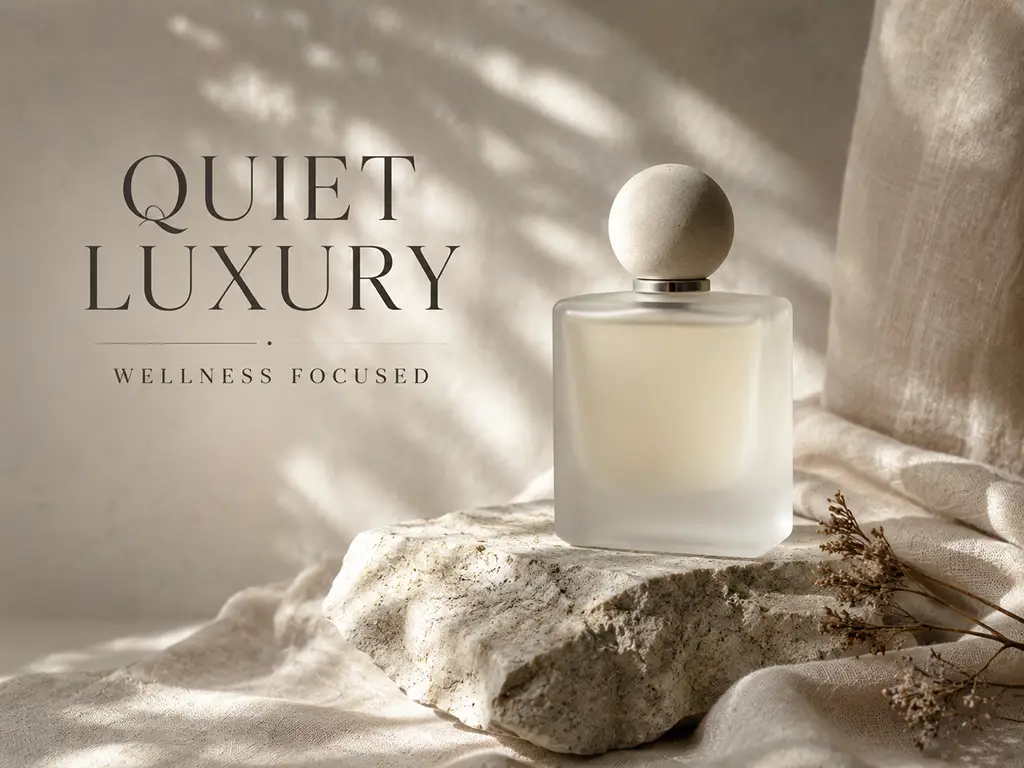
Alongside sustainability, the dominant visual story is restraint. Minimalism has become the default signal of quality, with younger consumers reading clean geometry, negative space, and quiet typography as modern and authentic (Smurfit Westrock, 2026). The look borrows heavily from the apothecary and skincare worlds: frosted finishes, uncoated boards, matte stone-like textures, and bottles that let the juice’s color do the talking.
Two forces are pushing this further. The first is wellness: fragrance is migrating from fashion accessory to self-care ritual, and “stress relief” is now the third-most-used claim in the global fragrance market, with “non-irritating,” “hypoallergenic,” and “no allergens” among the fastest-growing claims (Euromonitor, cited by Berlin Packaging, 2025). Packaging is expected to look like it belongs on a nightstand, not a pedestal. The second is transparency: indie brands increasingly print ingredient notes directly on the bottle, and uncluttered labels give skin-forward claims room to breathe. In this register, minimalism and sustainability reinforce each other: fewer layers, fewer materials, easier recycling. The economics here are unusually clean: fewer layers and simpler structures cost less to produce and less to ship, so the minimalist look is one of the only trends that improves unit economics while raising perceived quality. That combination is rare enough to build a range around.
Sculptural Bottles and the Return of Handcraft
At the top of the market, the pendulum swings the other way. While the mass tier goes minimal, luxury houses are commissioning sculptural statement pieces: asymmetric silhouettes, jewelry-like caps, designer collaborations, bottles designed to live on a vanity long after the last spray (AROS Group, 2025). Alongside sculpture comes a revival of craft: tiny air bubbles, slightly irregular edges, and hand-engraved details are now read as “perfectly imperfect” authenticity, a counterpoint to industrial uniformity.
Materials are hybridizing along the way — frosted glass wrapped in anodized aluminum, laser-engraved wood bases, cork and ceramic accents. The manufacturing reality behind these objects is demanding: the crystal-like facets that define the trend come from multi-pass polishing (cut, rough-grind, fine-grind), a process that thins walls and requires real craftsmanship to keep the bottle structurally sound. The sustainability tension is real too — a hybrid bottle that cannot be separated is beautiful but unrecyclable, which is why the smartest luxury launches now design dramatic outer shells around simple inner vials. The margin math sits beneath the art. Sculptural shells justify premium pricing and gift positioning, and the shell-and-vial architecture is what makes that premium repeatable: the customer keeps the object and buys the refill. Buyers evaluating these pieces should ask one question before admiring them: how does it come apart?
The Scent Wardrobe: Small Formats, Big Demand
Consumer behavior has moved from a signature scent to a scent wardrobe. Gen Z-led buyers mix, layer, and rotate fragrances by mood and occasion, which makes fragrance a collectible — and packaging a system (Smurfit Westrock, 2026). The format implications are significant: 62% of frequent travelers prioritize compact, reusable beauty items, and the mini refillable segment is projected to grow from €18.13 billion in 2024 to €22.63 billion by 2030 (Scento, 2026).
| Format | Typical size | What’s driving it | Packaging implication |
|---|---|---|---|
| Mini spray | 10–20ml | Scent rotation + TSA travel limits | Modular design: cases, stands, refill cartridges |
| Travel atomizer | 5–10ml | On-the-go touch-ups | Premium materials at miniature scale |
| Refill cartridge / inner vial | Matched to 30–100ml shells | Refill economics + waste reduction | Keep-forever shell + replaceable core |
| Solid perfume / oil | Compact, alcohol-free | Wellness + skin-forward claims | Tins, compacts, precise dosing closures |
The through-line is modularity. The smallest formats are being redesigned to slide into protective cases, dock into at-home stands, or plug into refill cartridges, so nothing in the wardrobe is single-use anymore. For brands, the wardrobe is a commercial structure as much as a behavior. Minis and travel formats are the entry point to a customer relationship: a low-friction first purchase that leads to the full-size upsell. For distributors, they are checkout-counter SKUs with impulse margins, and they fit retail spaces a 100ml bottle never could.
Feel-First Design: Why Engineering Now Drives Luxury
Here is the trend most trend roundups miss: luxury in fragrance is migrating from what a bottle looks like to how it behaves. A bottle that photographs beautifully but sprays like a garden hose will lose the repurchase. “Feel-first” engineering, the sensorial micro-sequence of grip, weight, cap resistance, and mist quality, is what turns a pretty object into a trusted one (Jarsking, 2025). For any business in this category, this is the trend with the highest cost of getting it wrong. The spray experience is the last thing a customer touches and the first thing they complain about. One leaked bottle in a handbag produces a one-star review that outlives the launch campaign.
Touch and Sound: Engineering the Hand-Feel
Consumers describe good packaging in tactile terms: frosted glass that “feels so good in my hand” is a genuine purchase driver, not a cliché. Manufacturers respond with engineered tactility: ribbed or fluted profiles molded into the glass (improving grip as a bonus), acid-etched frost finishes, soft-touch coatings, and weighted caps. Sound matters too: the damped click of a well-engineered closure and the soft whoosh of a quality spray are unconscious quality signals — the packaging equivalent of a car door’s closing thunk. And as lightweighting spreads, optical heft (thicker bases, sculpted recesses, wide shoulders) keeps the luxury feel alive in a lighter package.
The Spray Itself: Dose, Mist, and the Cloud Effect
The most underrated component in perfume packaging is the pump, because it defines the final half-meter of the product experience. The engineering gaps are measurable:
| Parameter | Typical pump | Premium pump | Why users notice |
|---|---|---|---|
| Single spray dose | 0.6–0.8ml | 1.0–1.3ml | Fuller application per press, matched to heavier fragrance habits |
| Atomization | Watery stream, ~0.3mm particles | Fine cloud, <0.1mm particles | Even, skin-hugging coverage instead of droplets |
| Valve & spring | Plastic valve core + standard spring | Ceramic micro-orifice core + 316L stainless spring | Consistent spray character over time |
| Durability | ~50,000 presses before degradation | 100,000+ presses without fade | The bottle keeps performing to the last drop |
| Surface finish | Common barrel finish | Electrolytic finish | Brighter, tarnish-resistant hardware |
These differences are invisible in a render but obvious in daily use. Serious brands now write spray-dose and mist-quality requirements into their packaging specifications rather than leaving them to chance. The pump parameters are promises that cannot be demoed through a screen. Dose, particle size, and durability belong in the written spec before a single order is placed. Wholesalers should treat the pump as the component most likely to drive returns and reorders, a fact any distributor who has fielded complaints about watery sprays already knows.
Seals and Leak-Proofing: The Quiet Quality Signal
The seal is the quality signal nobody sees until it fails. Perfume evaporates: the industry average is 2–3% volume loss per year, while well-engineered systems using pharmaceutical-grade silicone with PTFE liners hold evaporation under 0.1% annually. The failure mode is well understood: ordinary rubber seals swell and degrade after prolonged alcohol contact. So is the remedy: alcohol-tolerant composite seals plus vacuum testing as a standard outgoing check. Factories that skip vacuum and structural testing to save cost are gambling with the brand’s reputation; appearance defect rates below 50 parts per million and full-bottle inspection are what “premium” actually means at the production end. Evaporation is a quiet balance-sheet leak: lost product, plus the credibility loss when a customer’s new bottle arrives half-empty. For buyers, requesting vacuum-test results is the cheapest quality audit available. One email separates factories that test from factories that hope.
Smart Packaging and Personalization: Where Digital Meets the Bottle
Digital layers are arriving, but selectively. NFC chips and QR codes turn a bottle into a doorway: authentication against counterfeits, ingredient and sourcing stories, even mood-matched playlists. QR-based storytelling keeps the physical pack minimal while expanding the digital one (Jarsking, 2025). Personalization is cheaper than ever: variable data printing puts names, dates, or zodiac codes on labels without new tooling, and short-run digital printing lets brands test regional designs. The honest caveat is cost: smart components still land first in prestige and direct-to-consumer lines where lifetime customer value justifies the spend. For most launches, a well-placed QR code delivers 80% of the benefit at a fraction of the price. A well-placed QR code is also data infrastructure rather than decoration: every scan is a first-party touchpoint that shows who buys, when, and where. Distributors get something else from these layers: embedded authentication protects the value of the stock they paid for against the gray market.
From Mood Board to Production Line: What Trends Actually Cost
Every perfume packaging trends article ends at inspiration. The unglamorous truth every brand learns is that a mood board is not a product: between the render and the filling line sit four engineering gates, and each one can quietly consume months and budget. Knowing them in advance is what separates a launch that ships from one that stalls. For brands and buyers alike, these four gates are also the questions to ask any supplier. The difference between a factory and a partner shows up in how it answers them.
Design Realization: From Render to Mold-Ready Structure
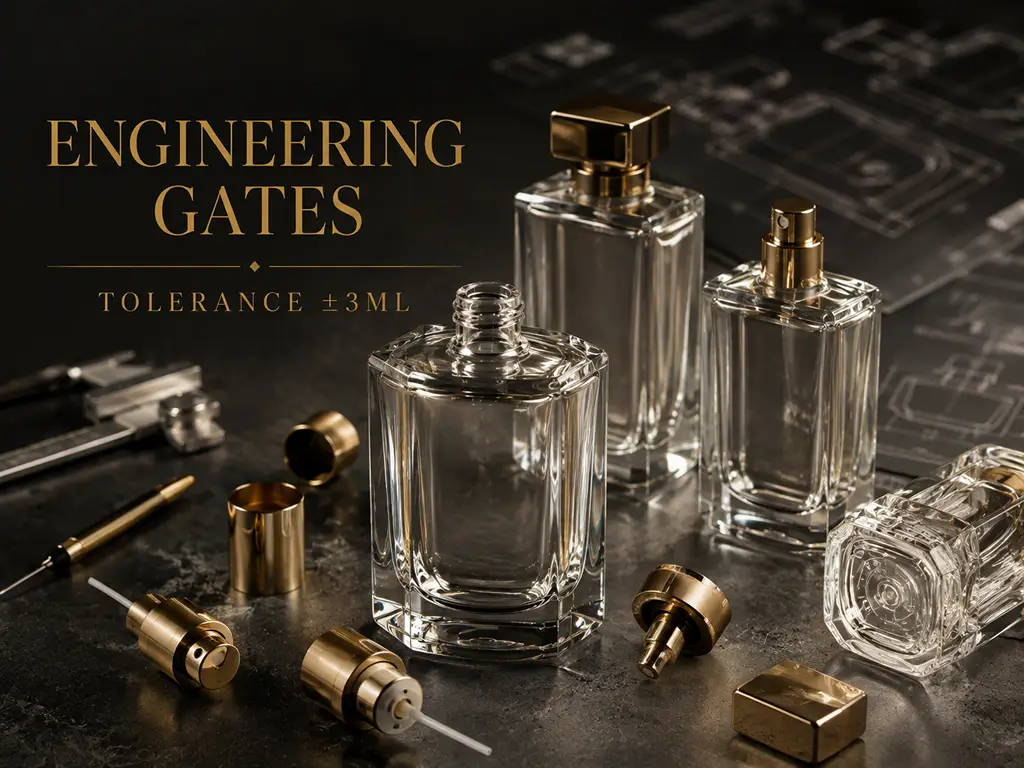
The first gate is translation. A rendering can promise anything; a bottle must survive blow molding with even wall distribution and a stable base. The professional workflow is render → 3D modeling → prototype (usually 3D-printed) → technical drawings → sample approval. Suppliers serious about this stage deliver 3–5 concepts within 3–7 days and validate proportions in 3D before any mold is cut. Certain trendy details carry hard constraints: multi-facet polishing thins the wall and demands minimum wall and base thicknesses, and extreme silhouettes may not release from a mold at all. The sample stage exists precisely so these discoveries happen before tooling money is spent.
Necks, Pumps, and Closures: The Interchangeable Backbone
The second gate is compatibility, and it usually hides in the neck. Perfume bottle necks follow a de facto standard: 15mm for regular bottles, 13mm for small formats, 20mm for oversized flacons. Match those, and pumps, caps, and filling lines all plug in; drift from them, and every component becomes a custom problem. Pumps deserve particular care because they are sourced separately from the bottle: reputable factories vacuum-test incoming pumps by batch and run a second vacuum test after assembly to guarantee the bottle ships leak-proof. Oil-based formulas need extra testing: the pump must be validated against the actual fragrance, which is why suppliers ask for a sample of the juice. On closures, the economics are stark: with hundreds of stock cap designs available, custom tooling is only justified when the cap is the brand statement.
Quality Gates, MOQs, and the Real Timeline
The third gate is where startup dreams meet industrial reality: minimum order quantities. In glass, MOQs scale with bottle weight: roughly 50,000 units for a 40–50g bottle, stepping down to 10,000 units for a heavy 200–350g piece. New tooling adds 20–35 days for mold making on top of 30–35 days of production, putting a custom launch at about 45 days door to door — which is why stock molds, where they match the design, are the fastest route to market.
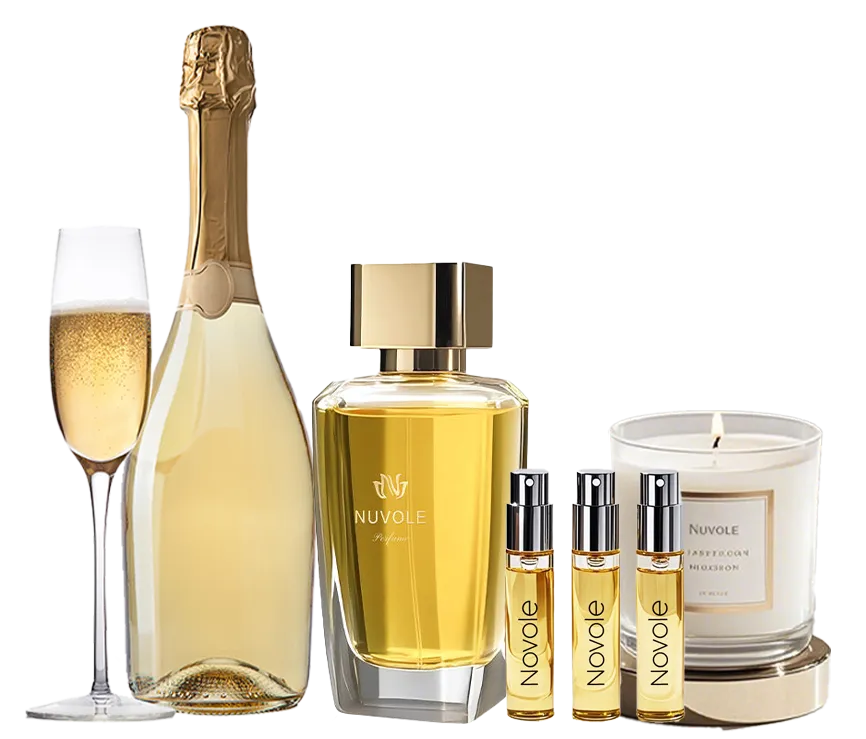
Suppliers built for this work make the math simpler. Nuvole, for example, runs a full custom perfume bottle design service that turns a brief into 3–5 concepts within 3–7 days and matches designs against 500+ stock bottle and cap molds before any new tooling is committed. New molds land in 20–35 days, are built to last 400,000–500,000 cycles, and hold capacity tolerances of ±3ml. For brands weighing a trend-driven launch against a calendar, that is the difference between a packaging idea and a packaged product.
Choosing Packaging That Outlives the Trend
Trends are inputs, not instructions. The packaging choices that survive a season share three traits: they pass the sustainability audit, they engineer the feel as carefully as the look, and they were specified with production reality in mind. Before committing to any direction, work through this checklist:
Fragrance packaging will keep reinventing itself. Refill systems will standardize, glass will get lighter, and the spray experience will keep evolving. What will not change is the arithmetic behind it: the brands that win are the ones who treat packaging trends as engineering briefs, not mood boards.
References
- Grand View Research. “Fragrance Market Size, Share & Trends Report, 2026–2033.” 2026. https://www.grandviewresearch.com/industry-analysis/fragrances-market
- Fortune Business Insights. “Perfume Packaging Market Size, Share | Industry Report.” 2026. https://www.fortunebusinessinsights.com/perfume-packaging-market-108348
- Global Market Insights. “Fragrance Packaging Market Size & Share Report, 2032.” 2026. https://www.gminsights.com/industry-analysis/fragrance-packaging-market
- Knowledge Sourcing. “Fragrance Packaging Market Report: Size, Trends, 2030.” 2026. https://www.knowledge-sourcing.com/report/global-fragrance-packaging-market
- Mordor Intelligence. “Cosmetic Perfumery Glass Bottle Packaging Market Size.” 2026. https://www.mordorintelligence.com/industry-reports/cosmetic-perfumery-glass-bottle-packaging-market
- Market Research Future. “Perfume Packaging Market Size, Share & Growth Report.” 2026. https://www.marketresearchfuture.com/reports/perfume-packaging-market-4125
- Smurfit Westrock. “Industry Dynamics Steering Fragrance Packaging Design.” 2026. https://www.smurfitwestrock.com/blog/industry-dynamics-steering-fragrance-packaging-design
- Safic-Alcan. “The New Face of Sustainable Perfume Packaging.” 2026. https://www.safic-alcan.com/en-fr/industry-articles/sustainable-perfume-packaging-trends/
- Scento. “Sustainability Trends in Perfume Packaging.” 2026. https://www.scento.com/blog/sustainability-trends-perfume-packaging
- Jarsking Global. “Beyond the Bottle: Fragrance Packaging Trends That Will Shape 2026.” 2025. https://jarskingglobal.com/blog/beyond-the-bottle-fragrance-packaging-trends-that-will-shape-2026/
- JohnsByrne. “Fragrance Packaging: How Brands Create an Unforgettable First Impression.” 2025. https://www.johnsbyrne.com/blog/fragrance-packaging-how-brands-create-an-unforgettable-first-impression/
- Berlin Packaging. “Personal Fragrance Packaging Trends.” 2025. https://www.berlinpackaging.com/insights/perspectives/personal-fragrance-packaging-trends
- AROS Group. “Luxury Perfume Bottles: The 5 Trends to Watch in 2026.” 2025. https://arosgroup.com/luxury-perfume-bottle/
- Nuvole Glass. “Custom Design.” https://www.nuvole-glass.com/custom-design/
- Nuvole Glass. Homepage. https://www.nuvole-glass.com/
- Nuvole Glass. “Contact Us.” https://www.nuvole-glass.com/contact-us/