A perfume bottle, an oven dish, and a window can all be called glass, yet their composition, processing, and intended use differ. The right comparison starts by asking which property matters: thermal expansion, impact behavior, appearance, chemical contact, or the way a broken article is retained.
Glass is commonly described by composition, by processing such as tempering or lamination, and by application. These categories overlap. This guide separates them so a buyer can describe the actual product and request evidence for its intended use.
Composition is a useful first layer. It influences thermal expansion and optical appearance, but it does not by itself determine whether a finished vessel is safe for food, oven use, candles, or a particular closure. Design, treatment, and testing remain part of the decision.
Tempered, heat-strengthened, and laminated are processing or construction terms rather than base glass families. A soda-lime sheet may receive different treatments for a building or vehicle. A perfume bottle needs a different set of checks from a window, even if both begin with soda-lime glass.
A buyer might see “borosilicate,” “tempered,” and “extra flint” in one catalog. The first describes a composition family, the second a treatment, and the third an appearance label. They answer different questions. Put each in a separate field on the request for quotation so a clear-looking sample is not mistaken for proof of heat performance or product contact suitability.
The Three Composition Families
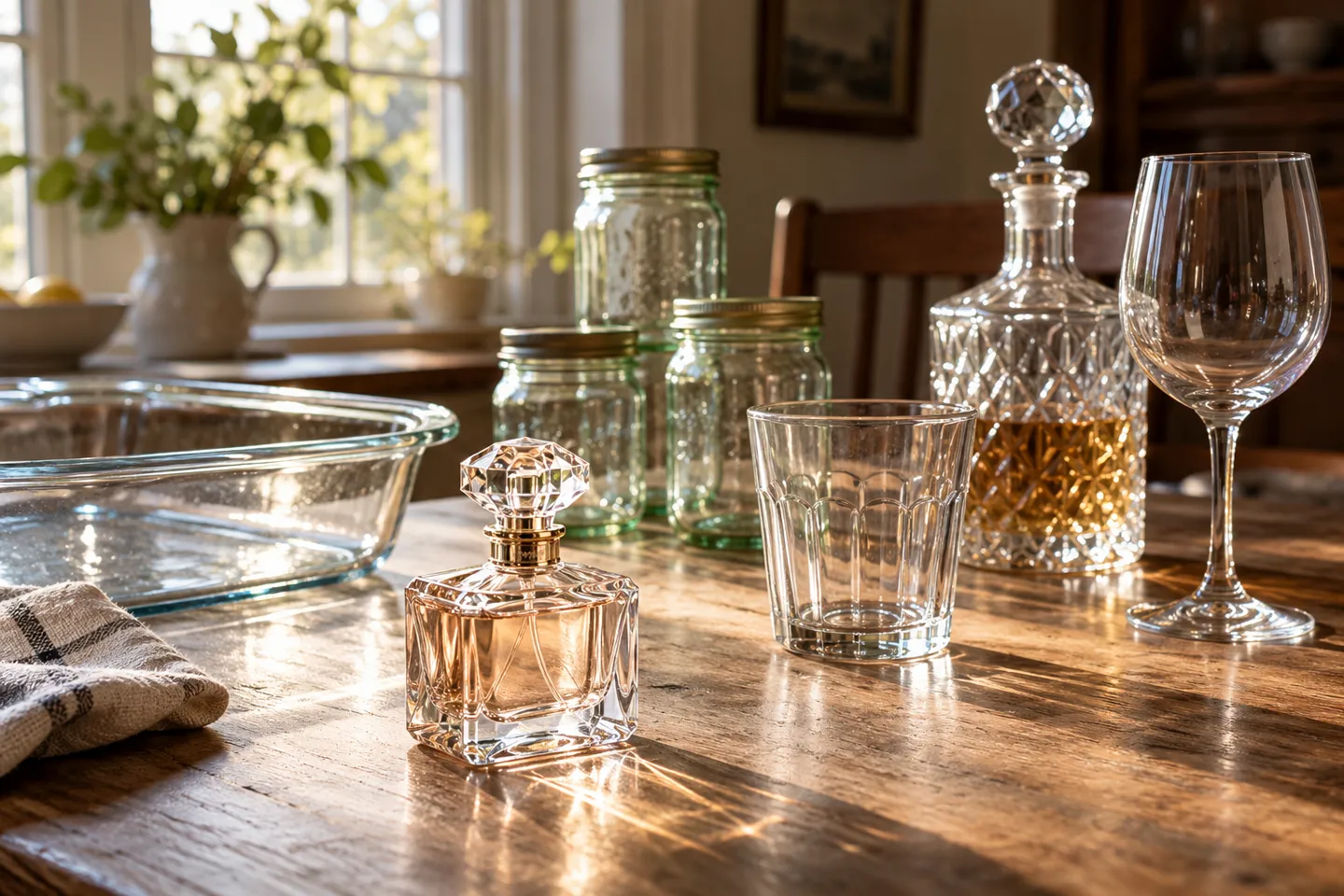
For packaging and household products, three useful families to compare are soda-lime, borosilicate, and crystal compositions. Other specialty glasses exist, so this is a practical shortlist rather than a complete taxonomy.
Soda-Lime Glass
Soda-lime glass is a common choice for bottles, jars, drinking vessels, and flat glass. Its batch generally contains silica, soda, and lime, with other ingredients varying by formulation. It forms efficiently at scale, but the finished article still needs specifications for its intended use.
For a bottle order, the glass family is only the beginning of the drawing. Neck finish, shoulder radius, base design, wall distribution, and capacity all affect how the article fills and seals. The same nominal glass composition can be formed into a light bottle or a heavy display vessel with different handling behavior. Ask for the intended manufacturing process and a representative sample, then test the dimensions that matter to the closure and filling line.
Do not treat soda-lime as universally more impact resistant than borosilicate. A particular tempered soda-lime product can perform differently from a thin borosilicate product, but impact results depend on geometry, wall thickness, surface condition, and the test method.
Soda-lime often has a higher thermal expansion coefficient than common borosilicate lab glass, so a sharp temperature difference can produce greater stress. Tint at the edge may reflect iron content and thickness, but appearance alone cannot identify the exact glass composition.
Tempering can improve resistance to some mechanical and thermal stresses, while the underlying composition remains soda-lime. It is not a universal oven rating. Follow the manufacturer’s care instructions and test the specific product under the planned conditions.
For example, a room-temperature serum bottle and an oven dish have different requirements even if both are transparent. The serum pack needs closure compatibility, chemical contact assessment, and a stable appearance. The dish needs validated heating and cooling instructions. A label such as “heat resistant” is incomplete until it names the test condition and the exact article tested.
Borosilicate Glass
Borosilicate contains boron oxide and often has relatively low thermal expansion. Corning lists approximately 3.25 × 10⁻⁶/K for a representative borosilicate lab glass and 9 × 10⁻⁶/K for representative soda-lime glass. Those values illustrate a material difference; they are not a pass/fail temperature limit for every dish or bottle.
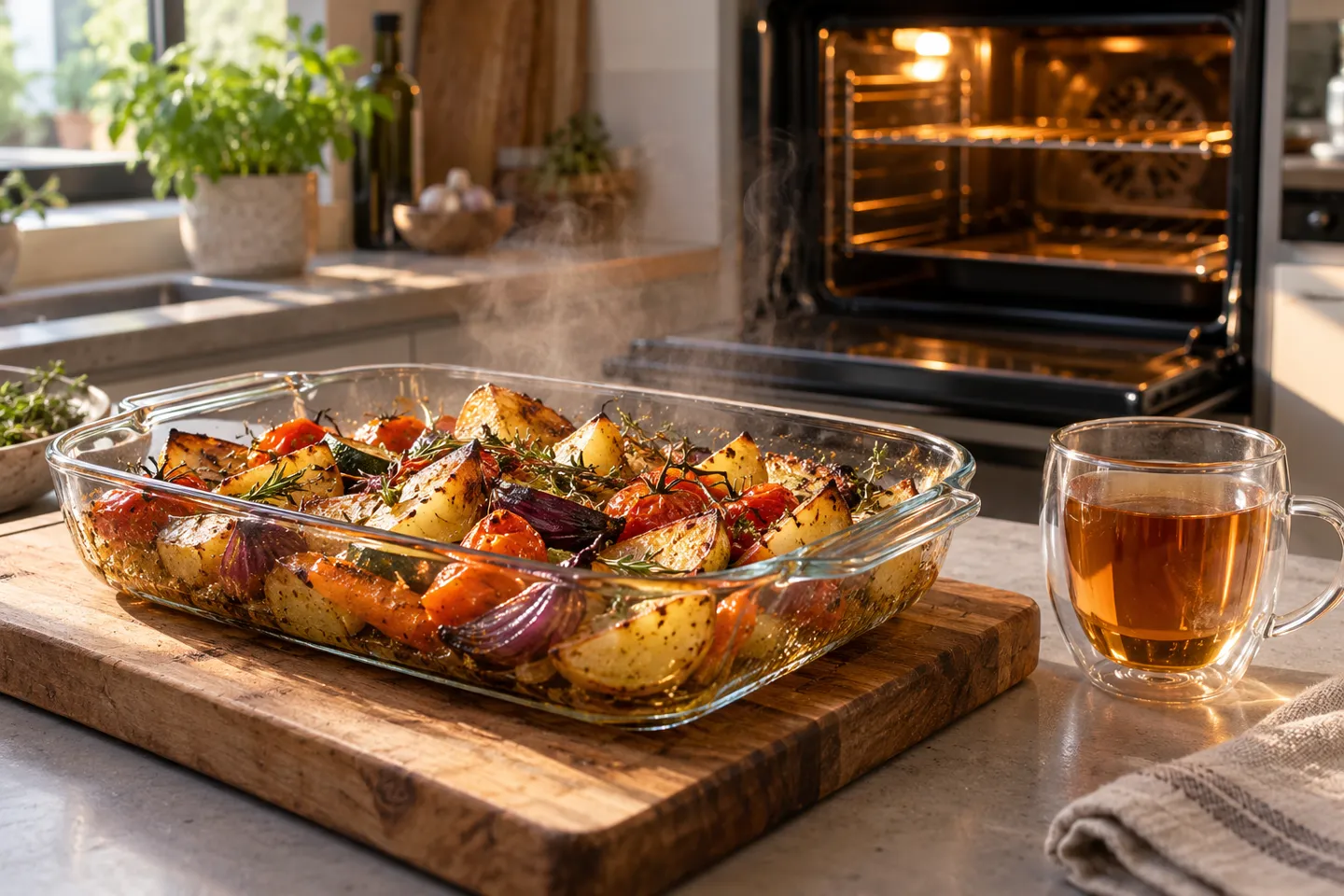
Lower expansion can help with thermal shock, but it does not make a borosilicate article immune to cracking or impact damage. Shape, scratches, thickness, and handling still matter. A kitchenware brand name is not a reliable composition or use specification; the exact product’s instructions govern.
“Stronger” is incomplete without a named stress and test. Compare thermal shock, impact, and surface damage separately on products with similar geometry. A technical data sheet should state the composition and test conditions, then a finished-product test should address the real use case.
An oven label should identify the product and permitted operations: oven temperature, preheating, freezer storage, direct flame, and cleaning are separate questions. The answer can differ even within one brand. When writing product copy, use the maker’s instructions for the exact item and do not extrapolate from a laboratory glass coefficient. A low expansion value supports material selection, but a finished dish also has handles, corners, lids, and possible surface damage.
Compare thermal, impact, and surface performance on the finished product with a named test method.
Lead Crystal and Lead-Free Crystal
Leaded crystal uses lead oxide to change optical properties. EU Directive 69/493/EEC reserves particular category names for defined compositions; the “lead crystal 24%” category specifies at least 24% lead oxide. A decorative or packaging quote that says only “crystal clear” does not establish that composition.
Health Canada advises against keeping food or drinks in lead crystal containers. For a food or beverage product, identify the exact material and destination-market contact requirements before selecting a decorative crystal vessel. Lead-free crystal describes a different composition, but it still needs product-specific contact evidence where food use is intended.
The word “lead-free” also deserves a specification. Ask the supplier to identify the glass composition and the test or declaration behind the claim. For tableware, verify the intended food-contact use. For a decorative perfume bottle, evaluate the formula and closure as a separate system. A material that looks brilliant in a showroom may still need a different contact or stability review when filled.
Specialty materials extend beyond these three groups. Aluminosilicate, fused silica, and glass-ceramics have uses in electronics, laboratory work, optics, and cooking. Their properties and costs vary substantially. Request a named grade and technical data sheet rather than assuming a broad family name guarantees suitability.
For a bottle buyer, specialty glass is rarely the starting point. It becomes relevant when a formula, temperature cycle, or optical requirement cannot be met by a suitable standard container. Ask what specific failure the specialty material is intended to solve and what test demonstrates the improvement. The additional material cost is useful only when the finished package benefits under its real conditions of use.
Three Glass Families at a Glance
| Family | Typical uses | Useful property | Check before use |
|---|---|---|---|
| Soda-lime | Bottles, jars, flat glass | Scalable forming and many finishes | Thermal path, geometry, closure fit |
| Borosilicate | Selected labware and ovenware | Relatively low thermal expansion | Exact product instructions and tests |
| Crystal compositions | Decorative tableware and vessels | Optical appearance | Lead content and contact suitability |
After composition, examine processing and construction. The treatment can change breakage behavior, but it does not erase the need for application-specific testing.
Safety Glass and Telling Glass Apart
Annealed glass has been cooled to reduce internal stress and is common in bottles and jars. Tempered glass has a stress profile produced by heat treatment; some products break into smaller fragments. Heat-strengthened and laminated products serve other safety needs. Lamination combines sheets with an interlayer to help retain fragments. These terms describe specific products and standards, not a promise that every item made this way is safe for every use.
In architectural glazing, safety performance is usually established through standards for the completed pane and its installation, not by a casual visual check. In packaging, the relevant standard may instead concern an annealed container or a food-contact article. This is why a single list of “types of glass” can become misleading: it may combine a recipe, a treatment, a shape, and a regulatory use in adjacent rows. State which layer each term belongs to before comparing them.
A practical rule: a tempered label alone does not authorize oven, stovetop, or candle use.
Tempering does not give a universal oven or candle rating. Verify the exact vessel and intended use.
Visual clues can start an investigation but cannot identify a glass grade reliably. Edge color changes with thickness, coatings can hide tint, and polarized light may reveal stress patterns without naming the composition. Weight and sound depend on shape as well as chemistry. For procurement, use a material declaration, approved samples, and the relevant test report.
Five checks you can run at a table
- Edge color is affected by thickness and composition.
- Polarized light may reveal stress patterns.
- Weight depends on both shape and material.
- Sound is not a composition test.
- Use a material declaration and product test report.
Treat observations as screening information. A production specification must state the material, dimensions, surface finish, intended contact, and acceptance method. That is especially important when decoration obscures the bare glass.
If a sample arrives without documentation, request a technical sheet rather than relying on home tests. A polarizer may help identify a stress pattern, but the result can be ambiguous and does not prove that an article is safe to heat. A ring test can be affected by thickness and shape. The buying decision should rest on documented material identity and a test of the finished article.
Clarity Grades and Functional Colors
The Clarity Ladder
In packaging, flint, high-white, extra-flint, and super flint often describe visual clarity. They are not a universal four-step standard used identically by every factory. Iron content can contribute to a green tint, but exact thresholds and allowable defects require a supplier-specific specification. Compare bare samples of the same shape under consistent lighting and record an approved reference.
Request a sample set with the intended bottle shape and wall weight. A small clear vial and a thick perfume bottle can display tint differently even when made from the same melt. If a supplier calls a grade “extra flint,” ask for its measured or agreed appearance criteria and how lot changes will be handled. A lower iron specification may help explain clarity, but the shelf result also reflects forming, mold condition, and decoration.
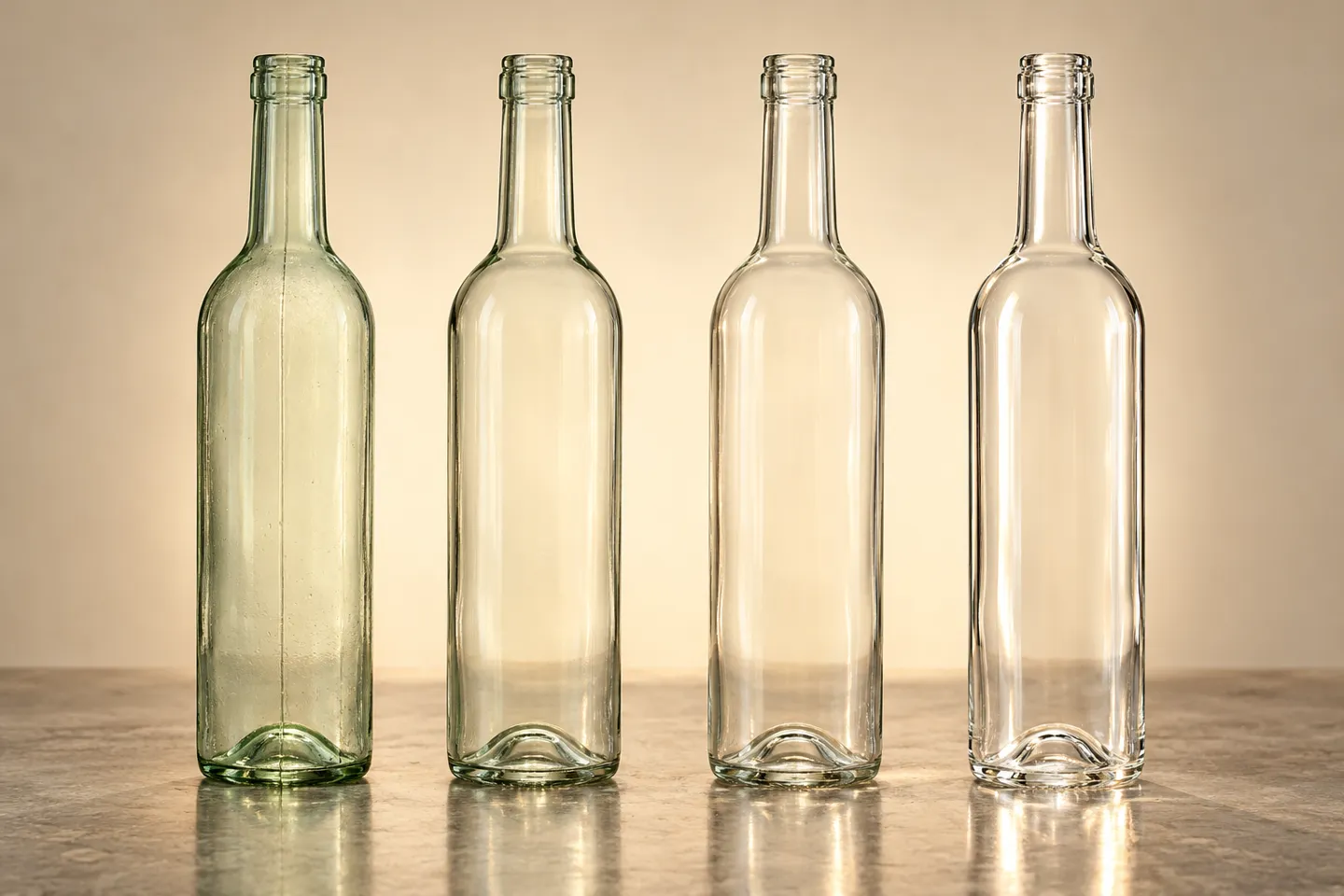
Clarity and surface quality should be specified separately. A bottle can have a clear base glass yet show mold marks or decoration defects. The relevant measurements may include tint, bubbles, cords, scratches, dimensional fit, and coating adhesion. Agree on viewing conditions and acceptable variation before production.
Use a simple approval procedure for appearance. View several bare bottles from a representative production lot against the same background and light source. Identify the shelf-facing areas where tint or bubbles matter most. Keep an approved master sample and photographs, then repeat the comparison when a new lot arrives. This turns a subjective “premium” description into a repeatable inspection.
Clarity labels vary by supplier. Approve a bare-glass sample, an inspection method, and a lot-to-lot acceptance limit.
Colors That Do Work
Glass color can influence how much light reaches a formula, but protection depends on the glass composition, wall thickness, spectrum, and product sensitivity. Amber or other colored glass may help a light-sensitive formula; the claim should be tested for the actual product. Frosting is a surface finish and should not be treated as a guaranteed UV barrier.
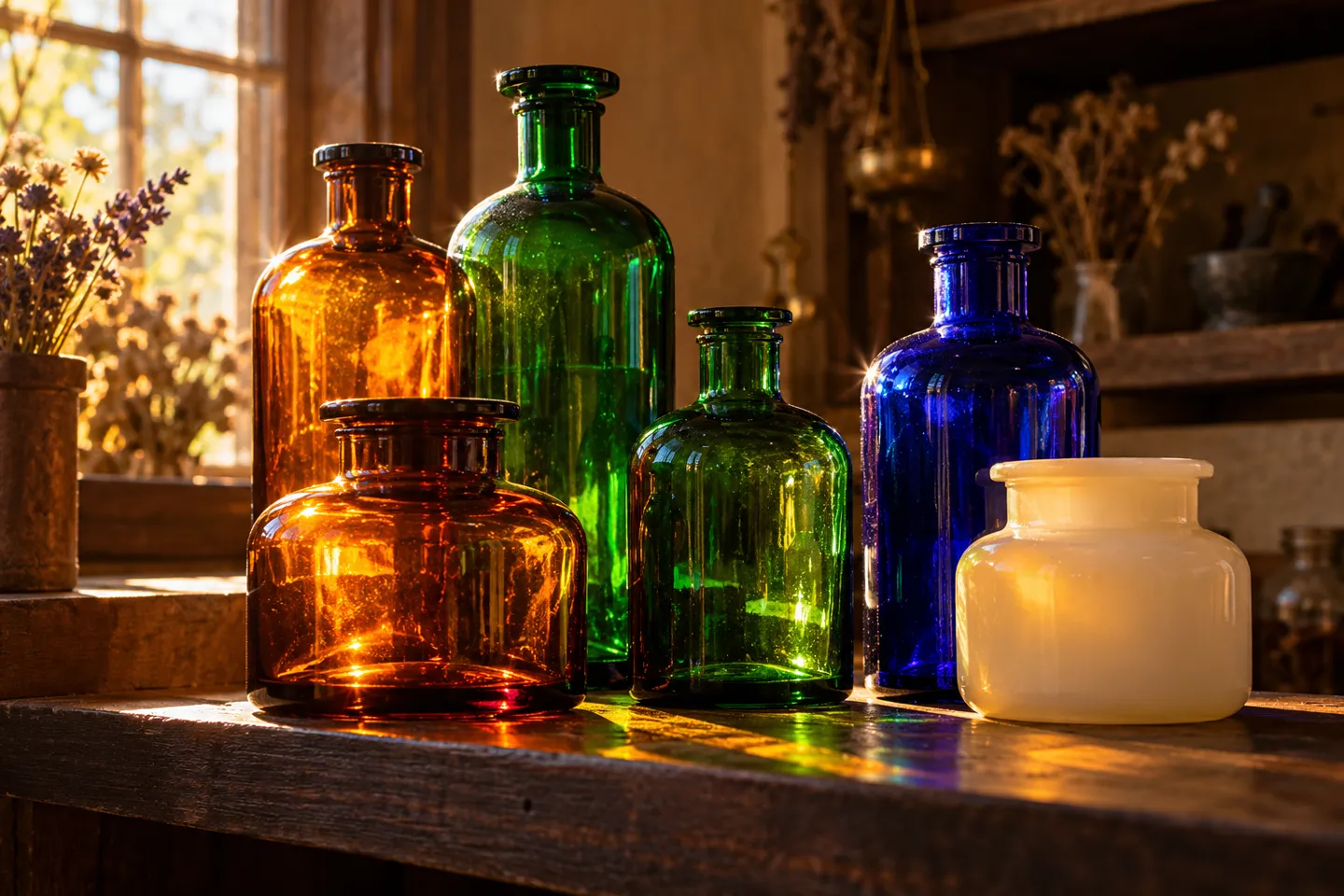
Select color by both presentation and product stability. A clear bottle displays the liquid, while an opaque or suitably tinted pack may reduce light exposure. Ask for transmission data or a stability study when light protection is part of the product claim.
Light-protection decisions also require the filled product. A colored glass can transmit different wavelengths in different amounts, and a thick base does not tell you what the sidewall transmits. Ask for relevant spectral data or use a stability study that compares the proposed package with a control under realistic display conditions. The right result is a product claim you can support, not a color assumption.
Matching Glass to Product: Scenarios and Acceptance
The matrix offers a starting brief. Each row still requires a finished-product specification and evidence matched to the target market and use conditions.
Write the intended use in observable terms. “Premium fragrance” is not a technical condition; “alcohol-based formula in a 50 ml bottle with crimped pump, six-month display exposure, and decorated outer surface” gives a supplier something to test. For a candle, state the wax, wick, fill level, and burn cycle. For food, state the product, contact time, temperature, and market. The same glass family may lead to a different specification in each case.
Scenario Matrix: Material, Grade, Boundary, Acceptance
| Scenario | Possible direction | Main risk | Acceptance evidence |
|---|---|---|---|
| Perfume and fragrance | Specified glass appearance and matching pump | Leakage or formula interaction | Filled-pack fit and compatibility tests |
| Spirits and wine | Contact-suitable glass and closure | Light exposure or closure mismatch | Market documents and closure test |
| Candle jars | Container designed for filled candles | Thermal stress during burning | Applicable vessel and finished-candle tests |
| Food, oil, beverage | Contact-suitable glass and closure | Migration or product degradation | Market documents and stability review |
For fragrance, pair the glass decision with the pump, gasket, and finish. A visual grade does not establish seal performance. Test the assembled pack for fit, leakage, and formula compatibility under realistic storage and handling conditions.
For wine or spirits, consider light exposure, closure compatibility, and food-contact requirements. Health Canada’s lead-crystal guidance cautions against using lead crystal for storage. A clear display decanter and a retail bottle can therefore require very different material decisions.
A beverage or oil pack also needs a practical light-exposure plan. Ask where the product will be displayed, whether it will be boxed, and how long it may remain under retail lighting. A dark bottle can help with some wavelengths but does not automatically secure shelf life. Evaluate the filled product with the intended closure and compare results with a control package before making protection claims.
ASTM F2179-26 covers annealed soda-lime-silicate containers made for filled candles and includes annealing, thermal-shock, and scratch requirements. It is not a blanket approval for a finished candle. Test the actual wax, wick, fragrance, vessel, and burn conditions as an assembly. Do not copy a temperature-difference pass number from an older summary without the current standard and test setup.
For food and beverage uses in the EU, Regulation (EC) No 1935/2004 sets general requirements for materials intended to contact food, including safety under normal or foreseeable conditions and traceability. Requirements elsewhere differ. Request documents appropriate to the destination market and to the complete container and closure system.
For a candle project, document the vessel dimensions, wax blend, wick, fragrance load, and intended burn cycle. Changing any of those can change heat distribution. For a beverage, include the closure, storage time, and distribution conditions. For fragrance, include the gasket, dip tube, and decoration. A glass container is part of an assembled package, so its acceptance plan should reflect the full system.
Share the formula, target market, use conditions, and desired appearance so Nuvole Glass can discuss suitable glass options and the evidence to request.
Request a material reviewWhat This Means for Your Packaging Decision
The main decision is product-specific. Composition influences physical behavior; treatment and geometry change finished performance; clarity and color affect appearance and sometimes protection. Turn each desired outcome into a named specification and test.
A volume bottle and a hero SKU may use different appearance targets, but the material choice should follow the formula and use conditions first. Confirm which parts of a grade are measurable and whether a decorated finish hides the underlying glass.
Acceptance criteria belong in the design brief: thermal-shock and assembled-candle checks where relevant, leak and compatibility checks for fragrance, and contact documentation for foods. Define the method and sample plan before signing the purchase order.
Keep the approved sample and the test scope with the purchase order. If a later lot changes tint, wall thickness, or closure fit, compare against the recorded baseline. If a supplier changes a mold, coating, or glass source, decide which checks need repeating. This is especially important when a visual grade is a brand promise: the quote should say how the promised appearance will be maintained across production, rather than relying on a one-time showroom sample.
Ask suppliers which composition and appearance standard the quote assumes, which test addresses the intended use, and which documents apply in the destination market. Nuvole Glass can review a bottle brief against its current stock and custom options; confirm availability and evidence for the proposed product in the project quote.
A useful RFQ has separate lines for composition, visual grade, color or coating, dimensions, intended contact, closure, tests, and documents. Ask the supplier to identify any assumption it made in the price. If one quote includes a decorated sample and another includes only bare bottles, the prices are not comparable. The same applies to test reports and market documentation. Clarifying these lines early makes both the technical review and the commercial comparison more reliable.
When comparing two suppliers, send both the same brief and request the same evidence. Ask for the material declaration, drawing, approved appearance sample, applicable test reports, and the responsibility for a failed lot. Record whether a claim applies to the bare glass, decorated bottle, or filled package. That distinction prevents a valid raw-material statement from being used as proof of finished-product performance.
Lock the grade before the mold is cut
Send your bottle brief and ask for the proposed material, appearance standard, test scope, and relevant documents in the quote.
Start your bottle inquiryReferences
- Corning. Technical Information: PYREX Borosilicate Glass
- ASTM International. ASTM F2179-26: Annealed Glass Candle Containers
- Health Canada. Reduce Your Exposure to Lead
- European Union. Directive 69/493/EEC on Crystal Glass
- European Union. Regulation (EC) No 1935/2004 on Food Contact Materials