
In B2B glassware logistics, a 3% breakage rate destroys net profit margins and severely damages brand reputation. In an era where reverse logistics costs are skyrocketing, optimizing your packaging strategy is a direct investment in your bottom line. This guide bypasses residential moving advice to deliver an industrial-grade engineering framework. We detail how to select the exact packing material for glassware based on physics, execute geometry-specific Standard Operating Procedures (SOPs), and calculate Total Cost of Ownership (TCO) to achieve zero-breakage delivery.
Analyzing Core Packing Materials: The 3-Tier Protection System
Professional shippers utilize a calculated three-tier system: Surface Cushioning, Void Filling, and Hybrid Exoskeletons. Understanding the physics, chemistry, and volumetric economics of these materials is critical for reducing Damage-on-Arrival (DOA) rates and optimizing freight utilization.
Surface Cushioning: Blocking Impact and Chemical Migration
Surface cushioning makes direct contact with the glass. In B2B warehousing, this material must withstand long-term storage, high stacking pressure, and severe temperature fluctuations across global transit routes.
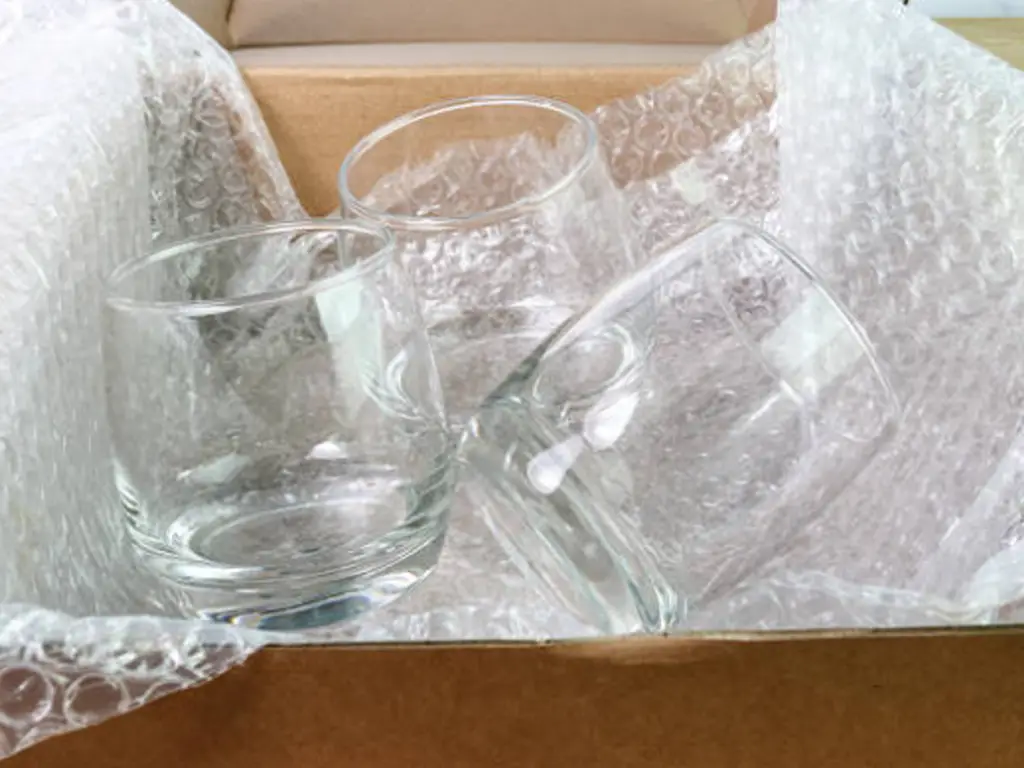
- The DIM Weight Penalty of Bubble Wrap: While 1/2-inch large-bubble wrap absorbs blunt force, it exponentially inflates carton volume. For carriers utilizing dimensional weight divisors (FedEx/UPS), this surge triggers DIM weight surcharges that eclipse product value. High-performance 3/16-inch small bubble wrap offers a superior financial balance.
- Chemical Inertness & Plasticizer Migration: A catastrophic B2B error is wrapping high-value glassware directly in standard polyethylene bubble wrap. Temperatures exceeding 90°F in steel shipping containers rapidly accelerate chemical bonding. This outgassing leaves permanent, iridescent “bubble marks” etched into the glass. Always wrap items in chemically inert Acid-Free Tissue Paper or anti-static EPE Foam Sheets first.
Void Fillers: Eliminating Internal Movement
Glassware shatters when kinetic energy allows it to accelerate and strike surfaces inside the box. Void fillers lock the product in suspended space.
| Material Type | Structural Integrity | Optimal B2B Application | Risk Factor |
|---|---|---|---|
| Crumpled Kraft Paper (60 lbs) | Rigid Interlocking | Heavy jars, thick-walled bottles | Low (if using virgin long-fiber) |
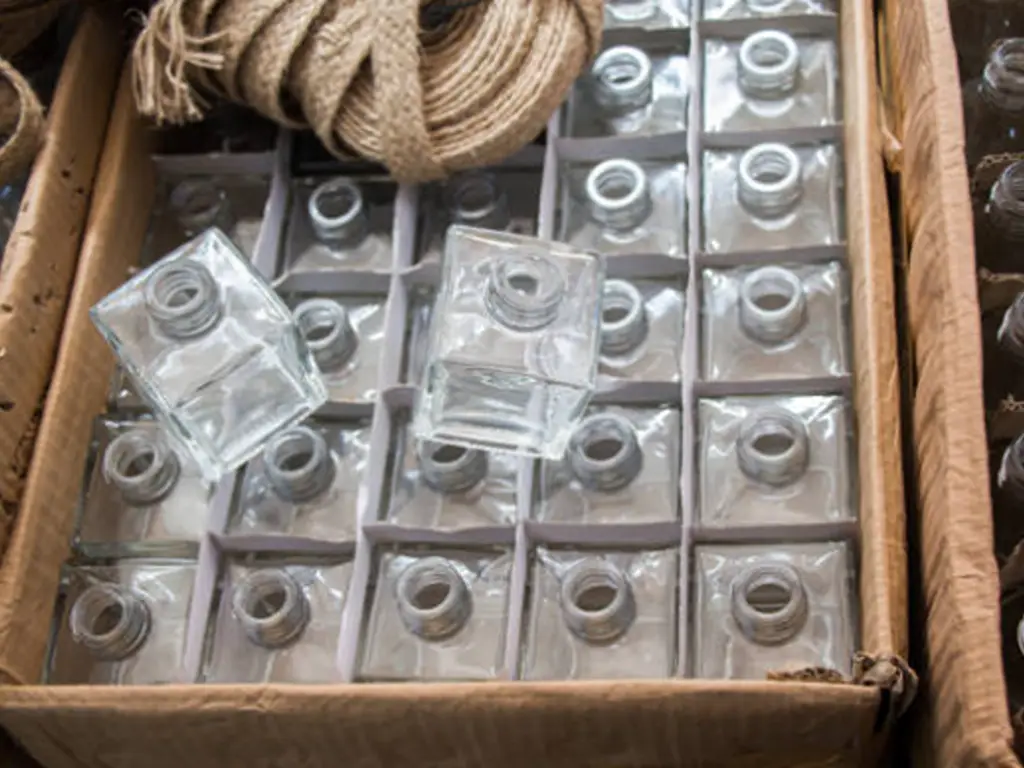
| Double-Wall Corrugated Dividers | High Shear Resistance | Bulk identical shipments (Cases) | Low (Increases top-to-bottom strength) |
| EPS Peanuts | Extremely Poor (for heavy glass) | Lightweight cosmetics only | High (Vibrational settling causes glass to sink) |
Hybrid/Custom Solutions: The Ultimate B2B Exoskeleton
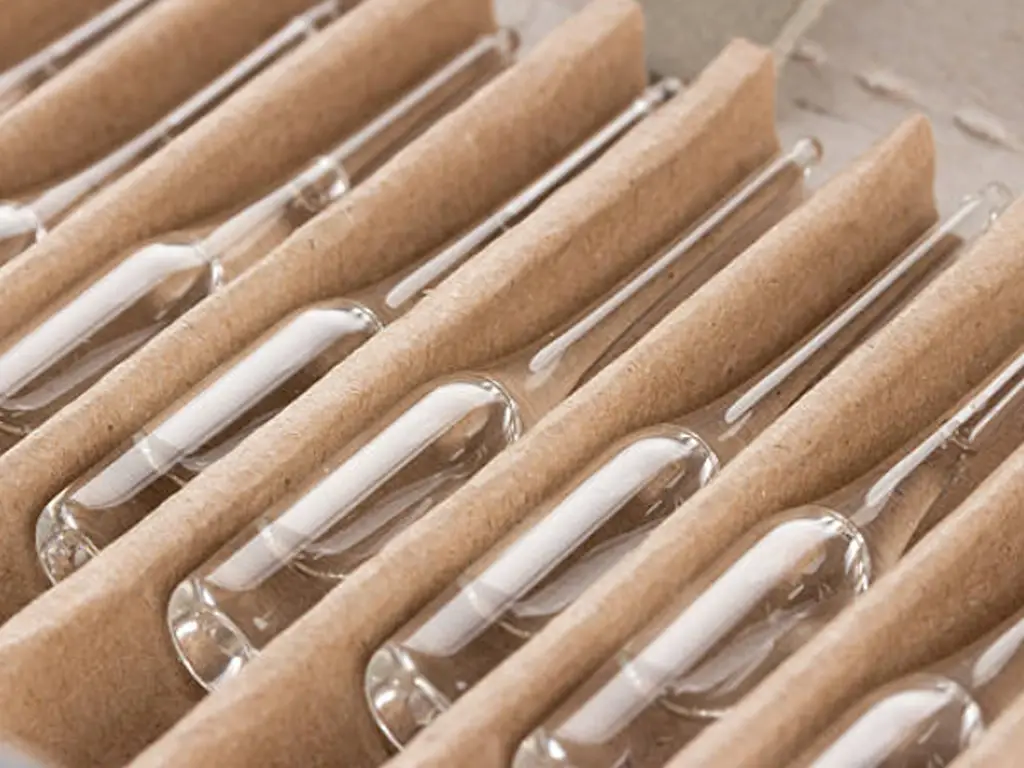
When shipping volume scales, manual loose packing becomes an operational bottleneck. Molded Pulp and Custom Die-Cut EPS/EPE Inserts act as an engineered second skin. Instead of merely filling voids, they mathematically contour to the exact 3D geometry of the glassware, distributing kinetic force across the maximum surface area. While requiring upfront tooling costs, the near-zero breakage rate delivers immense ROI.
The Ultimate SOP for Packing Glassware: Categorized by Product Type
Human inconsistency on the packing line causes concealed shipping damage. Please click on the specific glassware categories below to reveal their foolproof, scalable timeline methodologies.
Cylindrical glasses are structurally weakest at the rim, where the glass wall tapers and is most susceptible to micro-fractures.
Tightly pack the hollow interior with crumpled acid-free tissue paper. This internal density creates outward hydrostatic-like pressure, resisting external compressive forces.
Wrap the exterior in two layers of 3/16-inch bubble wrap. Guarantee a strict 2-inch minimum buffer between the glass and the shipping carton wall.
Place perfectly upright. Fill remaining voids with heavy Kraft paper until the sealed package passes the “Shake Test”.
Never allow rims to make physical contact. Never apply packing tape directly to bare glass, as industrial adhesive leaves stubborn residue.
The slender stem is a vulnerable bridge highly prone to snapping under lateral shear forces and sudden deceleration.
Wrap the stem exclusively with EPE foam until its diameter matches the widest point of the bowl and base, transforming it into a uniform cylinder.
Encase the equalized unit in two layers of 1/2-inch bubble wrap. External pressure is now distributed evenly, eliminating dangerous leverage points.
Load stemware perfectly upright into double-wall corrugated cartons with cellular dividers.
Laying stemware horizontally is a fatal logistics error. It subjects the stem to the full downward gravitational force of the box.
B2B perfume logistics present a triple-threat: high value density, fragile atomizers, and catastrophic liquid leakage risks during high-altitude transit.
Apply heat-shrink bands or specialized sealing tape directly over the cap and atomizer collar to prevent atmospheric pressure leaks.
Wrap the bare glass in acid-free tissue paper (prevents chemical imprints), followed by 1/8-inch EPE foam. Never use coarse Kraft paper against cosmetic glass.
Place wrapped bottle into retail box. Insert retail box into the corrugated shipping carton using rigid EPS blocks to suspend it perfectly in the center.
Always line the bottom of the master carton with industrial absorbent pads. High-proof alcohol leakage will rapidly degrade corrugated cardboard, destroying the entire shipment.
Manual wrapping for intricate protrusions (decanters, handles) is highly labor-intensive and dangerously inconsistent.
Deploy a prefabricated 3D die-cut EPE foam block tailored to the exact CAD contours of the vessel.
Place the glassware into the cavity. The heavy main body must be locked, while fragile handles or spouts are suspended entirely in empty space.
Place the matching top half of the custom insert over the vessel, creating a 360-degree protective clamshell.
Do not let workers manually stuff loose paper behind a delicate glass handle. External box pressure transfers directly through the paper, violently snapping the handle.
Industrial Testing Standards & The ROI of Breakage Prevention
True protection is governed by hard data. Supply chain managers must adhere to ISTA (International Safe Transit Association) standards. The ISTA 3A Test Procedure subjects packaged glassware to severe free-fall drop heights (18-36 inches), impacting specific corners, alongside random vibration spectrums mimicking truck leaf-spring suspensions. Managers must also upgrade exterior cartons, utilizing Edge Crush Test (ECT) ratings of 44 ECT double-wall boxes to prevent bottom-tier pallets from collapsing.
Breakage ROI and The Source Manufacturer Advantage
In B2B e-commerce, shattered shipments spike your Order Defect Rate (ODR), causing plummeting conversion rates and severe listing suspensions that multiply cargo loss tenfold. Attempting to mask inherent product fragility by purchasing thicker downstream packaging is financially exhausting because packaging cannot fix bad glass.
Nuvole Glass fundamentally shifts your TCO by engineering extreme durability directly into the product at the source. Through a meticulously controlled annealing process, we eradicate residual internal molecular stress. Instead of relying on inefficient warehouse wrapping, our engineers design bespoke, 3D-cut EPE foam inserts guaranteeing absolute suspension. Because every batch passes rigorous factory drop testing before export, you achieve maximum dimensional weight efficiency and zero-breakage delivery.
Evaluating Eco-Friendly Packing Alternatives for Glassware
Corporate sustainability mandates require calculating the mechanical performance limits and Total Cost of Ownership (TCO) of biodegradable alternatives.
The Feasibility of Honeycomb Kraft Paper
Honeycomb die-cut Kraft paper expands into a 3D hexagonal structure. While its raw material cost is 15-25% higher than plastic bubble wrap, it offers a massive ROI in Labor Efficiency. The interlocking structure enables tape-free packaging, accelerating warehouse lines by up to 30%. Factoring in these soft labor savings, honeycomb paper boasts a superior TCO for lightweight glassware.
Biodegradable Peanuts (Starch-Based)
Starch peanuts dissolve harmlessly in water. However, this is an industrial nightmare in maritime shipping. During ocean freight, starch peanuts aggressively absorb ambient humidity. They rapidly soften, shrink, and lose structural integrity, creating dangerous internal voids. They must be utilized strictly in conjunction with powerful industrial desiccants sealed inside moisture-barrier master cartons.
Conclusion
Mastering packing material for glassware is a precise engineering discipline balancing material chemistry, mechanical design, and financial ROI. By universally adopting the three-tier protection system, strict SOPs, and ISTA testing standards, B2B organizations can eradicate transit breakage. Integrating intelligent sourcing from structural-integrity-focused manufacturers ensures supply chains operate at maximum efficiency and profitability.
Upgrade to source-integrated, zero-breakage packaging solutions customized for your exact glassware geometry.
Consult Nuvole Glass Engineers Today