
Selecting the right types of glass bottles is not merely a question of aesthetics; it is a high-stakes engineering and financial decision that requires guidance from professional glass manufacturers. A single mismatch between liquid chemistry and glass grade, or a poorly calibrated closure system, can result in catastrophic leaks, product recalls, and destroyed brand equity. This definitive guide bridges the gap between chemical compatibility, manufacturing physics, and bottom-line economics, providing B2B buyers with a complete, actionable roadmap to zero-defect packaging.
The Inner Core: Aligning Liquid Chemistry with Glass Grades (Borosilicate vs. Soda-Lime)
The starting point for sourcing glass is never the external shape. You must first ask a critical engineering question: How aggressive is your liquid? Relying on the official United States Pharmacopeia (USP) <660> Containers—Glass standards, we can isolate the exact parameters separating high-end borosilicate from standard soda-lime glass, ensuring chemical survival over your product’s entire shelf life.
Type I (Borosilicate Glass): High Thermal Shock and Chemical Inertness
Type I glass is the absolute pinnacle of packaging defense. From a metallurgical standpoint, the addition of boric oxide to the silica network radically alters the glass matrix. This drastically suppresses the material’s Coefficient of Thermal Expansion (CTE).
Consider a real-world industrial hot-fill scenario: highly acidic serums are injected into bottles at 85°C to 95°C, followed immediately by a rapid plunge into a cold-water cooling tunnel. Ordinary glass would instantly develop micro-fractures or undergo catastrophic explosive shattering. Type I safely survives these extreme temperature swings (ΔT). Furthermore, its superior hydrolytic resistance means it will not leach alkaline ions into strong acids, making it the mandatory choice for aggressive pharmaceutical compounds and premium active cosmetics.
Type II and III (Soda-Lime Glass): Cost-Effective Solutions with Constraints
For 90% of fast-moving consumer goods (FMCG), Type I borosilicate represents severe engineering overkill and a waste of procurement budget. The industry standard is soda-lime glass, but buyers must understand the critical difference.
| Glass Grade | Surface Treatment | Optimal pH Range | Typical B2B Applications |
|---|---|---|---|
| Type I (Borosilicate) | None required (Inherently inert) | Extreme Acidic to Alkaline | Injectable drugs, strong acids, reactive serums |
| Type II (Soda-Lime) | De-alkalized (Sulfur treated inner wall) | Acidic to Neutral (pH < 7) | IV fluids, acidic beverages, active skincare |
| Type III (Soda-Lime) | Untreated | Neutral to Mildly Alkaline | Liquor, standard cosmetics, dry foods |

The Physical Body: How Capacity Dictates Production Methodologies
Once your chemical defense is locked in, you must construct the physical body. Before sketching CAD designs, one hard physical metric will dictate your entire manufacturing fate and supply chain structure: Capacity (ml).
The Manufacturing Physics: Why Process Dictates Volume (Tubular vs. Molded)
The dimensional tolerance and physical limits of a bottle rely entirely on how it is formed. Tubular Glass begins with pre-manufactured, hollow glass tubes. Machines cut these tubes and form the neck and base. Because it starts as a tube, the walls are incredibly uniform with zero mold seams. However, if you attempt to make a large-volume bottle, the tube diameter becomes too wide and dangerously fragile.
Molded Glass relies on dropping a molten “gob” of glass at 1,200°C into a steel mold and using highly pressurized air to blow it outward. Because a mold consists of two halves, molded bottles always feature a visible vertical seam line and have wider dimensional tolerances. The physical limit here is heat retention: if a gob is too small (e.g., 2ml), it solidifies instantly upon touching the cold steel mold, ruining the shape.
The Capacity-to-Process Decision Matrix (1ml to 1000ml+)
- Micro Volumes (1ml – 10ml): Strictly Tubular territory. Essential for ampoules, vial serums, and perfume samples. Tooling costs are practically negligible.
- The Golden Crossover Zone (10ml – 50ml): The buyer’s battleground. Need heavy, luxurious glass with thick bases? Choose Molded. Need ultra-lightweight, clinical transparency? Choose Tubular.
- Bulk Volumes (50ml – 1000ml+): The undisputed domain of Molded glass. Be prepared: shifting to molded glass triggers significant mold tooling fees and exponentially higher Minimum Order Quantities (MOQs).
The Shield and Visual: Engineering Shapes, UV Defense, and Surface Finishes
With the capacity defined, we must armor the bottle. Shape dictates your manufacturing throughput efficiency, while color acts as the ultimate barrier against photochemical degradation.
Industrial Shapes and Automated Filling Capabilities
A beautiful bottle that jams your conveyor belt is a profound liability. Classic cylindrical shapes like Boston Rounds and Euro Droppers dominate because their low center of gravity offers the highest throughput on automated filling lines. Conversely, sharp Square bottles create friction points, frequently causing catastrophic line jams unless specialized transport pucks are utilized.
Color Science, Wavelength Blocking, and Advanced Finishes
| Glass Color | UV Block Rate (<450nm) | Lethal Engineering Warning |
|---|---|---|
| Amber | > 99% | Masks the natural color and visual texture of your liquid entirely. |
| Green | ~ 50% – 70% | Weak against short-wave UV. Not suitable for reactive organics. |
| Cobalt Blue | < 20% | Provides almost no UV defense despite the dark aesthetic. |
| Clear / Flint | < 10% | Zero light protection. Formulations must be highly chemically stable. |

The Final Seal: Navigating Neck Finishes and Closure Ecosystems
You can source a flawless glass body, but if the closure mechanism fails, your entire investment drains away. A closure is a synchronized ecosystem comprised of glass threads, dispensers, and compressible liners.
Decrypting GPI and SPI Thread Standards
The industry speaks in precise dimensional ratios governed by the Glass Packaging Institute (GPI), such as 28/400. The first number (28) represents the “T-dimension”—the outside diameter of the thread in millimeters. The second number (400) dictates the specific thread style. Procuring a 24/410 glass bottle but accidentally buying a 24/400 lotion pump means the threads will cross, leading to guaranteed leakage.
Types of Closures: Matching Dispensing Mechanisms to Liquids
The Critical Role of Torque and Liners in Leak Prevention
Even with a perfect Teflon liner, sealing integrity fails on the assembly line if quality control misunderstands torque. Sealing requires compressing a liner at a specific pressure, measured in inch-pounds of Application Torque. If the torque is set too high on your automated capper, the rotational force will permanently crush and warp the liner (back-off), destroying its viscoelastic properties and breaking the hermetic seal.

The Bottom Line: Moving Beyond Tooling Fees to Master TCO
In the ruthless reality of B2B procurement, the final sourcing decision is dictated by the Chief Financial Officer. Most teams are blinded by initial unit prices, ignoring the hidden vampires draining their Total Cost of Ownership (TCO).
The ESG Financial Lever: Lightweighting and PCR Glass
In modern corporate RFPs, ESG compliance is a strict deal-breaker. Leveraging advanced manufacturing for Lightweighting (reducing glass weight by up to 20%) and incorporating PCR glass is not just an ecological victory. Shaving 50 grams off a single bottle translates to thousands of pounds removed from a shipping container, resulting in a massive, immediate reduction in trans-oceanic freight costs.
The Hidden Costs of Fragmented Sourcing (Real Math)
Assume you procure 100,000 units of a 50ml glass bottle requiring a custom frosted finish. You find a factory selling bare glass for $0.15 each ($15,000 total).
- The Trap: To achieve the frosted spray, you must ship bare bottles to a third-party decoration facility.
- Logistics Bleed: Secondary inland freight to move empty glass (shipping air) adds $1,200+.
- 3rd-Party Breakage: Extra loading/unloading introduces a standard 5% breakage rate. You instantly lose 5,000 units, vaporizing $750+ and blowing up your launch timeline.
Your “cheap” unit price has just been obliterated by fragmented supply chain friction.
The Integrated Manufacturing Benchmark
Therefore, sophisticated procurement requires an in-house integrated manufacturing approach. Within Nuvole’s expansive 60,000-square-meter facility, we have matrix-deployed 10 fully automated surface treatment lines working in strict tandem with primary glass production. Products never leave our roof, driving transfer breakage rates to absolute zero. Empowered by a daily capacity of nearly 1,000,000 units, Nuvole leverages unparalleled economies of scale to deliver ultra-premium bespoke finishes while permanently neutralizing secondary freight costs and insulating your supply chain from unpredictable TCO inflation.
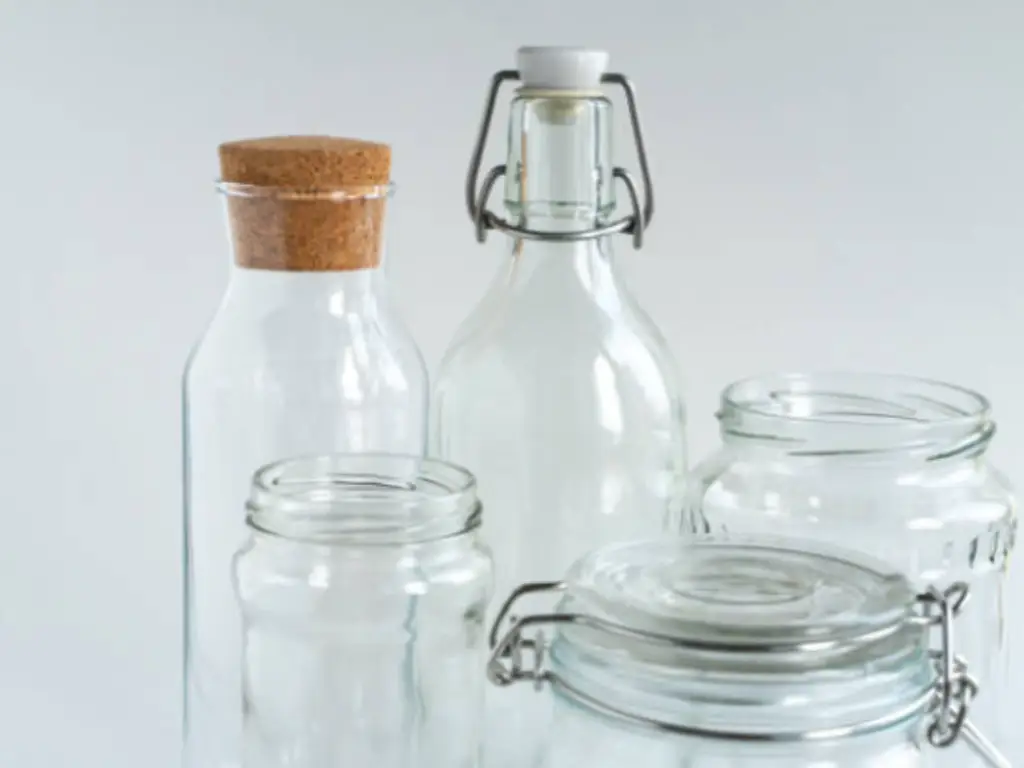
Conclusion: Finalizing Your B2B Glass Bottle Sourcing Strategy
Mastering the complexities of glass packaging requires moving far beyond surface-level aesthetics to adopt a rigorous, engineering-first mentality. To guarantee commercial and operational success, buyers must validate their liquid’s chemical aggressiveness against USP parameters, align target volumes with the physical limits of tubular or molded production, and select true Amber glass for authentic UV protection. Furthermore, locking down precise GPI thread codes with strict torque application standards will prevent catastrophic assembly-line leaks. Ultimately, by factoring in freight weight, breakage rates, and secondary decoration friction, procurement teams can uncover the true Total Cost of Ownership and partner with integrated manufacturers to secure a zero-defect, financially optimized supply chain.
Ready to Engineer Your Perfect Packaging?
Eliminate hidden costs and secure a zero-defect supply chain with our integrated manufacturing expertise.
Contact Our Experts Today