A seller wraps a vintage bottle in two layers of bubble wrap, drives to the post office, and hands it over at the counter. Weeks later the buyer claims the bottle arrived half empty, and the platform refunds the buyer anyway. Threads like this fill seller forums every month, and they share one blind spot: the packing was never the weakest layer.
The fix runs through four layers, and only one of them is the box.
What You’re Actually Shipping (and Why Carriers Care)
Alcohol-based perfume may be regulated as a flammable liquid. Under US hazardous-materials rules, a liquid with a flash point at or below 60 degrees Celsius (140 degrees Fahrenheit) meets the Class 3 flammable-liquid definition, subject to applicable exceptions (PHMSA). Check the finished formula’s transport classification before selecting a carrier or service. Carrier limits, approvals, and package markings follow from that classification.
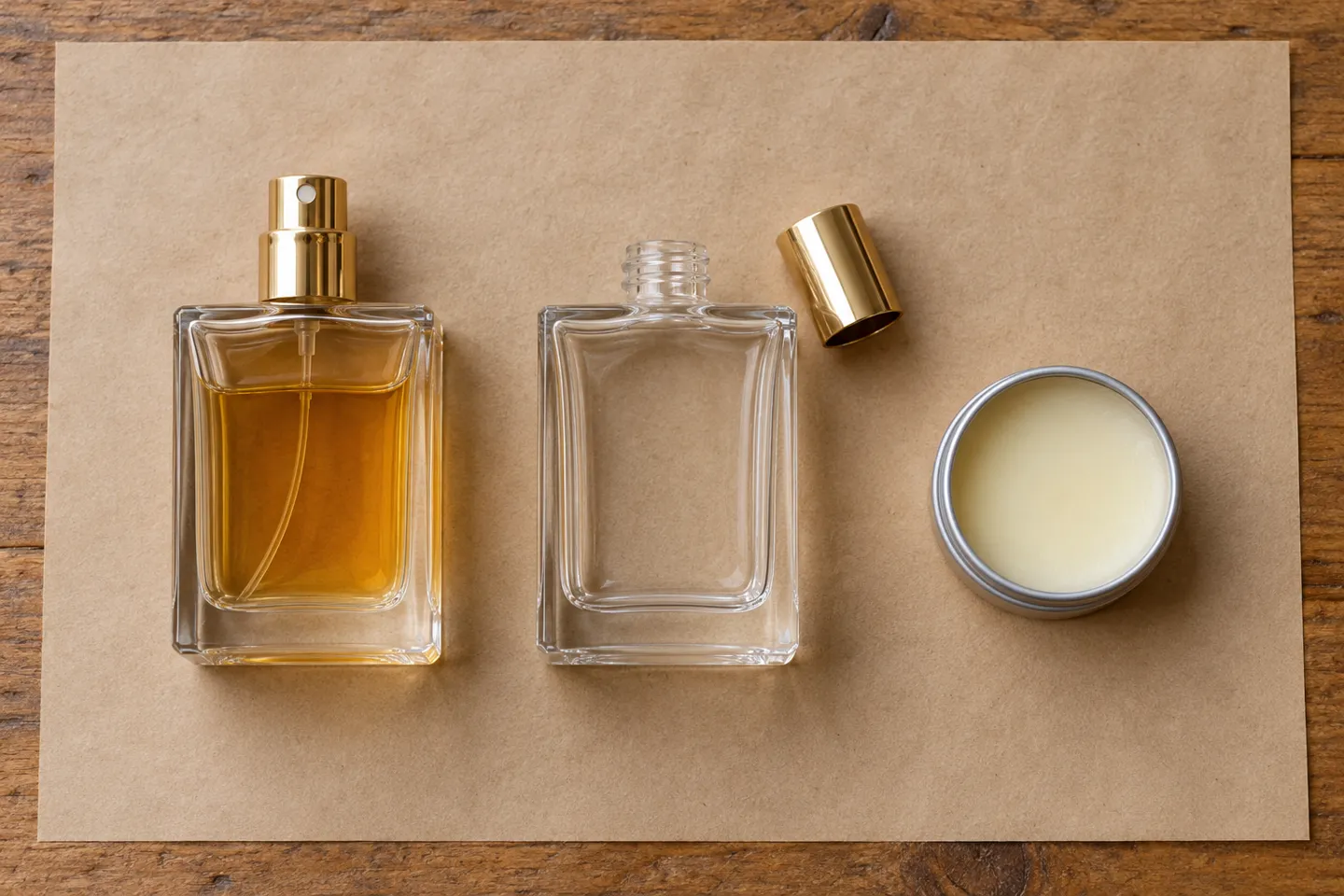
Three different objects hide behind the same word on the label, and each follows different rules. A filled bottle is a regulated dangerous good. An empty glass bottle is ordinary merchandise with no liquid hazard at all. A solid perfume balm mostly sidesteps the liquid rules, though it still deserves a sealed bag, because balm on cardboard is still a refund.
Classify the Finished Formula Before You Buy a Label
Start with the exact product that will enter the parcel, not a generic description from a supplier catalog. Ask the formula owner for its current safety data sheet and the test information behind its flash point. Section 14 of an SDS, when provided, lists transport information such as the UN number, hazard class, and packing group; OSHA identifies that section as non-mandatory, so a blank entry is a prompt to ask questions, not proof that the product is unrestricted (OSHA). Record the concentration and bottle size that match the formula you actually sell. A change from an alcohol spray to an oil-based version, or a reformulation that changes the flash point, deserves a fresh classification check. PHMSA places responsibility for proper classification and packaging on the shipper, even when the product arrives with a supplier’s paperwork (PHMSA).
These rules do not bind only individuals mailing a gift. Resellers on Depop and Mercari, and small fragrance brands shipping their own orders, operate under the same system. The difference is what failure costs: a brand that leaks once a week has a business problem, not a mailing problem.
Carrier Rules, Decoded: USPS, UPS, FedEx, and the International Question
Each carrier answers the core question of how to ship perfume with its own rulebook, so start with the one most parcels actually use. USPS accepts perfume domestically on ground services, with air transport possible only if you obtain prior authorization (USPS News, 2025). The ceiling is 16 fluid ounces (about 473 ml) of perfume per package. Every container must sit in its own sealed secondary packaging, such as a sealable plastic bag, with absorbent material packed around it. The outer box must then display Hazmat Label 876 plus DOT markings for surface transportation only (USPS News, 2025). International delivery is off the table, including military and diplomatic addresses (USPS News, 2025).
Since January 27, 2025, these parcels also need rigid outer packaging that meets minimum strength standards for edge crush and burst resistance (Federal Register, 2025). In practice that means a corrugated cardboard box, not a padded mailer.
Carrier requirements vary by service and shipment classification. UPS accepts fully regulated hazardous-materials shipments on a contract basis, while some limited-quantity ground shipments may not require a contract (UPS). FedEx directs perfume shippers to its dangerous-goods team for larger or business shipments (FedEx). For international service, DHL advises checking dangerous-goods acceptance and destination requirements before shipping (DHL). At street level there is a catch: a consumer carrying one bottle into a retail counter may be refused, and even store employees disagree about the policy (Reddit r/upsstore, 2026).
Ignoring the rules can lead to a refused shipment and regulatory penalties. Marketplace sellers face a quieter trap: a prepaid label may select an air service even when their perfume shipment qualifies only for ground transport. Check the service printed on the label before handing over the box; USPS normally restricts ethanol-based perfume to domestic surface transportation without prior written authorization (USPS).
Carrier Rules for Perfume at a Glance
| Carrier | Domestic | International | What you must have | Common trap |
|---|---|---|---|---|
| USPS | Ground only (air with prior authorization); 16 fl oz max per package | Not permitted, including military and diplomatic addresses | Sealed inner bag, absorbent material, Hazmat Label 876, surface-only marking, rigid corrugated box (2025 rule) | Platform prepaid labels defaulting to air service |
| UPS | Acceptance depends on classification and service; fully regulated shipments require a contract | Confirm route and dangerous-goods acceptance with UPS | Check whether the shipment is fully regulated or qualifies for a limited-quantity exception; follow the applicable packaging, marking, and documentation rules | Retail counters refusing one-off consumer parcels |
| FedEx | Confirm the perfume formula, quantity, and selected service with FedEx | Confirm destination and dangerous-goods acceptance with FedEx | Carrier-approved packaging and any required dangerous-goods documents for the actual service | Same counter-level refusals |
| DHL | Check the chosen DHL service and account | Possible on approved routes after dangerous-goods review | Carrier acceptance, destination check, and documents required for the route | Destination countries restricting alcohol shipments |
Sources: USPS News (2025); Federal Register (2025); UPS, FedEx, and DHL carrier guidance.
Confirm the Route Before Checkout
A shipping option shown in a marketplace menu is not the same thing as carrier acceptance. Before offering a service to customers, write down the origin, destination, actual formula classification, total liquid quantity, and the exact carrier product the label will purchase. Then confirm that combination with the carrier’s current dangerous-goods instructions. For USPS, the published perfume guidance distinguishes ordinary domestic surface mail from domestic air service that requires prior written authorization; it also excludes international and military or diplomatic destinations (USPS). For UPS, the contract question changes with whether the shipment is fully regulated or qualifies for a lighter exception (UPS). Make this a checkout rule rather than a packing-room guess. If a platform cannot generate a compliant service and marking for that order, pause the order and choose an accepted route before printing a label.
The Four Barriers: Where Leak-Proofing Actually Happens
Most packing advice piles everything onto one layer: more wrap, sturdier box, better tape. A parcel protects a bottle the way a defense protects a goal, in depth. Four barriers stand between the liquid and the doorstep, and each one fails differently.
Keep that sentence near your packing table, because it separates parcels that survive summer from parcels that generate refund emails.
Bubble wrap protects the box. The seal protects the perfume.
Padding cannot rescue a failed closure, so check the seal before you reach for more wrap.
Barrier 0: The Liquid Itself
Leave expansion room. A bottle filled to the brim has nowhere to put the extra volume when temperatures climb, so pressure goes hunting for the weakest seal. Vintage and secondhand bottles deserve a check for hairline cracks before they enter any box, because a crack turns every later layer into decoration.
Barrier 1: The Closure
Tighten screw caps fully and seat pump collars properly. On a spray bottle the crimped collar is the seal, and a marginal one weeps from the neck, not the cap. For unsealed vintage bottles, sellers wrap the neck with parafilm, a stretchable sealing film, before capping; it is the standard trick in reseller communities (Reddit r/Mercari, 2026). Parafilm stops seepage. It does not make glass stronger, which is why it belongs to this barrier and not the next one.
Barrier 2: The Inner Pack
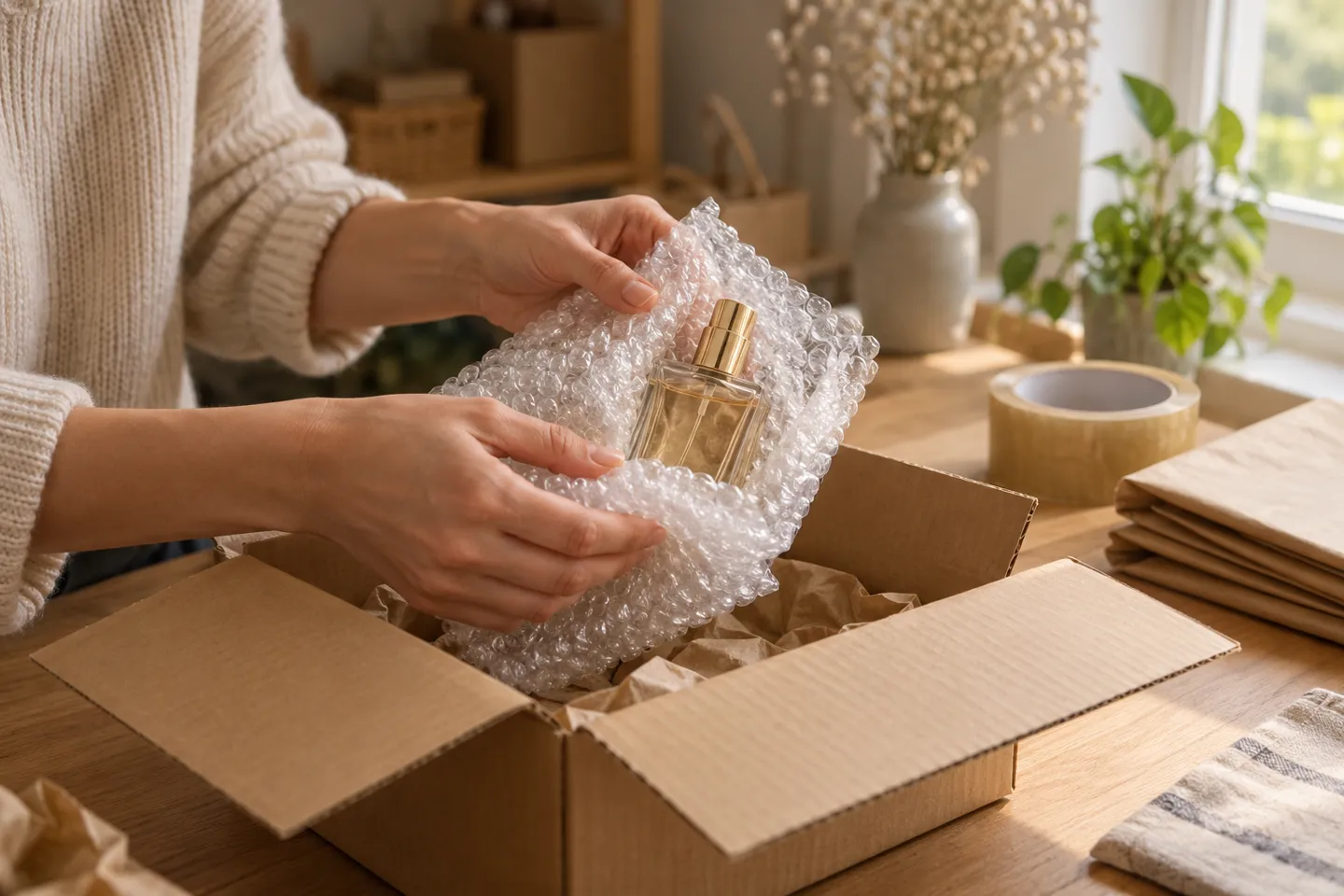
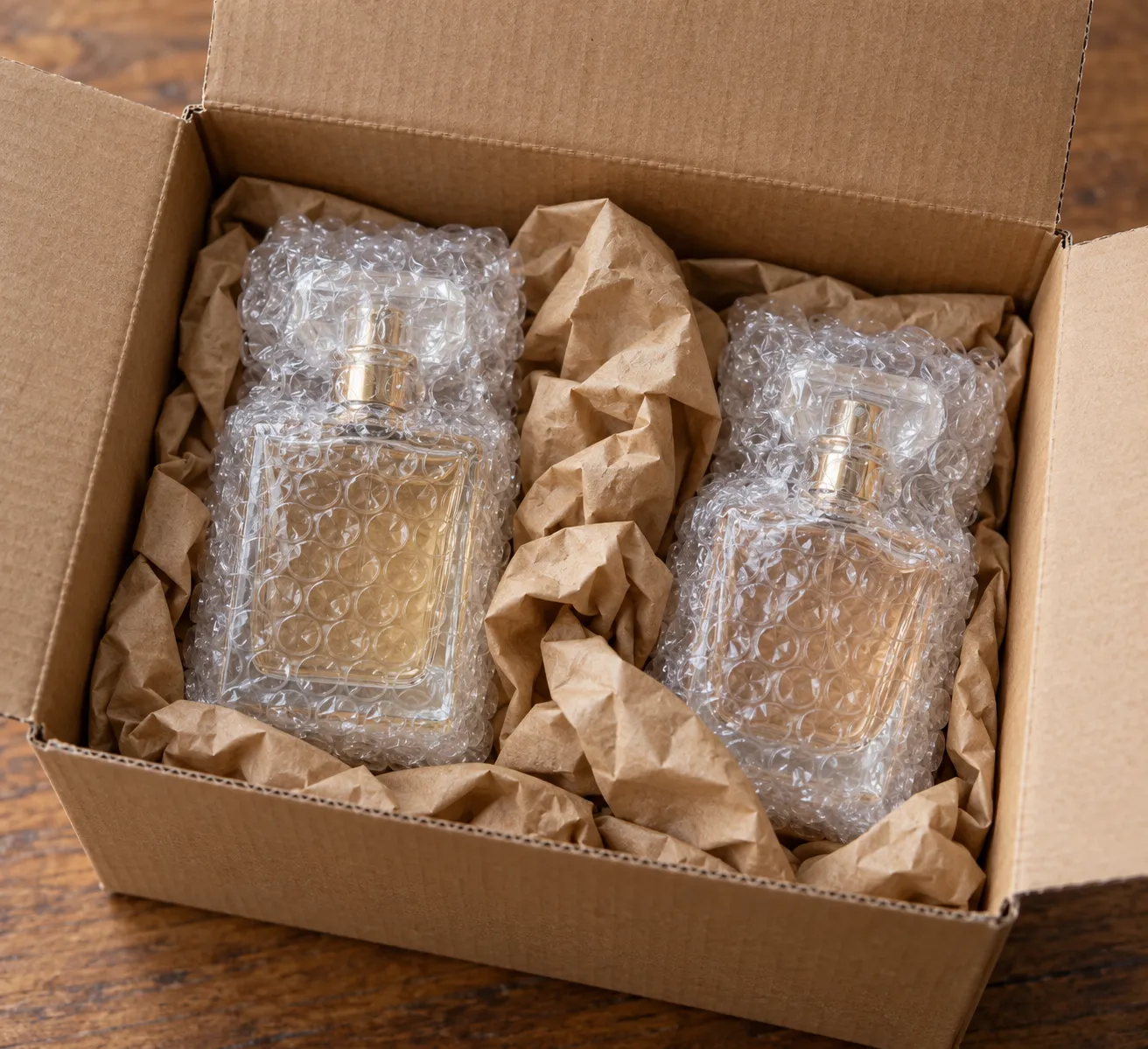
USPS requires each perfume container to be sealed in secondary packaging, with enough absorbent and cushioning material to contain leaks and prevent breakage (USPS News, 2025). Keep glass bottles from touching one another and use fitted dividers or cushioning so they cannot shift inside the outer box.
Barrier 3: The Outer Box
A rigid corrugated box is now a legal requirement for USPS hazmat parcels, not a preference (Federal Register, 2025). Fill the void so nothing shifts when the box is shaken, seal every seam with pressure-sensitive tape, then apply the labels and markings from the carrier rules above.
Your Four-Layer Packing Check
THE LIQUID
Leave expansion room, and retire any bottle with hairline cracks.
THE CLOSURE
Tighten fully, seat the crimp, and wrap unsealed vintage necks in parafilm.
THE INNER PACK
One sealed bag per bottle, absorbent around it, cushioning so bottles never touch.
THE OUTER BOX
Rigid corrugated box, filled void, every seam taped, labels and markings on top.
Follow every step and most parcels arrive dry. The ones that still fail share a pattern, and it is cheaper to learn it before your refund rate teaches you.
Make Every Pack-Out Repeatable
A packing method is only useful if the next person on the shift can reproduce it. Keep one approved sample parcel at the station, with photos of the bag, absorbent layer, dividers, outer box, and final markings. Next to it, post a short check sheet: bottle inspected, closure seated, secondary bag sealed, absorbent placed, glass immobilized, box closed, and service verified. Record the bottle lot and packing-material version on each batch sheet. When a leak report arrives, those two identifiers let you ask whether one crimp lot failed or whether a new insert allowed movement. They also keep a one-off packing mistake from being blamed on every bottle in inventory. Treat a change in box size, insert cut, closure supplier, or filling level as a new pack-out that needs a fresh trial. The goal is repeatability, not a thicker pile of material.
Why Bottles Still Leak: Root Causes, Heat, Air Pressure, and Disputes
Packing errors explain some failures. The rest begin before packing, at the bottle itself.
The Closure Is the Usual Suspect
A spray bottle’s crimp is a metal collar pressed around the glass neck with calculated force. Under-press it and the pump weeps. Mismatch the pump and neck tolerances and it weeps on schedule, in every box. Packaging cannot replace a physical check. As a simple acceptance check, invert a filled sample over a white paper towel and inspect the collar for seepage.
Seller forums hold the case studies. One Mercari seller documented everything: double-wrapped bubble wrap, tissues packed tight, the parcel handed across a postal counter. The buyer still claimed a leak, and the platform refunded the buyer while denying the seller’s appeal (Reddit r/Mercari, 2026). In an indie fragrance community, one customer counted three leaking orders in two or three months, from rollerballs to lotion bottles (Reddit r/Indiemakeupandmore, 2022). The question attached to the count: why had more brands not adopted a simple band of tape around the cap? Thick packaging did not save the first seller. The second never held a sealed bottle at all.
Heat and Cabin Pressure Do the Rest
Alcohol expands as temperatures rise. In a parked van or a sunlit mailbox, that expansion presses on the pump gasket until the weakest seal vents a little fragrance. Sellers who ship year round recognize the pattern: winter parcels arrive dry, summer parcels weep (Reddit r/Mercari, 2026).
Air adds a second stress. Cargo jets hold cabin pressure at roughly 75 kPa, equivalent to about 2,438 meters (8,000 feet) of altitude (Cal Poly, Singh, 2010). That is about a quarter below sea-level pressure, enough to push vapor through a marginal seal even when the liquid stays put. Neither heat nor pressure breaks a good seal. They find the marginal one.
When It Leaks Anyway: Build the Evidence Chain First
Platform disputes rarely reward honesty alone. The Mercari seller above had photos and a counter witness, and still lost (Reddit r/Mercari, 2026). What separates recoverable claims from lost ones is documentation produced before dispatch. Build three things: a photo of the filled level, a short packing video, and the inspection report that travels with a batch. Brands that pack daily can generate this once per batch instead of once per order.
Symptom Diagnosis: Which Layer Failed
| What you see | Likely root layer | Immediate action | Long-term fix |
|---|---|---|---|
| Bottle arrives already weeping from the neck | Closure: crimp or gasket | Quarantine the batch, run an inversion leak check | Add closure leak testing to goods-in inspection |
| Leaks only in summer or after air transit | Closure margin, stressed by heat or pressure | Replace seals, tape caps as a stopgap | Specify tighter pump and neck tolerance from the supplier |
| Glass arrives broken | Outer box and inner pack | Refund with photo evidence | Recut inserts so bottles cannot touch, and add enough cushioning to stop movement |
| Buyer claims a leak, platform sides with the buyer | Evidence chain, not packing | Accept the refund and learn | Photograph fill levels and film packing for every batch |
| Vintage bottle arrives half empty | Aged or missing closure seal | Refund graciously | Wrap necks in parafilm before capping any unsealed bottle |
Sources: failure patterns documented in r/Mercari and r/Indiemakeupandmore threads (2022-2026).
Specifying a Bottle That Survives Transit: Acceptance Criteria Before You Order
Every fix so far happens after the bottle exists. The cheaper fix happens at the purchase order.
Acceptance Criteria on the Bottle Side
Write the shipping question into the sourcing conversation as three testable items, not a hope. First, the neck: 15mm crimp neck is the industry’s common finish for fine-mist sprayers, and any pump you buy later must match it, so get the spec in writing. Second, leak evidence: ask how the supplier tests sealing, and expect vacuum seal testing on every batch rather than on a sample. Third, inspection: full visual inspection before packing, with a report you can keep. A supplier who answers all three in writing has already told you how your parcels will arrive.
Packaging Specs and the Test Shipment
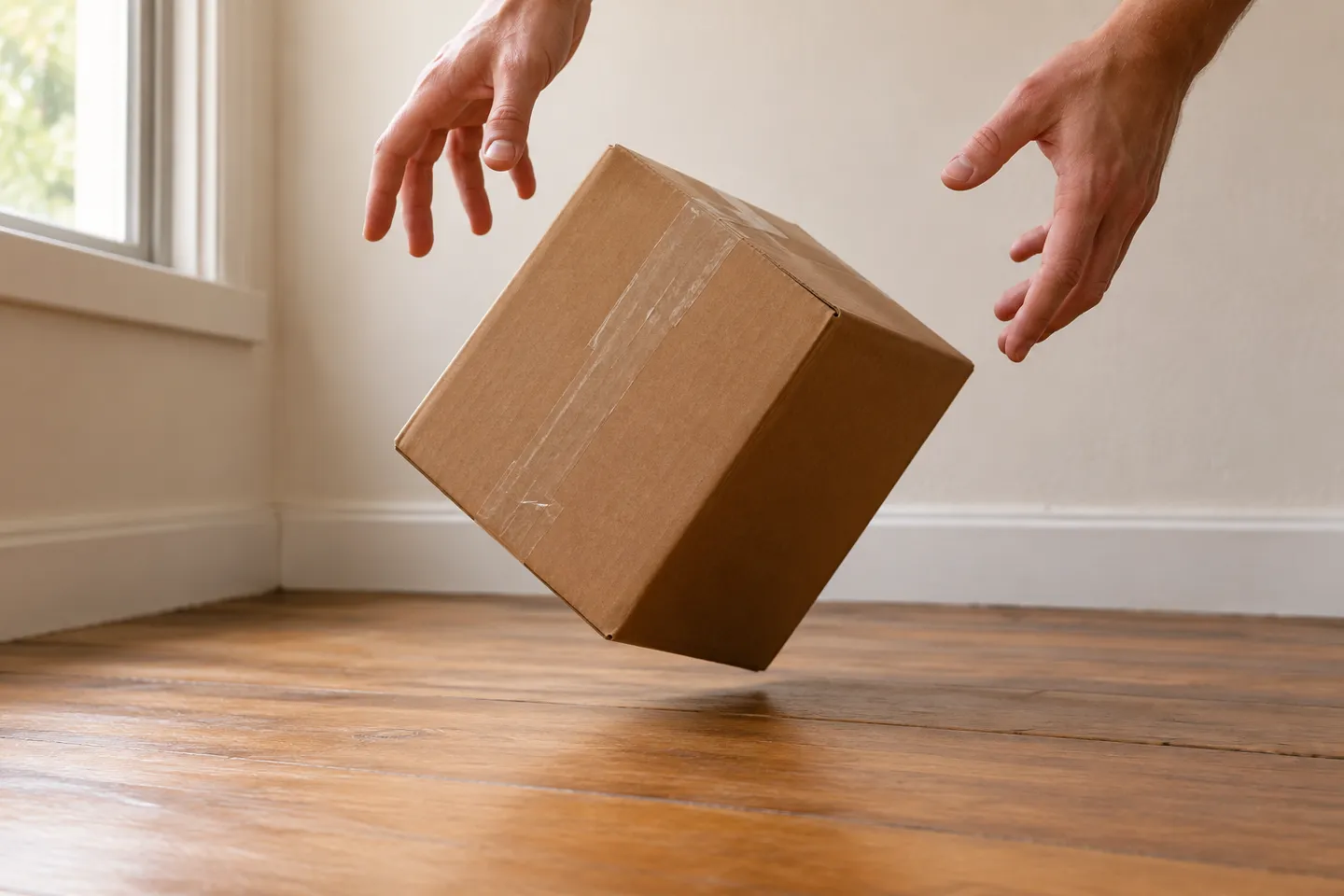
On the packaging side, cushioning and a strong rigid corrugated box do most of the work. Add enough material to keep the bottle from shifting or striking the box walls. Then test like a customer. Send packed parcels to yourself or friends across different climates before launch, and drop-test one box from waist height onto a corner. Keep the photos and video from every test batch; they are the first entries in the evidence chain described above.
Test the Filled SKU, Not Just the Empty Glass
An empty bottle can survive a drop and still fail after filling. Test the final combination: production glass, actual fragrance, pump, gasket, cap, label, inner bag, and the box you will use at launch. Start with an upright inspection, then invert samples over clean absorbent paper and look for moisture at the neck, pump, or cap. Check another set after a warm storage period and again after the packed-box drop trial. The aim is to find where liquid appears, not merely whether a box looks presentable. Photograph the starting fill line so a small loss is visible later. If one sample fails, separate closure leakage from broken glass and from a loose cap; each points to a different supplier fix. Ask the supplier to state the test method, sample size, and acceptance threshold in writing before production, then repeat the agreed check on the first delivered batch.
That is the standard we hold ourselves to at Nuvole. Our perfume bottles leave the factory only after vacuum-seal testing (vacuum-seal tested perfume bottles) with 100% visual inspection, on the industry’s 15mm crimp neck. Pump compatibility never becomes your leak point. Because evidence chains start at dispatch, we provide photo or video QC reports before shipment (photo or video QC reports before shipment). Your documentation arrives with the goods instead of after the dispute.
Pre-Order Acceptance Checklist
FROM THE SUPPLIER
- Written neck finish spec (15mm crimp)
- Vacuum seal test procedure and per-batch leak results
- 100% inspection statement
- Sample bottles for your own testing
IN THE CONTRACT
- A defined leakage rate with remedies
- Breakage compensation terms
- Pre-shipment QC photos or video
TEST YOURSELF
- An inversion leak check on samples
- Ship-to-yourself parcels across climates
- A drop test on the packed box
The Economics of Breakage: Making Leakage a Contract Term, Not an Apology
Thicker packaging bills every order, forever. A better-sealed bottle bills once, at the purchase order. Between those two sits the arithmetic small brands rarely run. One leaked bottle costs the product, the reshipment, the postage, and often the review that mentions the smell of perfume on a crushed box.
The three clauses worth writing are the ones this article kept circling: a defined leakage rate with a remedy, breakage compensation, and pre-shipment QC evidence. None of them require scale. All of them turn leakage from a customer-service apology into a supplier obligation.
Put a simple cost beside the defect rate before deciding that more wrapping is cheaper. Multiply the number of orders by the share that leak or break, then add the replacement bottle, outbound and return postage, packing time, and customer-service time for each claim. Compare that monthly loss with the cost of a better closure or a revised insert across the same order volume. Keep the calculation by bottle and pump combination: a single weak SKU can disappear inside a healthy overall average. The result gives purchasing a reason to reject a marginal batch before it becomes a season of refunds.
Where the Money Goes
PER ORDER, FOREVER
- Bubble wrap upgrades
- Absorbent material and seal bags
- Reshipment per leak
- Refund per dispute
ONCE, AT THE PURCHASE ORDER
- Bottle spec upgrade
- Supplier leak-test clause
- Evidence-chain workflow
One boundary note closes the loop: palletized wholesale shipments move under a different rulebook from parcel post. The four barriers still apply, but the economics, and the contract terms, belong to a freight negotiation, not a packing table.
If you are specifying bottles that have to survive the last mile, we put our zero-breakage delivery commitment in writing (zero-breakage delivery commitment). Breakage risk sits with us instead of with your customers.
Put Your Bottle Spec to the Test
Vacuum-seal testing on every batch, 100% visual inspection, and photo or video QC reports before shipment. Tell Nuvole your neck finish and order volume.
Request a Bottle QuoteReferences
- USPS News. “When it comes to shipping this item, these precautions make scents.” 2025. https://news.usps.com/2025/12/03/when-it-comes-to-shipping-this-item-these-precautions-make-scents/
- Federal Register. “New Mailing Standards for Hazardous Materials Outer Packaging and Nonregulated Toxic Materials.” 2025. https://www.federalregister.gov/documents/2025/01/27/2025-01618/new-mailing-standards-for-hazardous-materials-outer-packaging-and-nonregulated-toxic-materials
- PHMSA. “Interpretation 17-0066: Class 3 Flammable Liquid Definition.” https://www.phmsa.dot.gov/regulations/title49/interp/17-0066
- OSHA. “Hazard Communication: Appendix D, Safety Data Sheets.” https://www.osha.gov/hazcom/appendix-d
- UPS. “Hazardous Materials Contract Shipping.” https://www.ups.com/us/en/support/shipping-support/shipping-special-care-regulated-items/hazardous-materials-guide/shippers-responsibilities/contract-shipping
- FedEx. “How To Ship Liquids.” https://www.fedex.com/en-us/shipping/how-to-ship-liquids.html
- DHL. “Shipping Perfumes.” https://www.dhl.com/discover/en-ro/logistics-advice/import-export-advice/ship-perfume-internationally
- Singh, S. Paul. “Temperature and Pressure in Air Transport.” Cal Poly Digital Commons. 2010. https://digitalcommons.calpoly.edu/cgi/viewcontent.cgi?article=1038&context=it_fac
- Reddit r/Mercari. “My experience with Mercari Seller Protection on Vintage Perfume.” 2026. https://www.reddit.com/r/Mercari/comments/1x0bwp1/my_experience_with_mercari_seller_protection_on/
- Reddit r/Indiemakeupandmore. “Indies and leakage.” 2022. https://www.reddit.com/r/Indiemakeupandmore/comments/tyga15/indies_and_leakage/
- Reddit r/upsstore. “Perfume.?” 2026. https://www.reddit.com/r/upsstore/comments/1u97r2m/perfume/