Starting a perfume brand is more than just choosing a pleasant scent; it is a high-stakes balance between olfactive artistry and meticulous supply chain precision. In this comprehensive guide, we strip away the romantic gloss to reveal the raw unit economics, regulatory hurdles, and manufacturing secrets required to build a scalable, profitable fragrance empire in 2026.
Shattering the Illusion: Why a “Good Scent” Doesn’t Guarantee Sales
The most dangerous misconception among aspiring fragrance founders is the belief that a beautiful scent will organically sell itself. The modern fragrance market is a highly saturated, hyper-competitive red ocean. Every single day, thousands of new SKUs are launched globally, many formulated by master perfumers. Yet, the vast majority of these indie brands quietly shutter within their first eighteen months, buried under the weight of dead stock and misaligned marketing.
To survive and scale, you must immediately shift your mindset from that of an “artist” to that of a “supply chain and branding architect.” The brutal reality of the commercial fragrance world can be distilled into a definitive success formula:
The Profitable Fragrance Formula: 30% Olfactive Quality (The Scent) + 40% Visual & Emotional Premium (The Branding) + 30% Supply Chain Efficiency (The Margins).
You must understand the concept of Olfactory Fatigue in marketing. Consumers browsing online or walking through a department store are bombarded with sensory inputs. They cannot physically smell your product through a screen. Therefore, the initial purchase decision is almost entirely driven by emotional resonance, packaging weight, and precise market positioning. The scent itself is merely the retention tool that guarantees the second purchase.
Before you even contact a manufacturer, you must establish an absolute demarcation regarding your price bracket and target audience. Are you building a “Masstige” (Mass-Prestige) brand, targeting Gen Z with affordable $40-$60 gourmand body mists driven by TikTok virality? Or are you entering the “Hyper-Niche” arena, pricing your 50ml bottles at $250+, utilizing rare absolutes, and targeting affluent buyers who demand complex, challenging scent profiles? Mixing these two strategies—such as putting expensive, challenging juice into cheap, mass-market packaging—is a guaranteed recipe for commercial failure.
The Ultimate Fork in the Road: Private Label vs. Custom Formulation
There is no universally “correct” way to start a perfume business. Your optimal route depends entirely on three variables: your available capital, your timeline to launch, and your desire for intellectual property control. Before diving into the operational nuances, we must objectively deconstruct the two primary manufacturing pathways available to modern founders.
The Core Differences (A Quick Breakdown)
Understanding the structural differences between Private Label (White Label) and Custom Formulation (OEM/ODM) is the most critical decision you will make. This decision dictates your entire business model.
| Metric / Attribute | Path A: Private Label (Lean Route) | Path B: Custom Formulation (Bespoke Route) |
|---|---|---|
| Formula Ownership | Owned by the manufacturer. You are licensing a pre-made scent. | 100% owned by your brand (if negotiated and paid for via development fees). |
| Time to Market | Extremely fast: 4 to 8 weeks. | Prolonged: 6 to 12+ months (due to sampling and stability testing). |
| Minimum Order Quantity (MOQ) | Very low: 100 to 500 units. | Extremely high: Often 5,000 to 10,000+ units, dictated by custom components. |
| Initial R&D Cost | Minimal to Zero. | High: $2,000 – $10,000+ for formulation, briefs, and lab revisions. |
To use an architectural metaphor: Private Label is akin to purchasing a high-end, fully furnished condominium. You can change the artwork and the furniture (your branding and labels), and you can move in immediately, but you cannot alter the floor plan. Custom Formulation, conversely, is buying a plot of land and hiring an architect. It requires immense capital, deep patience, and rigorous permits, but the final estate belongs entirely to you and cannot be replicated by anyone else.
A critical legal pitfall here is Formula Ownership. Many unverified factories will offer “free custom formulation” to entice you. This is a trap known as Formula Lock-in. If they do not charge you a development fee, they retain the IP of the formula. If your brand explodes in popularity and you wish to move to a larger factory, you legally cannot take the formula with you. You are held hostage by their pricing.
🧭 The 60-Second Founder Reality Check
To ensure you do not waste time reading strategies that do not align with your financial reality, answer the following three critical questions honestly:
- Question 1: Is your realistic, liquid startup capital strictly under $15,000 USD?
- Question 2: Are you under extreme pressure (from yourself or investors) to launch, generate cash flow, and validate the market within the next 3 to 4 months?
- Question 3: Is your primary unfair advantage related to social media distribution, content creation, and performance marketing, rather than a deep, artisanal obsession with olfactive chemistry?
Your Diagnostic Result
Based on your capital and timeline, choose your dedicated execution blueprint:
Execution Path A: Launching a Private Label Brand (Lean & Marketing-Heavy)
Welcome to the agile entrepreneur’s playbook. By choosing the Private Label route, you are making a calculated business decision to bypass the grueling, expensive R&D phase and instead deploy your capital directly into customer acquisition, visual branding, and market validation. However, selling a pre-existing formula requires an exceptionally sharp market positioning strategy.
Lean Market Research: Data-Driven White Space & The Discovery Library
Your market research in Path A is not about inventing a groundbreaking new scent; it is about finding a new narrative and visual packaging for a proven, mature scent profile. You must avoid relying on “gut feeling” and instead use hard data to find your olfactive white space.
Instead of guessing what people want, rely on data verification. First, utilize tools like the TikTok Creative Center to monitor the growth velocity of specific fragrance hashtags (e.g., tracking the explosive rise of #PistachioPerfume or #SkinScent). Look for trend vectors that have high engagement but low brand saturation. Secondly, execute the “1-Star Review Reverse Engineering” method. Scrape the bottom reviews of best-selling fragrances on Sephora or Fragrantica. If a popular “clean girl” fragrance consistently receives complaints like “love the top notes, but it disappears in 20 minutes” or “the dry down is too synthetic,” you have just found your precise marketing angle for your private label alternative.
Once you identify a trend, you must request a “Discovery Library” (or sample matrix) from your chosen Private Label manufacturer. When testing these pre-formulated juices, your evaluation must be ruthlessly objective. The industry operates on “Safe Blind-Buy Profiles”—scents like citrus-woody or light gourmands that convert exceptionally well in e-commerce because they are universally inoffensive. During your blind testing of the manufacturer’s samples, do not just evaluate the top notes. You must meticulously record two metrics: Longevity (does it survive on the skin for at least 6-8 hours?) and Sillage (the scent trail it leaves). If a factory’s ready-made juice fails these fundamental performance metrics, no amount of brilliant packaging will prevent your brand from dying via high refund rates and terrible reviews.
Transparent Startup Costs & The “Filling” Paradox
A primary advantage of Path A is financial predictability. Below is a realistic, conservative Bill of Materials (BOM) and startup cost breakdown for a micro-launch of 500 units.
| Expense Category | Estimated Cost (500 Units) | Notes & Hidden Traps |
|---|---|---|
| Product (Juice, Bottle, Pump, Cap) | $7,500 ($15.00/unit) | Using premium stock packaging. Excludes bespoke molds. |
| Brand Identity & Visual Design | $2,500 – $3,500 | Do not skimp here. This is your primary differentiator. |
| Sample/Discovery Library Sourcing | $300 | Paying for manufacturer tester kits and shipping. |
| Fill & Assembly (Turnkey/Labor) | Included in Turnkey, OR $500 (Equipment) | Crucial hidden cost. See the ‘Filling Paradox’ below. |
| Basic Compliance & Label Proofing | $800 | Ensuring INCI ingredient lists are legally compliant. |
| Total Initial Capital Required | ~$11,600 – $12,600 | Leaves remaining budget for Shopify and initial ad spend. |
The Disastrous “Filling” Paradox: Many beginners attempt to be overly clever by purchasing 500 empty bottles from one supplier and a few liters of bulk perfume juice from another, thinking they will save money. This creates a catastrophic physical paradox. If you choose a standard FEA 15 Crimp Neck bottle (the industry standard for high-end atomizers), you cannot screw the pump on by hand. It requires a pneumatic crimping machine. No reputable contract filler will put a micro-order of 500 units on their automated filling lines—it is simply not worth the setup time. You are left with two choices: purchase a manual/pneumatic crimping machine for $300-$500 and spend days doing grueling manual labor in a sterile environment, or fundamentally change your sourcing strategy. For lean startups, the absolute best path is to demand a “Turnkey Solution” where the manufacturer handles the juice, the bottle, the filling, and the crimping, delivering a fully finished, retail-ready product.
Bypassing the Glass MOQ Trap & The Heavy-Cap Premium
If you are on Path A, let us be perfectly clear: Do not attempt to open a custom private mold for your glass bottle. Custom glass molds require a tooling fee of $3,000 to $5,000, and more importantly, glass factories demand Minimum Order Quantities (MOQs) of 10,000 to 30,000 units. That alone will bankrupt your lean startup.
Instead, you must master the art of the “Stock Bottle + High-End Decor” hack. You utilize the factory’s existing library of public molds (Stock Bottles) which have MOQs as low as 500 units. To prevent your product from looking like a cheap generic item, you divert your capital into aggressive secondary decoration and premium closures.
The secret weapon of perceived luxury in the fragrance industry is tactile weight. Consumers subconsciously equate physical heaviness with premium quality and high price points. By pairing a standard stock glass bottle with a heavy Zamac (Zinc Alloy) Cap weighing 40 grams or more, you instantly elevate the emotional premium of the product. This completely blocks the urge to source cheap, lightweight plastic caps from platforms like 1688, which will instantly destroy your brand’s credibility. Furthermore, to solve the filling paradox mentioned earlier without buying heavy machinery, you can source high-end stock bottles featuring a “Hidden Screw Neck.” These bottles function like standard screw-on caps for incredibly easy manual filling, but feature a customized metal collar that clicks over the threads, visually mimicking a luxurious, factory-crimped FEA 15 finish.
D2C E-commerce & Social Media Customer Acquisition
Because your juice formulation is not an exclusive, patented chemical marvel, your absolute core competency must be marketing. Selling perfume online (Direct-to-Consumer via Shopify) presents a massive friction point: the consumer cannot smell the product before buying.
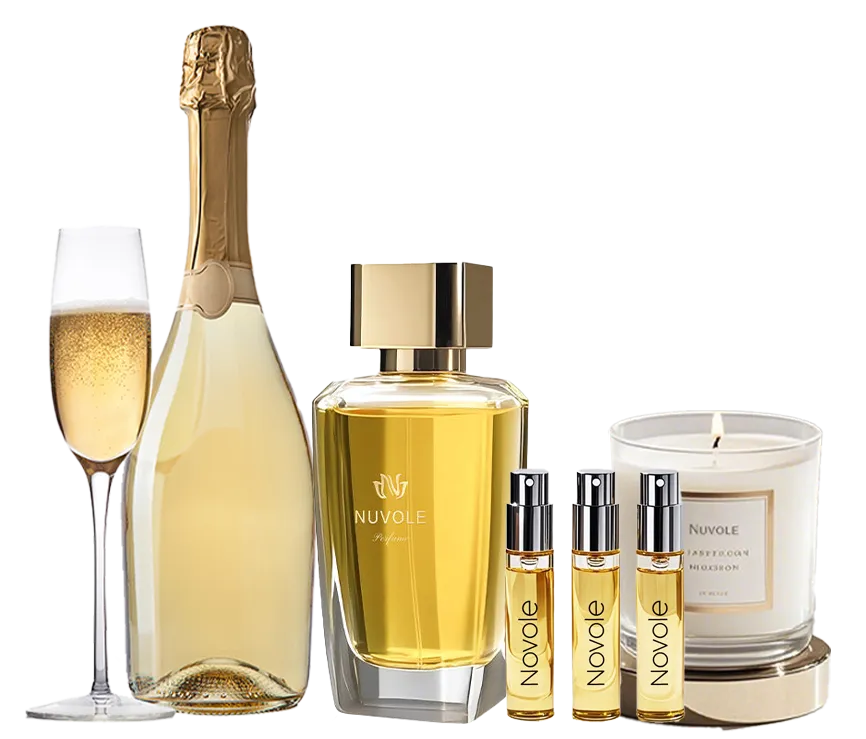
To bypass this, you must engineer a highly optimized “Discovery Set” Funnel. Instead of trying to force cold traffic on TikTok or Instagram to buy a $120 full-size bottle blindly, you run performance ads for a $15-$20 Discovery Set containing three 2ml sample vials of your collection. This dramatically lowers the barrier to entry and reduces your Customer Acquisition Cost (CAC). The psychological conversion trigger is the inclusion of a “Full-Size Credit.” You communicate clearly: “Pay $20 to test our scents at home, and receive a $20 discount code toward your first full-size bottle.” By treating the discovery set as a self-liquidating marketing asset rather than a profit center, you seamlessly transition hesitant online scrollers into committed, high-Lifetime Value (LTV) brand loyalists.
Execution Path B: The Custom Formulation Route (R&D & Quality Focus)
If you have selected Path B, you are not simply launching a product; you are engineering an intellectual property asset from the ground up. This bespoke route is designed for founders with substantial capital (typically $30,000+), deep patience, and an uncompromising vision for a completely unique olfactive signature. Here, you are not buying off the shelf; you are commanding a laboratory. However, this path is fraught with extended timelines, brutal minimum order quantities (MOQs), and complex chemical testing.
Deep Olfactive Mapping & Finding Your “White Space”
Unlike Path A, where you repackage a safe trend, Path B requires you to invent a scent profile that currently does not exist in the commercial landscape. This begins with rigorous Olfactive Mapping and analyzing Fragrance Genealogy. You must systematically deconstruct the fragrance pyramids of apex Niche Brands to identify the unserved desires of high-net-worth individuals.
Using industry-standard frameworks like the olfactive quadrants found in Fragrances of the World or Mintel trend reports, you look for the gaps. For example, while the market is flooded with overly sweet gourmands and synthetic ouds, you might identify a lucrative white space for a hyper-realistic, medicinal, herbal bitterness—drawing inspiration from traditional apothecaries or ancient pharmacopeia. This level of uncompromising, challenging artistry is the sole justification for spending tens of thousands of dollars on custom chemical development and proprietary molds.
Mastering the Scent Brief & Stability Testing
Your relationship with a master perfumer or a fragrance house (like Givaudan or Firmenich) begins with the Scent Brief. A professional brief does not just say “make it smell like roses.” It details the exact target demographic, the emotional landscape, the maximum cost per kilogram of the fragrance oil, and strict raw material restrictions (e.g., 100% vegan, cruelty-free, or excluding specific synthetic musks).
Once the lab submits the initial mods (modifications) and you approve a final scent, you enter the most critical and non-negotiable phase of bespoke manufacturing: physical and chemical testing. Amateurs skip this to rush to market; professionals know it is a matter of life and death for the brand. You must mandate a 12-Week Accelerated Stability Test. Perfume is a volatile mixture of essential oils, aroma chemicals, water, and high-proof alcohol. Without proper Maceration (aging) and Chilling/Filtering processes, your bespoke juice might smell divine in the lab, but after three months in a consumer’s warm bathroom, it could undergo catastrophic failures—such as severe discoloration, souring/rancidity, or the formation of cloudy, flocculent sediment at the bottom of the bottle. Skipping stability testing is the fastest way to trigger a mass recall and destroy your brand equity permanently.
The Brutal Reality of Custom Molds & Packaging MOQs
The true financial shock of Path B rarely comes from the liquid itself; it comes from the glass. If your brand vision requires a completely proprietary, uniquely silhouetted glass bottle—one that no other brand on earth possesses—you are entering the realm of custom tooling.
To commission a private mold, glass manufacturers will charge a non-refundable Tooling Fee ranging from $3,000 to $5,000 just to create the steel mold. More punishingly, the physics of operating a massive industrial glass furnace dictates that they cannot produce small batches. A custom glass run will trigger a strict MOQ of 10,000 to 30,000 units per bottle size. Furthermore, you must engineer the neck finish flawlessly, deciding between a standard screw neck or the high-end industry standard FEA 15 crimp neck, ensuring it perfectly aligns with your bespoke zamac caps and atomizers.
The True Cost of Bespoke Manufacturing
When executing a fully custom supply chain, the financial threshold is exponentially higher. Fragrance houses typically require a minimum order of 25 kilograms of pure fragrance oil for a custom compound. Depending on your concentration (e.g., an Extrait de Parfum at 25% dosage), that 25kg bucket of oil will force you to produce thousands of bottles immediately.
When you combine the $5,000 glass tooling fee, the upfront payment for 10,000 custom bottles, the 25kg fragrance oil MOQ, and the extensive lab testing fees, the realistic safe capital reserve required to navigate Path B without suffering a mid-production cash flow crisis is between $30,000 and $50,000. This is a heavy-asset play designed for long-term IP accumulation.
🔀 THE CONVERGENCE: MANDATORY CHECKPOINTS FOR ALL FOUNDERS
Whether you chose the lean agility of Path A or the bespoke exclusivity of Path B, the following two operational pillars are unavoidable. We now return to the shared reality of supply chain survival and legal compliance.
Supply Chain Survival: Vetting Manufacturers & Avoiding Pitfalls
The fragrance supply chain is treacherous, filled with unverified middlemen masking themselves as source manufacturers. Before you rush to Alibaba to save $0.20 per unit by hiring a random trading company, let us calculate the Total Cost of Ownership (TCO). In the precision-driven cosmetics industry, trading companies notoriously suffer from specifications getting lost in translation. A micro-millimeter tolerance mismatch between the glass neck and the pump means your product will evaporate during transit. Saving twenty cents on a cheap component could result in losing $50 worth of premium juice per unit, paying exorbitant return shipping fees, and suffering a graveyard of 1-Star Amazon reviews that will permanently kill your brand’s algorithm. You must ensure any factory you engage holds an ISO 22716 (GMP for Cosmetics) certification as a baseline defense.
This is exactly why partnering with a true source manufacturer—not a middleman—is your only defense line. Whether you are using stock options with Hidden Screw Necks (Path A) or tooling bespoke molds (Path B), an established glass packaging expert like Nuvole Glass fundamentally eliminates these catastrophic risks. They bridge the gap perfectly: for custom projects, their engineering team ensures high-precision tooling for unique silhouettes without the exorbitant hidden fees; for agile launches, they offer an extensive library of premium stock molds elevated by proprietary secondary decorations. Most importantly, Nuvole Glass solves the industry’s biggest headache—leakage—by providing end-to-end turnkey component matching. They do not just ‘match’ items visually; they engineer them to survive the physics of distribution. Leakage is caused by poor Inner Diameter Tolerances, incorrect crimping pressure parameters, and cheap pump gaskets that degrade upon contact with alcohol. Nuvole Glass solves this by using specialized alcohol-resistant gaskets and rigorously testing the crimp-to-neck tolerance before a single bottle leaves the factory, ensuring your liquid gold remains exactly where it belongs.
The Legal Wall: IFRA Compliance, FDA, and Hazmat Logistics
You can have the most breathtaking scent and flawless packaging, but if you fail to respect the legal and logistical barriers of the fragrance industry, your inventory will be seized at customs or banned from e-commerce platforms. Because perfume contains high concentrations of ethanol (alcohol), it is heavily regulated both as a cosmetic product and as a hazardous material.
- Formulation Compliance (IFRA 51st Amendment): The International Fragrance Association (IFRA) heavily regulates the usage levels of potential allergens and sensitizers in perfumery (such as oakmoss or specific citrus derivatives). You must obtain an IFRA Certificate from your manufacturer proving your formula is legally compliant for skin contact under the latest amendments.
- Market Registration (MoCRA & CPNP): If you are selling in the United States, you must now comply with the FDA’s Modernization of Cosmetics Regulation Act (MoCRA), which mandates facility registration and adverse event reporting. If selling in Europe, you must undergo rigorous safety assessments and register your product in the Cosmetic Products Notification Portal (CPNP).
- Hazmat Logistics (UN 1266): This is the silent killer of perfume startups. Perfume is classified internationally as a Class 3 Flammable Liquid (UN 1266). You cannot simply drop off a box of perfumes at a local post office. Air freight for hazmat goods is astronomically expensive and heavily restricted. You must proactively secure specialized 3PL (Third-Party Logistics) fulfillment centers that possess the specific hazmat certifications required to store and legally ship flammable liquids to your end consumers.
Conclusion: Your Next Step to Building a Fragrance Empire
Launching a successful perfume business is a masterclass in duality. It requires the poetic soul of an artist to capture an emotion in a bottle, combined with the ruthless pragmatism of a supply chain auditor. Success does not go to the founder with the best nose; it goes to the founder who meticulously controls their unit economics, respects the physics of manufacturing, and executes a flawless marketing funnel. Map your capital to the correct path, vet your manufacturing partners with extreme prejudice, and prepare to bring your olfactive vision to the world.
Ready to Build Your Fragrance Empire?
Don’t let MOQ traps and component leakage destroy your vision. Partner with the industry’s premier glass packaging experts to bring your olfactive IP to life with absolute precision.
Contact Nuvole Glass