When it comes to starting a perfume brand, the business process is very often exoticized as a kind of alchemy work–combining rare botanical extracts and filling them with memories. However, the highly ornate marketing campaigns and the magical odor are also accompanied by a very sophisticated, capital-intensive designing ecosystem. In summary, here are the key steps to consider: Through thorough research on current trends, we have been able to be on the other end of the industry as a longstanding manufacturer of perfume bottles and can attest to the reasons that see some brands soar to international fame and others that literally fall apart within the first few months of existence.
It is not often the difference in the smell. It is in an in-depth knowledge of the supply chain and the fragrance industry that allows you to develop a unique brand identity and signature scent. This is an article that is written by the manufacturer in his God-view. We are going to offer real, practical, and detailed blueprint to ambitious founders. We will cut the fluff and discuss precise budgets, minefields of regulations and lead you to the complex process of changing an olfactory idea into a marketable product.
Shattering the Illusion: The Cruel Reality of “Huge Profits”
When you look through social networks or read simple business forums, you will soon be drowning in this myth common about the fragrance business being a goldrock of huge profits. Usually, the claims of the influencers are that a bottle of luxurious perfume with a retail price of $200 just has a value of $5 of raw liquid in it. Although the mathematical price of the so-called juice (the perfume oil and alcohol) really is quite low, such a limited perspective is a deadly trap to first-time buyers embarking on their entrepreneurial journey in content marketing.
This is a mean fact because what is known as the liquid formula is only a tip of the iceberg. What kills the cash flow of a new brand is the sunk cost, the hidden costs, which are hard to avoid but will be racked up long before a single bottle has been sold. When you choose to open a brand, you are not merely purchasing scented oils; you are covering custom glass moulding charges required by professional perfume glass bottle manufacturers, tooling custom cap design, graphic design, obligatory safety compliance tests, marketing expenses, and the outrageous startup costs and expenditures on the advertising and consumer capture.
More so, most of the founders do not consider ongoing expenses like manufacturing loss- the percentage of bottles that are scratched during the transport process, the pumps that cannot pass the quality control, or the leakage of inconsistent neck thread match. Beginning this endeavor involves keeping in mind various aspects such as the 90% profit margin filter that breaks as soon as you see your first minimum order quantity (MOQ) requirement or get a bill of cross-border shipment of hazardous material (hazmat). You need to change your mindset of a painter of smells to a physical supply chain that manages a business to be alive and flourish.
From 0 to 1: The Perfume Business Blueprint & Budgets
Therefore, when the myth about the massive profit is killed, and the concealed expenses are actual, the question is how to create a sustainable fragrance line brand name by yourself? And the solution to this is that there is no set starting line. Your plan will have to be just as optimal as your capital, target audience, and favorableness to the complexity of the supply chain.
To achieve the gap of abstract concepts and tangible production, we have segmented the launch process into three different and tiered blueprints, incorporating effective marketing tactics that tell a unique story. You are not booting up in your garage or renting the retailing space in high-end boutiques; this is your real roadmap.
Plan A: The Geek Test Run & Wholesale MVP (Budget $500 – $2,000)
To individual creators, influencers or bootstrap entrepreneurs, plunging into a one-off manufacture business is a sure bankruptcy. Plan A is formulated as a Minimum Viable Product (MVP) approach that is directly targeted at the B2C market to explore the waters of launching your own perfume business and includes effective product development, converting it into a successful reality without spending much money.
[ The 0 to 1 Loop ]
- Market Research: Before mixing a single drop of liquid, you must locate a highly specific, underserved micro-niche within the fragrance industry. You are not competing with Chanel; you are targeting your target market within Reddit communities or TikTok subcultures (e.g., “dark academia aesthetics,” “goth enthusiasts,” or “people who love the smell of old bookstores”). Your research is based on social listening, not expensive focus groups.
- R&D (The Juice): Do not hire a professional chemist. Instead, rely on high-quality wholesale pre-mixed fragrance oils or white-label bases from reputable suppliers. You are acting as a curator, blending existing safe profiles rather than inventing new molecules.
- Packaging Design: Purchase readily available stock glass bottles (public molds) in small quantities (e.g., 50-100 units). As a manufacturer, we advise using simple screw-neck bottles at this stage so you can fill them by hand without needing expensive crimping machines. Your visual differentiation will come entirely from high-quality, custom-printed waterproof labels and unique, locally sourced outer boxes.
- Marketing & Sales: Heavily prioritize “Discovery Sets” (small 2ml sample kits). You cannot convince a stranger on the internet to blindly spend $150 on an unknown scent, but you can easily sell them a $15 sampler to lower their decision-making threshold. Offer a discount code in the sample kit that can be applied to a full-size bottle purchase.
[ Financial & Timeline Projections ] Expect to invest between $500 and $2,000. This budget primarily covers raw wholesale materials, stock packaging, basic labeling, and a simple Shopify storefront setup. The timeline from concept to launch is incredibly rapid, usually taking only 1 to 3 months.
[ Precautions & Red Flags ] The greatest scam at this point is the fantasy of Dropshipping to evade stock. Do not do this. The content of alcohol is very high in perfume to make it a hazardous material (Hazmat). Dropshipped perfumes will be regularly inspected by customs, experience appalling logistical delays, and have terrible unboxing experiences because of the use of cheap bubble-wrapping packages. Complete the fulfillment yourself, internalize the shipping regulations, and pay attention to the feedback of the customers.
Plan B: The Asset-Light Private Label Model (Budget $5,000 – $15,000)
Plan B provides a professional point of entry, without the enormous baggage of heavy, ground-up manufacturing, to an established lifestyle brand (such as an apparel line) that wants to engage in strategic planning, write blog posts, and add to its product line or an e-commerce entrepreneur ready to raise capital and pull the lever.
[ The 0 to 1 Loop ]
- Market Research: Your research must be data-driven. Analyze competitor pricing, identify trending scent profiles (e.g., clean beauty, gender-neutral, woody-floral), and pinpoint effective marketing strategies to find “white space” in the current mid-tier fragrance market. You are researching what your existing customer base is already buying from other brands.
- R&D (The Juice): Partner with an established Original Equipment Manufacturer (OEM) or private label fragrance house. You won’t start from scratch; instead, you will select from a library of mature, pre-tested, and IFRA-compliant formulas. You will tweak the top or base notes slightly to align with your brand’s specific identity.
- Packaging Design: Because your formula development costs are minimized, pivot your budget aggressively toward packaging aesthetics. You will still use stock glass bottles to avoid mold fees, but you will invest heavily in premium components: weighty Zamac (zinc alloy) caps, localized electroplating, and exquisite secondary packaging (rigid two-piece boxes). This is where the perceived value of your brand is forged.
- Marketing & Sales: Focus your marketing on targeted social media ads, high-end visual storytelling (3D renders and lifestyle photography), and influencer seeding campaigns to build premium brand equity before the official launch.
[ Financial & Timeline Projections ] This route demands an investment of $5,000 to $15,000. The funds are distributed across OEM setup fees, purchasing a higher tier of packaging (with MOQs usually around 1,000 to 3,000 units), and your initial digital marketing ad spend. Because you are modifying existing assets, the timeline spans roughly 4 to 6 months.
[ Precautions & Red Flags ] The riskiness of the OEM model is the need to fully rely on a turnkey factory to do all the work, including the juice, and the packaging. This is convenient, but in one way or another, conceals huge markups. Moreover, the factories that provide all-in-one solutions often compromise the quality of packaging in order to earn more profit on their own account. You should be alert, demand physical specimen of all pieces, and never relinquish the entire control in your process of quality assurance.
Plan C: The Niche Haute Couture Blueprint (Budget $30,000+)
It is the playground of serious visionaries who intend to create a legacy brand story, have shelf space in upscale boutiques, or institutional investment. Matter of fact, Plan C is a heavy-asset, B2B-distribution-based model in which supply chain mastery is non-negotiable.
[ The 0 to 1 Loop ]
- Market Research: This involves deep demographic studies of high-net-worth individuals and understanding consumer preferences, alongside the strict buying criteria of luxury retail buyers (e.g., Neiman Marcus, niche perfumeries). You are researching heritage, ingredient provenance, and engaging with potential customers while understanding the exact pricing architecture required to survive in wholesale distribution.
- R&D (The Juice): Commission an independent “Nose” (Master Perfumer) or a top-tier fragrance house (like Givaudan or Firmenich) to design a bespoke olfactory signature from scratch. This involves dozens of iterations to ensure a scent profile that cannot be replicated and boasts exceptional longevity and sillage.
- Packaging Design: This is your core visual moat. You will invest heavily in private, custom-molded glass bottles that are instantly recognizable. The tactile experience must exude absolute luxury: from the precise engineering of a magnetic cap that clicks flawlessly, to an invisible dip tube inside the bottle. Everything must be custom-tooled.
- Marketing & Sales: Marketing transcends digital ads. It weaves deep brand storytelling, focusing on the artistry of the perfumer, the sourcing of rare ingredients, traditional PR (magazine placements), and securing B2B wholesale partnerships through industry exhibitions.
[ Financial & Timeline Projections ] Prepare for a minimum investment of $30,000, which can easily scale past $100,000 for a full collection. A significant portion of this budget is devoured by custom mold fees (tooling for glass and caps), independent perfumer contracts, safety testing certifications, and the steep MOQs (often 10,000+ units) required for bespoke manufacturing. This is a marathon; the timeline stretches from 9 to 18 months.
[ Precautions & Red Flags ] The main threat in this case is the suffocation of cash flows and engineering failures in manufacturing. Custom molding puts you in high inventory. When a batch has a manufacturing fault (e.g. the custom cap does not fit the custom glass thread exactly), or when your product has been rejected by the market, then the pressure in the inventory can be life threatening.
Table 1: The Perfume Brand Launch Matrix
| Business Model | Ideal Budget | Target Audience Focus | Packaging Strategy | Time to Launch | Core Risk Factor |
| Plan A: Geek MVP | $500 – $2,000 | B2C, Niche Communities | Stock bottles, wholesale bases | 1 – 3 Months | Dropshipping & Hazmat traps |
| Plan B: Private Label | $5k – $15,000 | B2C & E-commerce | Stock bottles, premium caps | 4 – 6 Months | Hidden OEM markups & QA blind spots |
| Plan C: Haute Couture | $30,000+ | B2B Wholesale, Boutiques | 100% Custom molds & bespoke | 9 – 18 M | Cash flow & high MOQ inventory |
The Invisible Death Line: Compliance & Hazmat Logistics
The buzz of designing a brand becomes abruptly stopped by the invisible wall of the industry regulations in the case of many founders. Adhering to the key legal requirements and steps in these regulations is not just a legal recommendation; it is an essential distinction between amateur activities and the legitimacy of the business.
A strategy that is purely based on selling small batched to consumers via a personal site may work in the short term with preserving basic transparency with ingredients and performing low-quality skin allergy tests. But, as soon as your ambition peaks, the second you start to present your fragrance to a department store of the high-end or an international distributor, the game has a different set of rules. Professional purchasers will insist on full documentation, including selection results in the first place, of an IFRA (International Fragrance Association) Certificate of Conformity, strict MSDS (Material Safety Data Sheet), and adherence to regulatory requirements to ensure product safety. In the absence of these, your product is virtually contraband in the B2B world.
At the same time, you are forced to face the logistical nightmare of the chemical composition of your perfume products. Perfumes are mainly made of high-proof alcohol, which classifies them all as Dangerous Goods or Hazardous Materials (Hazmat). You do not just throw a bottle of perfume in an ordinary postal envelope. International and even interstate transportation demands special containers, licensed transportation companies, and a very high shipping price, which are critical financial aspects to consider. These Hazmat charges are the silent killers of the profits, and consistently cannibalise up to 30% of the estimated revenue of a foolish brand.
Supply Chain Pitfalls: The Manufacturer’s God-View
Your budget is completed, you have gone through the maze of the laws and regulations, and your digital renders are spectacular. The most dangerous step now follows which is the conversion of paper ideas into the actual physical world and establishing a solid online presence, which is crucial for ensuring brand loyalty. Looking down the supply chain ecosystem as a manufacturer, we discover an endless number of brands that were ruined not by poor marketing, but by production disasters.
Supply Chain Pitfall Prevention Guide
The production process is filled with the so-called hidden bills. The unit price quoted by an OEM or supplier of packaging usually looks very tempting when it comes to negotiation. What they do not state at the very outset is the extremely high sampling costs, the money spent to revise a prototype, and the imposition of huge BOQs last minute before production can commence, especially when raw materials are involved. These are the tricks which are meant to snare your capital and undermine your brand recognition.
In addition, a disjointed supply chain is a critical aspect of disaster. When you purchase your perfume juice in one lab in France and your glass bottles in another factory and your spray guns in another factories, you have created a fractured ecosystem. In this comprehensive guide, we will explore who is to blame when the end product is put together and when the bottles begin to leak due to the fact that the neck thread of the glass does not exactly fit into the crimp of the pump? The pump supplier will accuse the glass factory, the glass factory will accuse the pump supplier and you the owner of the brand will be left holding thousands of unsellable, leaking units.
Perfume packaging quality control (QC) is ruthless in the perfume industry. A sputtering pump rather than a fine and continuous mist is a quick way to destroy the image of luxury and undermine your unique selling points. Peelable caps that degrade after one week of usage will make the customers lose confidence and result in crippling reviews that cannot be salvaged by any type of marketing.
The Ultimate Solution: Enter Nuvole
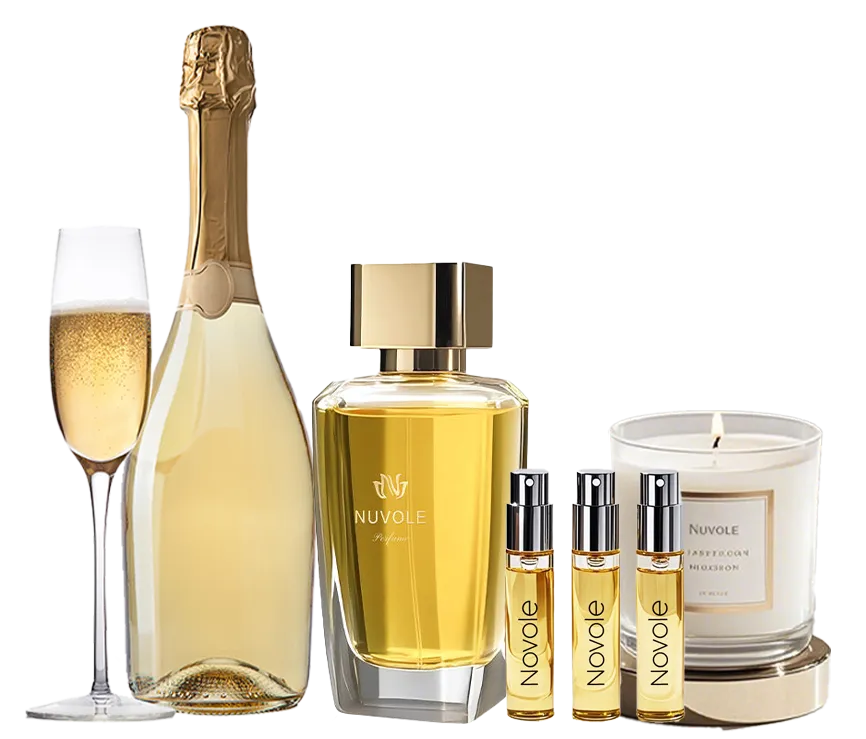
You can just not afford to have the blind spots of a fragmented supply chain when your brand depends on the physical functionality of a bottle. This is exactly what Nuvole comes in to alter the story. Being a specialty manufacturer serving Europe and the Middle East, we are able to offer an end-to-end solution of glass packaging that can bring your vision to life, addressing potential legal issues while ensuring 3D models and prototypes are transformed into a reality ready to enter the market without the manufacturing nightmares seen in other manufacturers. To fight the horrific scenario of leaking bottle disaster and mismatch of components, the multilingual team makes sure that its multilingual communication is flawless, not just on initial design but the execution done after sales as well. Our materials are of medical quality and we have a strict ±3ml standard of precision testing. Supported with detailed ISO, CE and RoHS certification, we ensure zero leakage, zero defects reality. Together with our high-end multi-stage crystal polishing process, the tactile weightiness of your glass and the visual perfection instantly conveys a high price tag so that you can transfer all your attention to the business expansion.
Nuvole, on top of impeccable engineering and using essential oils, will make your business strategy as fast and sustainable as possible to transform your fragrance dreams into reality. Execution speed is all in the recent and fast-paced fragrance business; we can ship your physical samples within 15 days and full mass-production orders within an incredible 45 days, we can give your brand a chance to capture the transient market opportunities quickly. At the same time, carbon-neutral packaging solutions are a major marketing opportunity to contemporary brands that value ESG objectives. With the use of the state-of-the-art electricity and natural gas systems, we cut down on general material consumption by 15% to 25-percent with up to 85-percent recycled material content. When you purchase Nuvole, you are not only purchasing glass, but also ensuring a sustainable high-speed and flawlessly executed physical base of your brand.
Conclusion: The Balance of Art and Commerce
To make a successful perfume business, it takes way more than a nice smell to do it; it needs careful planning and an impeccable physical supply chain where your budget matches your business model, international regulations such as IFRA are not negotiable and strict quality control to manage a catastrophic mistake in packaging. When what was a purely digital concept is now physical, you just can no longer do away with the blind spots, leaking bottles or inflexible MOQs of a discontinuous manufacturing process.