Two glass bottles can have the same capacity yet require very different production plans. A studio can make a small artistic run, while an industrial plant spreads tooling and setup costs across a longer campaign. That difference affects minimum orders, repeatability, lead time, and unit price. Buyers need to compare the full specification before treating two prices as equivalent.
This guide follows the bottle from raw materials to inspection, then explains production scale, stock and custom options, cost drivers, scheduling, and supplier qualification. The goal is a quote that can be checked against an approved sample and a realistic launch plan.
From Sand to Shelf: The Five Steps Every Bottle Shares
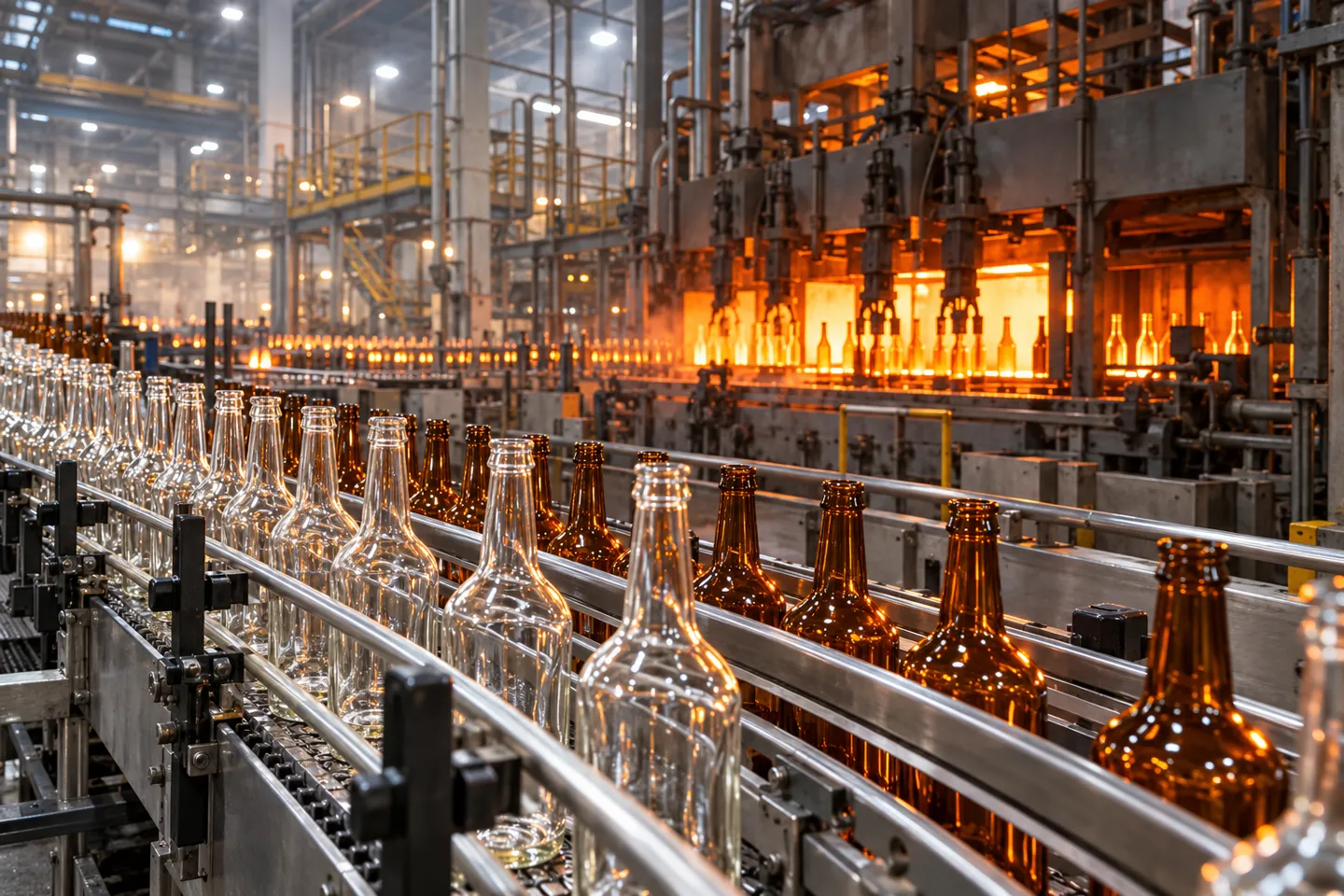
Production starts with a batch of silica sand, soda ash, limestone, and cullet, or recycled glass. The formulation depends on the intended container and color. Cullet is remelted with other inputs; its amount varies by product and plant. O-I illustrates these ingredients and the main stages in its glassmaking process guide.
The raw-material mix is only one part of color control. Recycled cullet must be sorted to the desired color stream, and contaminants can affect appearance or production. If the bottle will be clear and visible on shelf, ask how the plant controls tint between lots. For an amber or coated design, compare the final appearance under the lighting used for approval. Record which variation is acceptable before the factory starts the run.
The batch enters a high-temperature furnace. O-I describes a representative process at about 1,565°C. That figure illustrates one industrial operation; the actual furnace temperature and schedule depend on the glass composition and equipment. Container-glass furnaces commonly operate continuously, so scheduling and changeovers have real production consequences (O-I; FEVE).
Molten glass is conditioned and cut into gobs that enter forming equipment. A blank mold establishes an initial shape and neck finish; a final mold forms the body. Narrow-neck and wide-mouth containers can use different forming methods. There is no universal seconds-per-bottle figure: machine layout, container weight, shape, and number of active sections change throughput.
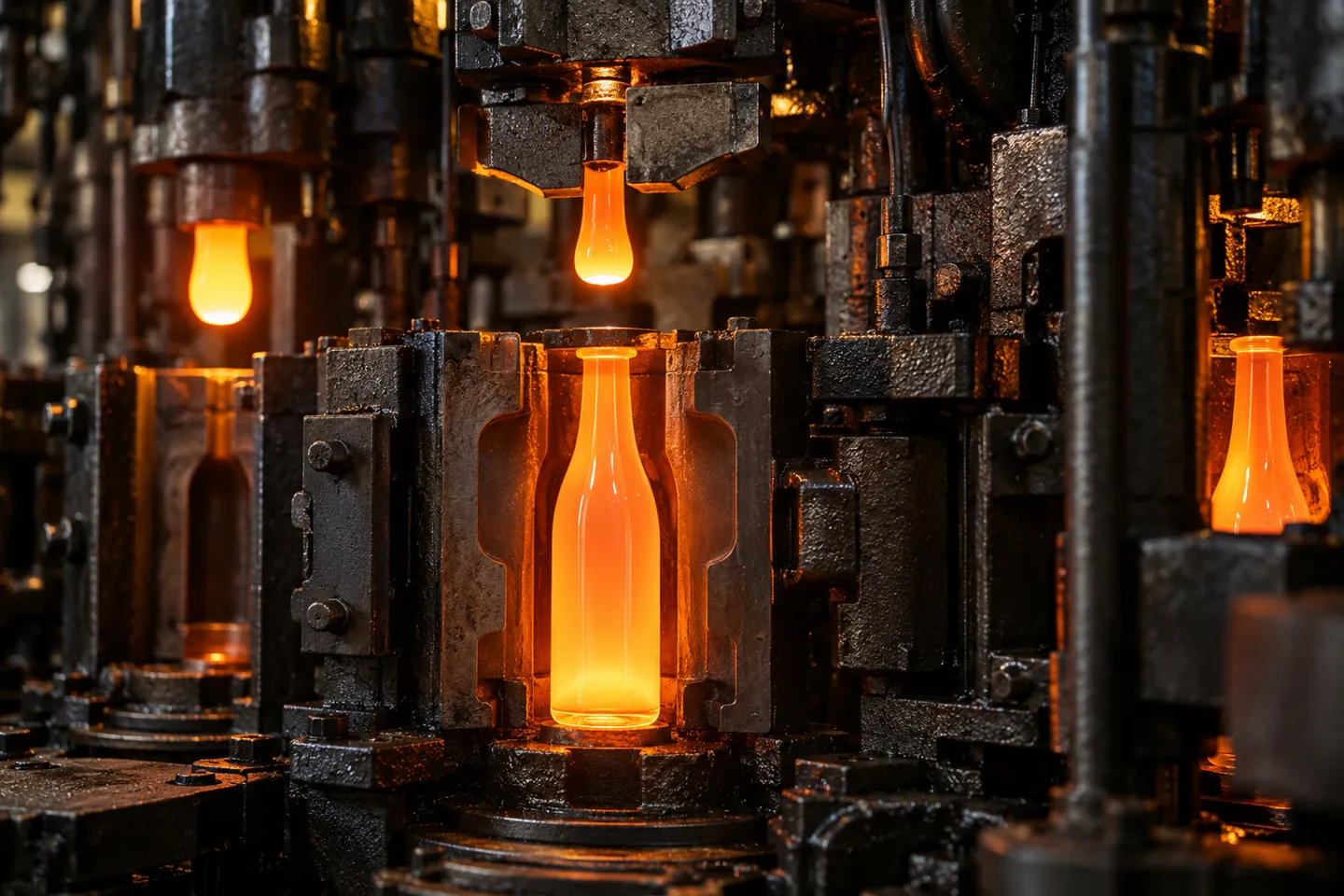
The formed container passes through an annealing lehr, where controlled cooling reduces residual stress. Poor annealing can increase breakage risk, but an individual crack still needs investigation rather than an automatic diagnosis. ASTM C148 describes polariscopic methods for evaluating the state of anneal in commercial soda-lime glass containers.
Annealing information belongs in the quality conversation when the bottle has a demanding use case or a history of breakage. Ask which test method the plant uses and how the result is sampled. Also inspect for mechanical damage at the neck, shoulder and base after packing. A sound anneal does not prevent damage caused by an unsuitable carton or a closure forced onto the wrong finish.
Inspection follows forming and annealing. Plants may check dimensions, capacity, visual defects, and other properties, then apply any decoration and pack the accepted containers. A buyer should ask which checks happen on every unit, which use sampling, and how rejects are counted.
The process is often drawn as five or six simple steps, but the quality gates are as important as the machines. For a new design, specify which dimensions are critical to filling, sealing, and shelf appearance. A bottle may pass a general visual check while its neck finish prevents a pump from seating consistently. Put the functional dimensions on the drawing before a pilot run.
Batch
Sand, soda ash, limestone, plus recycled cullet.
Melt
High-temperature melting under a plant-specific recipe.
Form
Gob cut, neck finish and body formed to the drawing.
Anneal
Controlled cooldown drains internal stress.
Inspect & decorate
Gauges and cameras, then coating, printing, packing.
Two Worlds of Production: The Workshop and the Million-a-Day Line
Production options form a spectrum: studio work, stock bottles distributed in smaller quantities, and industrial custom runs. Each has different tooling, repeatability, and purchasing terms.
The Workshop Scale: What Hand-Making Really Costs
A studio can be appropriate for sculpture-like prototypes or limited artistic editions. Price and capacity vary widely by craftsperson, design, mold, and finishing work, so a single public anecdote is not a reliable market rate. Request a sample, drawing, and written price for the exact design.
Hand production is not automatically incompatible with a closure. The question is whether the maker can hold the neck dimensions and surface quality required by the selected pump, stopper, or cap. For a functioning fragrance pack, test the actual bottle and closure together before approving the method.
The Missing Middle: 500 to 5,000 Units
Brands seeking hundreds or a few thousand units often find the most practical route in stocked glass with custom decoration or a short run from existing tooling. Availability depends on the supplier and finish. Ask what part of an offer is custom: bottle geometry, color, coating, print, or closure.
At this scale, a new mold may be difficult to justify because engineering, sampling, and line setup still have to be paid for. A supplier may offer a stock silhouette with a distinctive finish instead. Request separate prices for the undecorated bottle, decoration, closure, and packing.
The smaller the order, the more carefully a buyer should separate “available now” from “repeatable later.” A distributor may have several cases of a discontinued shape. That could be enough for a launch and a problem for a reorder. Ask whether the design is an active production item, who owns its tooling, and whether the finish will remain available for the planned closure.
The Industrial Line: Where MOQ Comes From
Industrial lines continuously feed forming machines from a furnace. Multiple machine sections can operate in parallel, with methods selected for the container design. Daily output is plant-specific. Ask for the planned production route and capacity for the proposed bottle rather than applying a generic “million per day” claim to a particular supplier.
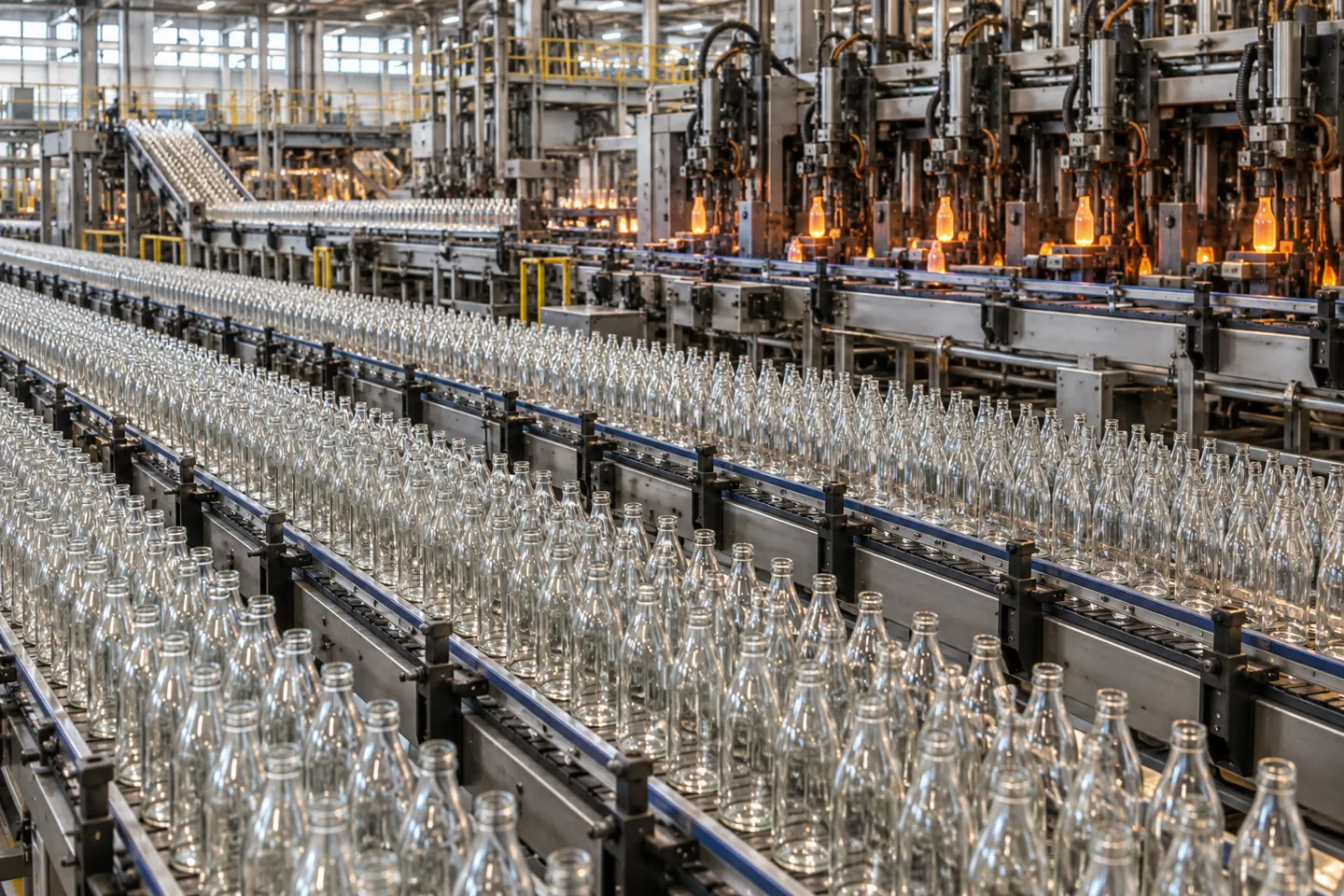
Minimum orders reflect more than furnace physics. Tooling, changeover time, production efficiency, decoration, stock availability, and commercial policy all matter. Some suppliers can sell a stock design by case; a new industrial mold usually needs a larger commitment. Request the MOQ for the exact bottle, finish, color, and decoration in the quote.
A handmade prototype and a machine-made production bottle are not directly comparable on unit price. They may differ in finish precision, weight, appearance, testing, packaging, and included services. Compare like specifications and separate one-time tooling from recurring unit costs.
A fair comparison also keeps capacity consistent in the right sense. A 750 ml nominal fill, a 750 ml brimful capacity and a 750 ml marketing label describe different things. Confirm the required fill level, headspace, and filling tolerance. Then compare bottle weight, height, and pack-out. Small differences in these dimensions can alter the number of units per case and pallet, which changes freight and storage cost.
Compare the delivered bottle: approved design, neck finish, decoration, testing, packaging, tooling, and landed cost.
Stock, Decorated, or Full Custom: Picking Your Entry Point
Choose a supply route from forecast volume, functional requirements, budget, and how distinctive the bottle needs to be. The launch plan should include sample approval and testing before production.
A stock bottle uses an existing design. Availability may shorten the path to sampling, but stock quantity, glass color, and neck finish must be confirmed. Labels, caps, cartons, and sometimes decoration can carry the brand identity while the base silhouette remains standard.
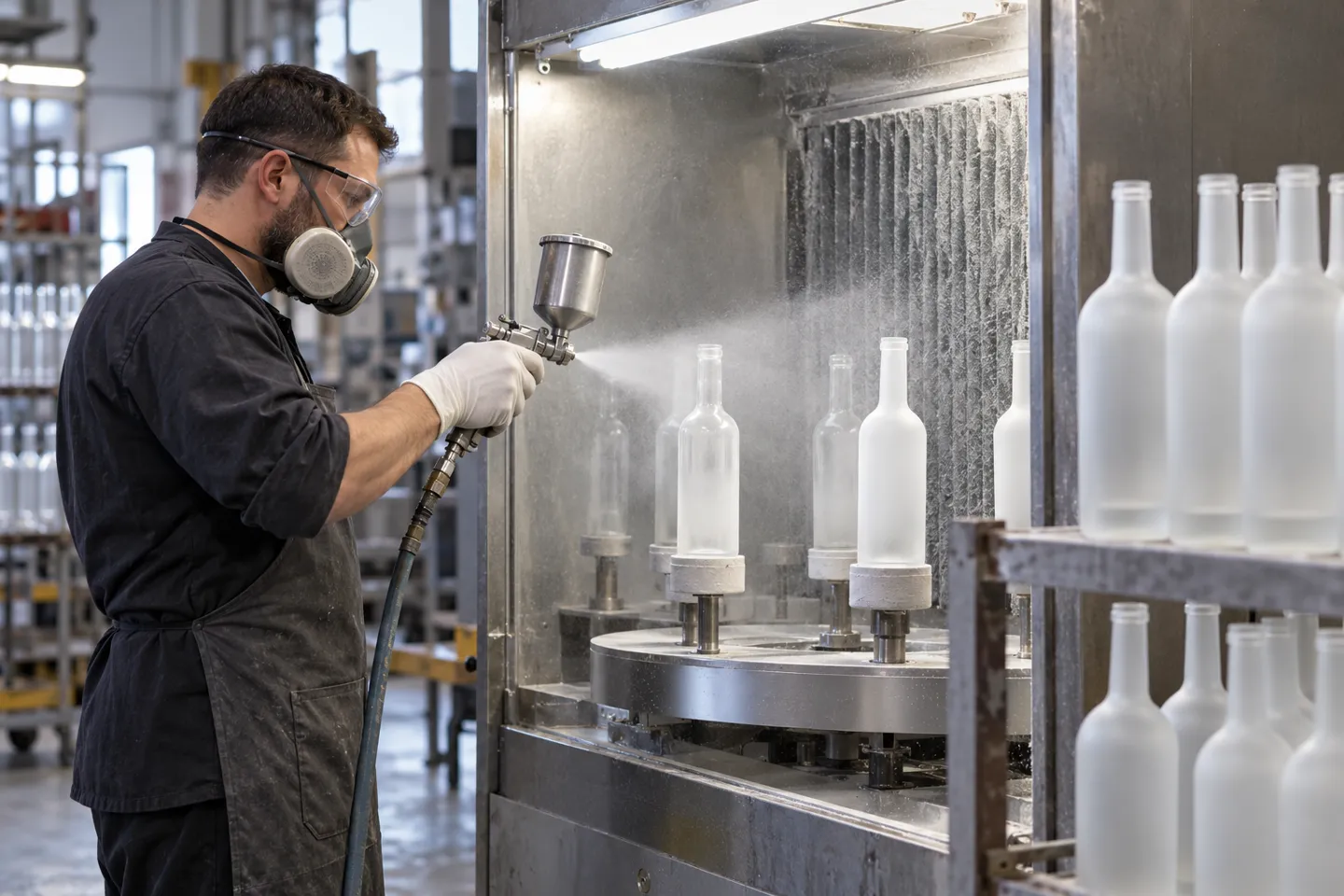
A decorated stock bottle adds spraying, frosting, screen printing, hot stamping, or another finish to an existing body. Each process has its own artwork, setup, sampling, and minimum-order terms. Confirm compatibility between the decoration and the product, handling, and shipping conditions.
Decoration deserves its own validation. Check the coating or print on bare and filled bottles, after handling and in the proposed shipping carton. A metallic finish can look excellent on a showroom sample and still rub during packing. Define the viewing conditions and acceptable variation. Keep one approved decorated sample from the intended process, not only a digital rendering.
A new mold offers control over silhouette and functional details. Its cost, build time, ownership terms, and production MOQ depend on complexity and supplier. Request a tooling quote and project schedule before assuming a standard fee or a fixed number of weeks.
Weight can affect forming capacity and production economics, but it does not determine MOQ by itself. Color changes, bottle geometry, decoration, line scheduling, and the availability of stock tooling also matter. Ask how the supplier calculated the minimum for your project and whether future orders can use the same approved mold and finish.
If a new mold exceeds the launch budget, explore decoration on stock glass. A printed panel, label, custom cap, or selected surface treatment can create distinction without changing the base geometry. Test the finished assembly and check current stock depth before committing artwork.
Artwork should be approved on the actual bottle curvature and finish. A flat proof may conceal stretching around a shoulder or poor contrast against the filled liquid. Ask for decorated samples with the intended cap and carton, then review them under shelf lighting and after routine handling. The artwork file, color reference and placement tolerance should become part of the approved specification for the repeat order.
Three entry paths into glass bottle production
| Entry path | Best fit | Cost to confirm | Typical schedule driver | Main constraint |
|---|---|---|---|---|
| Stock bottle + labels and caps | Validation and repeat orders | Bottle, closure, packing, freight | Stock and component availability | Fixed glass geometry and finish |
| Stock bottle + decoration | Distinct appearance using existing glass | Setup, decorated units, rejects | Sample approval and decoration slot | Artwork and process minimums |
| New custom mold | Signature shape with forecast demand | Tooling, pilot, production units | Drawing, mold, testing, production | Higher commitment and change control |
What a Bottle Actually Costs: Anchors, Decoration, and Time
A complete quote separates recurring and one-time costs. Bottle unit price, decoration, closure, mold or tooling, samples, inspection, packing, freight, and duties can all sit on different lines.
Compare Bottle Quotes by Specification
Public bottle prices are poor benchmarks unless capacity, weight, color, order volume, finish, delivery terms, and date match the proposed project. Use the comparison table below to request the same fields from each supplier.
Quote lines to compare across suppliers
| Cost line | What to define |
|---|---|
| Base bottle | Capacity, weight, color, finish, quantity |
| Decoration | Method, colors, coverage, acceptance sample |
| Tooling | Mold ownership, maintenance, reuse rights |
Treat each supplier figure as a project quote. Specify target capacity, weight range, approved appearance sample, neck finish, artwork, order quantity, packing, and delivery terms. Ask which costs repeat on a reorder and which are one-time charges.
Ask whether the supplier price includes only empty bottles or also caps, pumps, dividers, export cartons, and freight. Quote comparisons often fail because one offer includes inner packing and another assumes bulk pallet loading. Specify the delivery location and trade terms. If mold or screen charges are paid separately, record who owns those assets and whether they can be used for future runs.
Decoration: The Second Cost Curve
Decoration costs depend on the process, artwork, coverage, number of colors, setup, and expected reject allowance. Request a separate line for each method and a decorated production sample. Ask who pays for screens, plates, fixtures, and any rework when the finish fails the agreed inspection.
Glass Grades: Specify the Appearance You Need
Terms such as flint, high-white, and extra-flint usually describe appearance, but they are not universal grades. A supplier may use different criteria for tint, clarity, or inclusions. Agree on a physical reference sample and inspection conditions. Do not assume a specified iron-content number or a guaranteed retail-price premium from a grade label alone.
If a supplier offers a “premium” grade, ask exactly what changes: base-glass color, allowable bubbles, surface marks, wall distribution, or inspection method. Buy a sample from the proposed production route and compare it with the standard grade in the same shape. A clear price premium may be justified by an observable difference; the purchasing record should explain which difference the brand approved and how later lots will be checked.
For a coated or opaque bottle, bare-glass clarity may be less visible, though it can still affect the finished look. Bottle weight also changes freight and handling costs. Compare appearance, breakage, and landed cost together instead of assuming heavier glass always signals better value.
How Lead Times Actually Stack
Build the schedule stage by stage: drawing approval, samples, any mold work, pilot testing, production, decoration, inspection, and transit. Stock and custom projects have different critical paths. Request a dated milestone plan with assumptions and a clear statement of when the quoted lead time begins.
Schedule risk also comes from dependencies outside the glass plant. Artwork can delay decoration; a pump sourced elsewhere can arrive after the bottles; a failed transit test can require a new divider or carton. Show the dependencies on one timeline and identify the approval owner for each stage. A supplier can then explain which dates are firm and which depend on materials or customer sign-off.
Share your design, quantity, finish, and launch date so Nuvole Glass can map the sample, tooling, production, and delivery stages in a project quote.
Request a Stage-by-Stage QuoteQualifying a Production Partner Before the PO
Supplier qualification starts with the route they propose for this bottle and the evidence they can provide. The four checks below make the comparison more concrete.
Ask who will manufacture the bottle, where it will be produced, and what capacity is available for the planned run. A live floor tour can help, but a documented production plan, sample history, and clear responsibility for quality are more important than a promotional video.
Specify tolerances from the bottle drawing and the filling or closure equipment rather than using generic values. Ask for a defined inspection plan, a leak or seal test for the assembled package where relevant, and documentation required by the destination market. No universal 50-ppm defect target or lead/cadmium threshold can be applied to every glass bottle order. CETIE publishes general glass-container tolerances and neck-finish data that can inform the drawing.
A practical acceptance plan has three levels. First, critical defects that affect safety, sealing or filling must be defined. Second, major visual defects that prevent sale should be described with examples. Third, minor marks can have agreed limits under specified viewing conditions. The supplier and buyer should use the same definitions, sample size and decision rule. That makes a quality report meaningful even when the two teams inspect in different locations.

Identify the contracting party, manufacturer, mold owner, and party responsible for inspection and corrective action. A distributor can be a useful partner when these roles are clear. Record who can authorize a material, finish, or factory change after sample approval.
Put milestones into the purchase order: drawing and sample approval, tooling completion if needed, production, inspection, packing, and dispatch. Define what happens when a milestone or acceptance test fails. The payment schedule should match the risks and terms agreed for the project.
For a pilot, retain samples from the first accepted lot and document critical measurements. Compare a later order against those records under the same inspection conditions. If the supplier proposes a mold repair, new furnace, different glass composition, or changed closure, agree on the tests needed before accepting the change. This makes repeatability a contract requirement rather than a memory of a good first shipment.
Eight checks before the PO
- Manufacturer and production route identified
- Drawing and critical tolerances agreed
- Closure and leak-test method specified where needed
- Visual defect definitions and inspection plan
- Representative pre-shipment quality report
- Market-specific documentation identified
- Mold ownership and change-control terms
- Milestones and remedies written into the order
Running the Numbers Like a Brand Owner
A sensible sequence is to validate functional fit and demand before paying for a unique mold, unless the shape itself is central to the product concept. Stock glass and decoration can test a launch at a different cost and risk profile from full custom tooling.
Appearance spend should be justified by the actual product. Clear glass can matter when the customer sees the liquid and the bottle is a major part of the brand experience. It is harder to justify a higher grade behind an opaque coating or sleeve. Test whether customers value the difference rather than assigning a universal retail premium to clarity.
A signature bottle can justify custom tooling from the start when the design is essential to the offer and the volume supports it. The decision still needs a drawing, closure test, landed-cost model, and a realistic production schedule.
Nuvole Glass can discuss stock, decorated, and custom bottle options against a project brief. Request current catalog availability, tooling terms, decoration capability, sampling charges, and any certification evidence relevant to the specific supplier and product.
For a launch decision, build one comparison sheet that includes tooling, unit cost, decoration setup, closure, packing, transport and expected loss. Put lead time and minimum order beside the cost, not in a separate conversation. A low unit price can be less attractive when it requires excess inventory or a long wait for a replacement lot. Review the sheet again after the pilot so actual defects and delivery performance inform the next order.
Plan Your Glass Bottle Project
Send your bottle brief and ask for current stock options, decoration, tooling terms, and a dated quote.
Get Your Bottle Quote